Twenty-three years since 9/11
Next Wednesday marks the 23rd anniversary of the attack on the Twin Towers, a tragedy that led to the death of nearly 3,000 people.
Peter Tié:r Arquette had been working on the Triborough Bridge in New York City on September 11, 2001, when he noticed the Twin Towers were on fire. The ironworkers there soon put their tools away to look at the smoke billowing out of the towers.
It was only about 15 minutes later that they learned what was happening.
“Our boss came running down the bridge and said, ‘Put your tools away, get off the bridge. Terrorist attack! A plane hit the Trade Center!’” the former ironworker said. He and many Kahnawa’kehró:non had been working on the bridge that day for the American Bridge Company.
“I just couldn't believe it,” Arquette said.

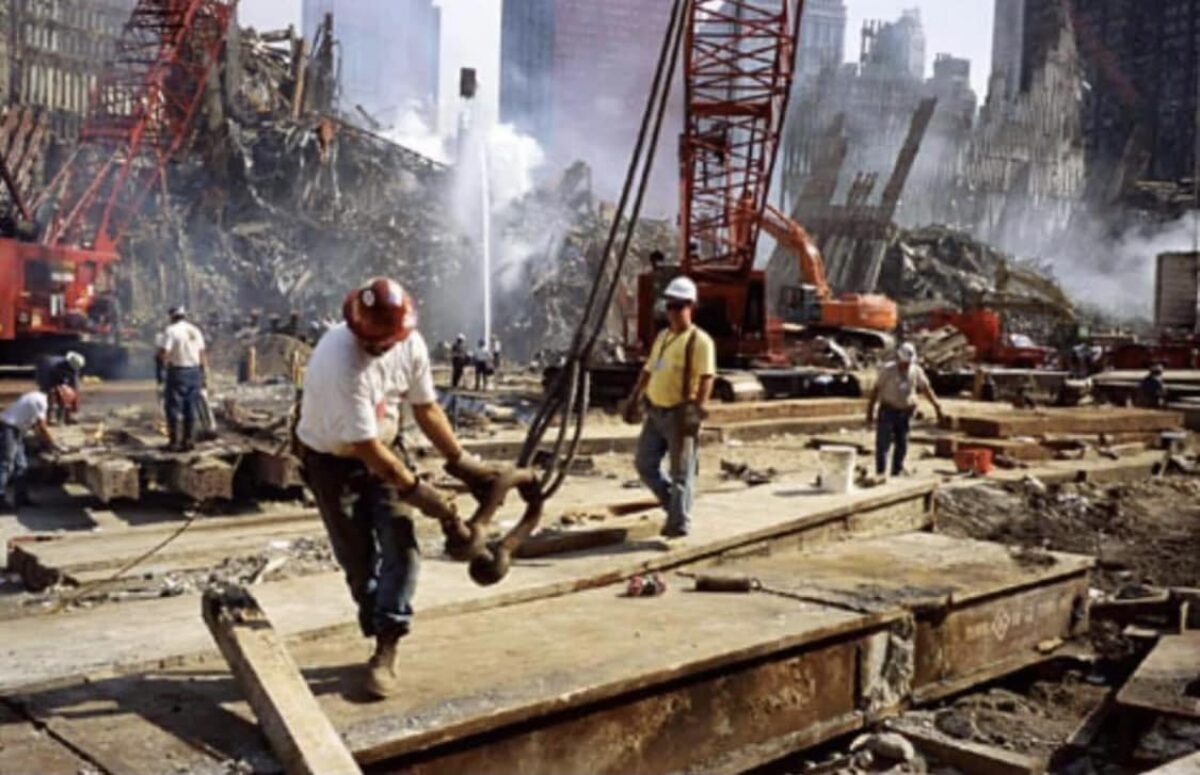
They were rushed off the bridge after that. It was then the ironworkers found out volunteers were needed to move the heavy steel beams of the structure so that first responders could search for bodies.
“I had three guys in my car, and they wanted to go,” he said, so they jumped out to rush over to Manhattan. Arquette, meanwhile, began his journey back to Kahnawake.
“The guys that went there, they’re dead today. They got cancer,” he said of the many Kahnawa’kehró:non that volunteered back then in the cleanup. Some stayed as long as three months.
“I said ‘Besides, we’re not firemen, we’re ironworkers. We don’t have any business being there,’” Arquette said.
The former ironworker is one among many Kahnawa’kehró:non that were in and around the city when the planes struck the towers. Many came from families of ironworkers that built the structure itself, which was at one point the tallest in the world.
Without respirators, they trudged along through toxic fumes laced with asbestos.
To this day the names of the first responders that took part in the clean-up that have since passed are read out loud at a memorial ceremony held each year at the former ground zero, now the National September 11 Memorial and Museum.
“I’m proud of the reaction that the men of Kahnawake had. They rushed down there immediately after it happened,” Lindsay LeBorgne told The Eastern Door last year.
The former chief with the Mohawk Council of Kahnawake (MCK) spent a week assisting in the cleanup, working five 12-hour days at ground zero.
“But several that worked down there have died of cancer. They paid the ultimate sacrifice. They went down there unscathed, and little did they know the attack would cost them their life 10, 15, 20 years down the road. That killed them that day.”
Sign up for email updates from The Eastern Door
This article was originally published in print on September 6 in issue 33.36 of The Eastern Door.