Three generations of Kanien’kéha
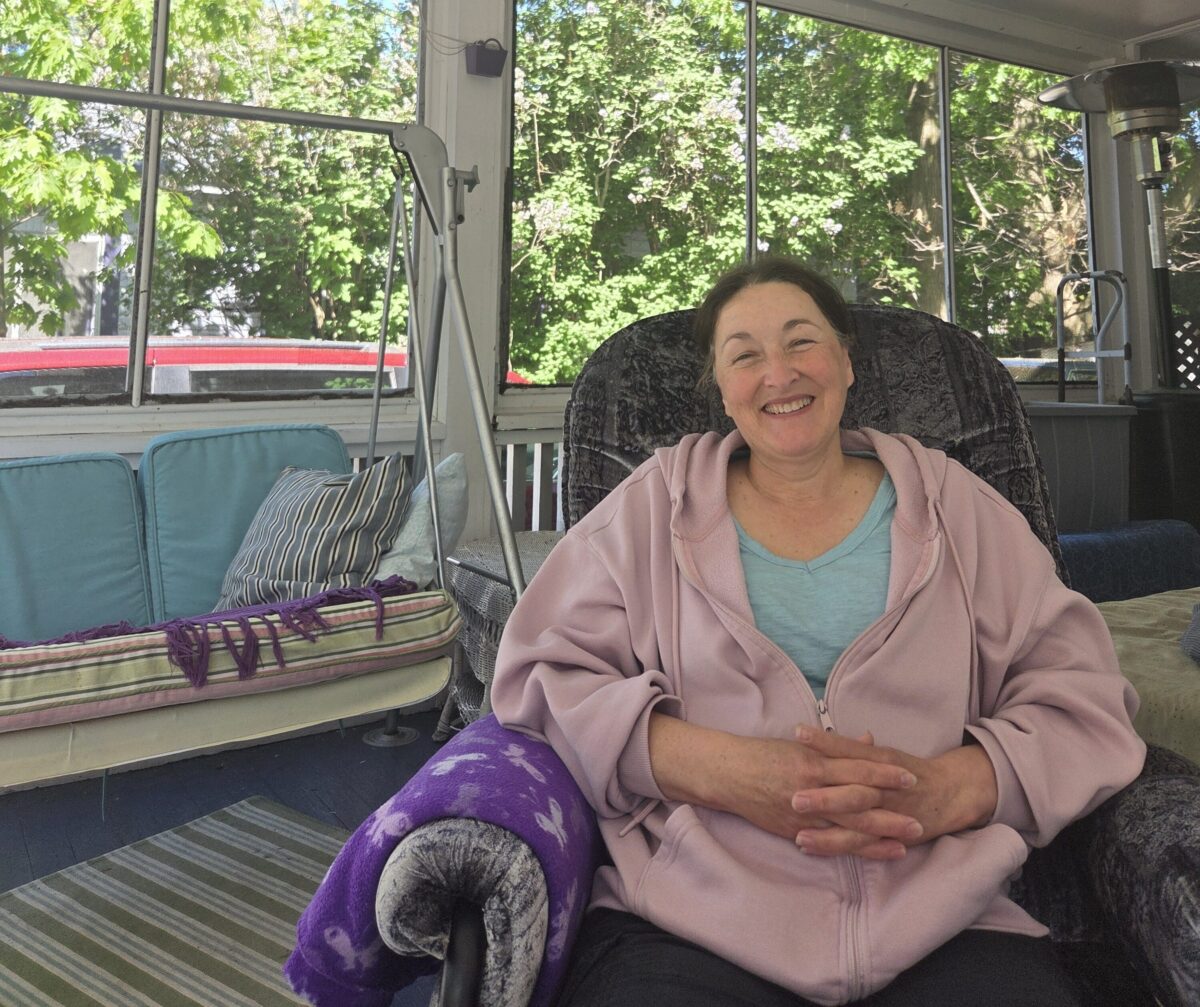
Otsi’tsa’ón:we Gaspe sitting on her front porch. Fern Marmont The Pines Reporter
For Otsi’tsa’ón:we Gaspe, enrolling in the the Ratiwennenhá:wi Kanien’kéha language immersion program was the fulfillment of a dream decades in the making.
“I’ve wanted to do this since I was 20 years old,” said Gaspe. “When the flyer came in the mail, I was like, ‘Oh wow, finally.’ I was so excited.”
But the excitement came with uncertainty. The program offered a smaller salary than what Gaspe was earning, and she was worried if she could afford such a chance.
“Then I thought, ‘Who cares? I’m going for it,’” said Gaspe.
Gaspe applied late and had to be placed on a waiting list, where after being interviewed, she was finally able to enroll in a program that would teach her Kanien’kéha, a skill that she had wanted for years.
Yet while the program was rewarding, it wasn’t easy for Gaspe.
“Learning a new language is challenging,” said Gaspe. “Especially being a mature learner. I was in class with a bunch of young people, and trying to remember things isn’t as easy as when you’re 20 years old.”
Gaspe still carried some knowledge of Kanien’kéha with her into the program. Growing up, she learned the basics from her mother and school. Her father, who was fluent in the language, rarely spoke it.
“I think that generation, it was kind of beat out of them,” said Gaspe. “My father would say, ‘Where are you going to use that?’”
Like many Indigenous communities across Turtle Island, Kanesatake suffered generations of language loss because of colonial efforts to strip away the language.

“Nobody spoke Kanien’kéha much,” said Gaspe, who remembered hearing very little of the language growing up.
Gaspe’s interest in the language deepened following the Siege of Kanehsatake in 1990, which sparked cultural resurgence for many community members.
“There was a real awakening of our culture, our language, our songs and all the traditional ways,” said Gaspe
Gaspe began learning traditional songs, attending ceremonies, and seeking opportunities to strengthen her connection. The immersion program was another step on that path.
“The first year, we were all shy with each other,” said Gaspe. “But when you spend every day together, you start getting to know everyone. We formed some good friendships.”
As the oldest student in the cohort, Gaspe earned a special title from her classmates.
“They called me istá,” said Gaspe.
Gaspe’s daughter, Karihohetstha Cupples, witnessed her mother’s dedication, required to complete the immersion program.
“I was really excited for her, watching her throughout the years put in a lot of work. It was really nice to see,” said Cupples.
“There were times where she was very stressed out,” said Cupples. “But she always pushed though.”
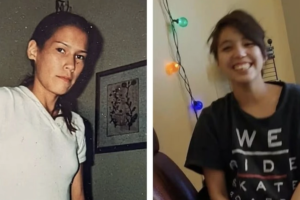


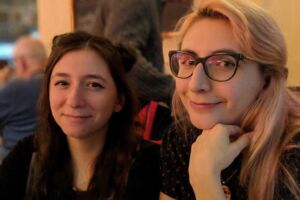
The immersion program has strengthened the language within the family, as now three generations are working together to learn and speak Kanien’kéha.
Cupples is part of the new cohort of the immersion program and is teaching her son the language.
“We have a real three-generation dynamic going on,” said Cupples. “Sometimes I remind her of things she learned in class, and sometimes she helps me with things I forgot. It’s fun to teach each other and learn together.”
For Cupples, one memory stands out from her mother’s studies.
After the birth of her son, Gaspe, elders, and friends gathered around speaking Kanien’kéha.
“They were all speaking together, talking about baby words and how cute the baby is,” said Cupples. “It was such a nice moment, and it really solidified that I wanted to join the immersion program.”
“My main inspiration was to be able to speak with my children and future grandchildren,” said Gaspe, who added that while she was in the program, both of her daughters became parents.
Now she is focused on ensuring her grandchildren hear the language from the earliest age.
Although Gaspe completed the program, and is attending the graduation ceremony this Saturday, June 6, she considers herself a lifelong learner.
“This is just the beginning, I need a lot more work to be fluent. But at least I have a lot more than I had when I was young,” said Gaspe.
Sign up for email updates from The Eastern Door
“I will be able to teach my grandchildren more than what my children had,” said Gaspe. “We’re building and building, and hopefully it gets stronger and stronger with each generation.”
Her brother, Karahkóhare Syd Gaspe, sees the effort as part of a larger movement to revitalize the language throughout the community.
“We’re certainly proud of her,” said Karahkóhare. “It must get quite challenging, especially at a certain age.”
“People see the value in it now. There are jobs coming up, there is interest,” said Otsi’tsa’ón:we.
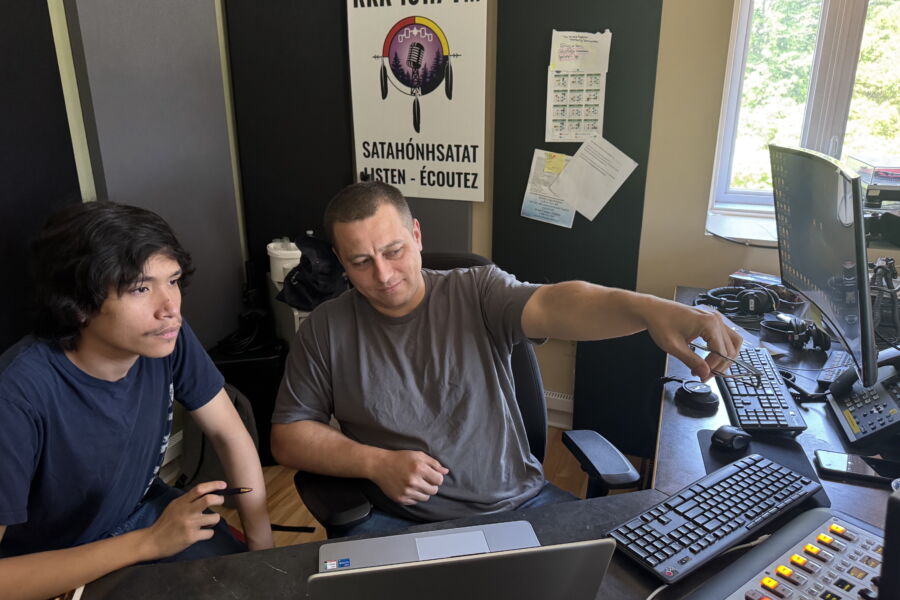
“The schools, the immersion program, the radio station, all these pieces are coming together,” said Otsi’tsa’ón:we. “It is the revitalization of our language.”
Fern Marmont, Local Journalism Initiative Reporter