Series pieces together history
When news broke in 2021 that the graves of missing children had been found at the former Kamloops Residential School, many non-Natives were shocked. But for Indigenous communities, the information was nothing new.
Journalist Tanya Talaga, who is a member of Fort William First Nation, refers to that awareness as “The Knowing” – which is also the title of her new four-part docuseries, co-written and co-directed by Kahnawa’kehró:non Courtney Montour.
“All of us as First Nations people have family members and community members that you heard of who didn’t come home,” she said. “You heard of someone that was missing from Indian residential schools, or Indian hospitals, tuberculosis sanitoriums, or asylums. Everyone has a story.”
For years, Talaga had been thinking about Annie Carpenter, her lost family matriarch and great-great-grandmother. Her late great-uncle Hank had compiled a big, brown folder of documents about her, full of clippings, as he desperately tried to piece together his ancestry, his own mother a residential school survivor. Talaga’s mother inherited the folder and asked Talaga for years to find Annie.
The family knew she died in Toronto, but they didn’t know where.
“It was a journey, really, of reclamation. My uncle Hank had started it, so I picked it up and finished it,” Talaga said. “Although, it’s not finished really. Not by any stretch of the imagination. There’s still more records to find and more truths to be uncovered.”

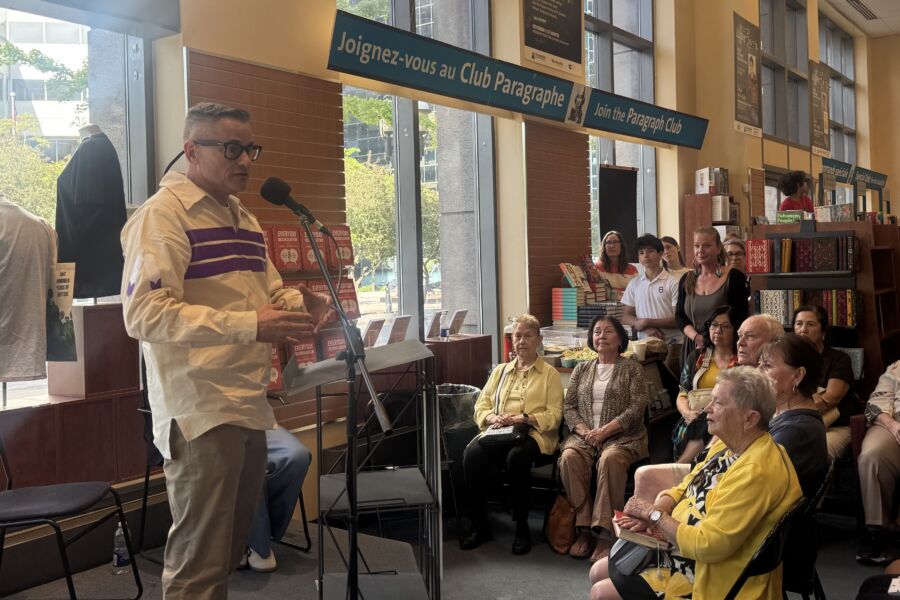
The docuseries is a companion to Talaga’s book of the same name, released at the end of last month. As a seasoned journalist, Talaga wanted to show the faces and voices of the people she met, and brought on Montour, an experienced documentarian, to join the project in 2023.
Montour worked collaboratively with Talaga, reading over the manuscript as it was written, being one of the very first people to read the full book.
“It was a beautiful way of working and trusting one another to see this, rather than having a completed work that you’re starting off from,” Montour said. “It created a pathway where we could ask, ‘How are we going to bring such an important story and such a meticulously researched history to screen in a series?’”
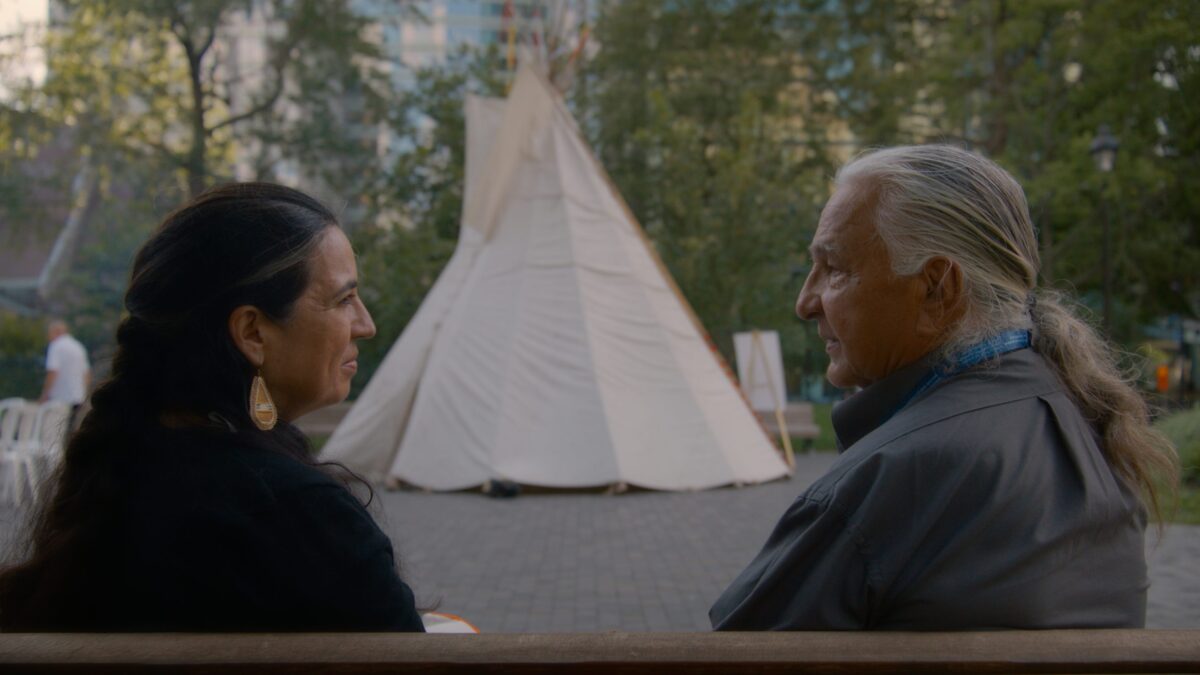
The series, which can be streamed on CBC Gem as of this Wednesday, sees Talaga pull together archival footage and meet previously unknown relatives, piecing together an almost lost history. She hopes that other Onkwehón:we will feel seen by The Knowing.
“I think and I hope that a lot of people will see themselves and their own stories in Annie’s story, and realize that we should all try and find our loved ones by going back in our family history,” Talaga said. “That’s how we’re going to find our children too. Ground penetrating radar is a useful tool, but this will actually help us find the names of those who were forgotten and lost.”
Montour and Talaga headed to Kashechewan First Nation, on the Albany River, where Talaga discovered her maternal matriarchs were from. She had previously been on the river as a journalist, without knowing her family's connection to the area.

“It was pretty wild. People talk about blood memory, and it’s a thing. Why am I always doing these stories? My bones remember it, I think,” she said.
Capturing that feeling was important for Montour and Talaga. Montour said they worked hard to ensure viewers can feel the depth of connection with the land, utilizing cinematic shots and drone shots of the water and scenery there and everywhere that Talaga visits in the series.
“I think part of the story was grounding it in the land. The land is a character in the series, it’s so important to where we’re all from, that connection to land, community, and water,” Montour said. “So, wherever she travels, we see those elements as well.”
Talaga’s book also features poetic narration in the Ininiw dialect, which Montour and Talaga ensured was preserved in the visual telling of the story. Cree elder Stella Schimmens speaks in the dialect, narrating throughout the series.
“Having this elder speak, and hear the richness of the language also really grounds it,” Montour said. “Tanya narrates in the series too, and it’s almost like a conversation through generations and through ancestors. I feel like a lot of that plays out in the series, there’s a connection to the past and the present woven in and happening at the same time.”
The series had its world premiere at the Toronto International Film Festival (TIFF) earlier this month, which was attended by many of the survivors and family members involved in its creation.
Sign up for email updates from The Eastern Door
“My mom said to me, ‘I grew up in the bush. I’m 80 years old, and now I’m standing on the red carpet,’” Talaga said.
“That’s everything. That’s why we do this work. For our families and our communities, to try and make things just a little bit better.”
This article was originally published in print on September 27 in issue 33.39 of The Eastern Door.