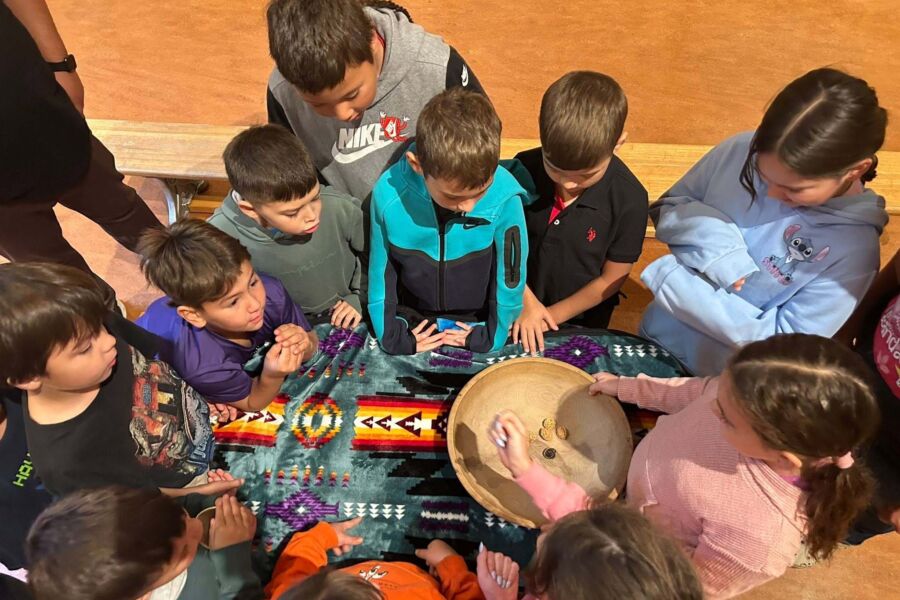
These mukluks are made for walkin’
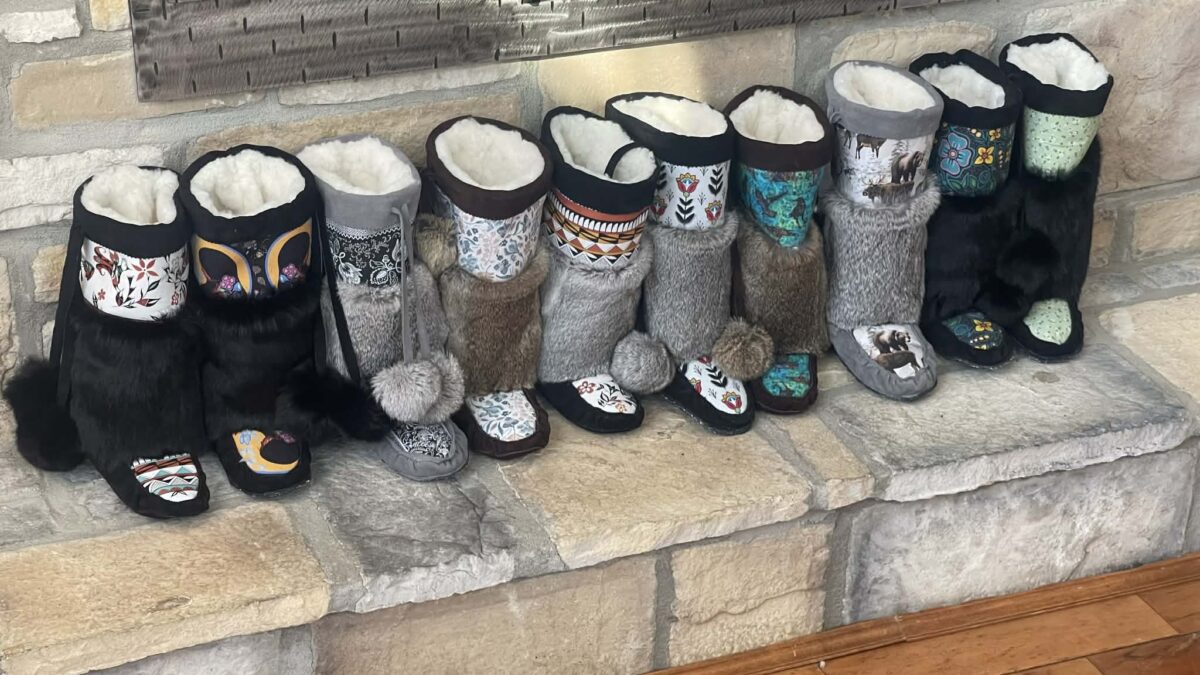
After 4 days, each participant made one mukluk, now with the skills to make the other at home. Courtesy Kathleen Skye
A four-day mukluk-making workshop at the Tsontkwahtentionhátie farm is not only helping participants create cozy winter footwear, but also strengthening community ties and sharing cultural knowledge.
The workshop, hosted by the Kanesatake Health Center (KHC) from March 26-29, filled up within four days. According to Kathleen Skye, nurse and cultural revivalist at the KHC, the strong interest reflects the broader shift toward land-based programming at the KHC. Expanding beyond clinical care to encompass cultural and social well-being.
“This is new, we never had this before,” explained Skye. She shared that she has been a nurse for 33 years, and back then, these types of events were unheard of.
“It’s only been the last three years, when the health centre’s mandate took a turn, and now we have all this,” said Skye.
“Some things take time,” said Skye. “It’s bittersweet because it’s almost time for me to retire, and now we have everything we needed.”
Skye said inviting guest instructors from other nations has been key in bringing in new techniques and fostering cultural collaboration.

Instructor Alley Yapput, a Two-Spirit Ojibwe-Cree artist from Thunder Bay, described the workshop as mutually beneficial.
“I think it’s a wonderful experience. It gives me the opportunity to travel and visit Kanesatake. This is my first time here,” said Yapput.
“It’s almost like a cultural exchange. I’m sharing what I know, and passing that on to new people.”
Yapput shared that they learned how to sew moccasins from their grandmother as a child, but it wasn’t until their early 20s that they started to reconnect with those old memories and skills. Then, over the decades, including a move to Manitoba, Yapput was springboarded into offering these workshops.
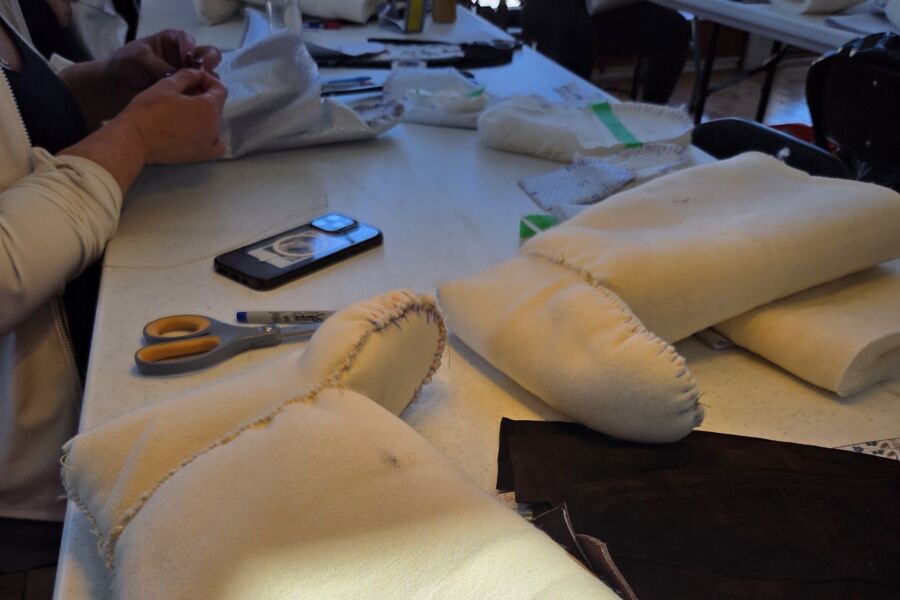
Yapput explained that participants are making mukluks designed for extreme winter conditions, using suede, felt lining, and insulated interiors. Ribbon skirt material from another workshop the KHC held is being used in the designs.
“What we did was incorporate our ribbon skirt fabric into the shoes,” said Skye. “It’s going to be just amazing.”
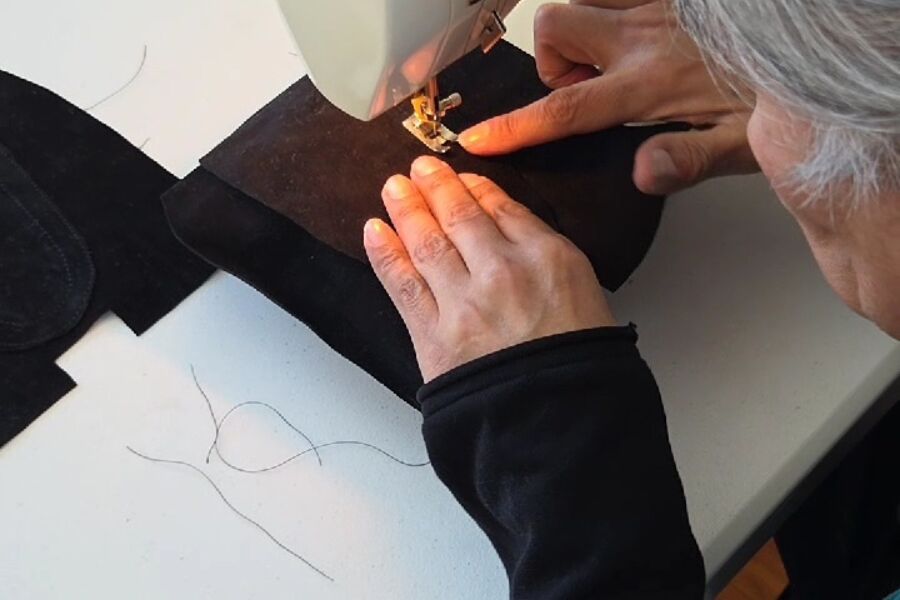
Yapput adapted his usual teaching methods to fit the four-day workshop format, introducing an unconventional tool in mukluk-making, a sewing machine.

“I had to condense the workshop programming,” said Yapput. “There are some elements that I had to change to make it go a bit more smoothly.”
According to Yapput, mukluks are usually sewn by hand. But to fit the time constraints of the workshop, Yapput used a sewing machine to make the soles of the shoes, while the rest of the mukluks were hand-sewn.
Even with those changes, Yapput explained that the collaborative atmosphere remains central to the experience.
“I don’t like leaving people too far behind,” Yapput said. “If somebody’s finished, just wait, maybe help the person sitting beside you.”
For participants, that sense of collaborative learning is part of the appeal. Lorrie Ann Kaniehtenhawi Oke, who has years of experience in leather and bead work, said the workshop still offered new insights.
“With the tips and tricks and different styles that he does, it’s really helped me to learn. Because he has it all mapped out, it comes out really nicely uniformed,” said Oke.
Sign up for email updates from The Eastern Door
“He goes to everybody’s specific rhythm,” Oke added. “So, we’re faster because we’re highly-motivated, but sometimes he does tell us, ‘slow down, wait for me.’”
Oke shared that she joined the workshop to make a pair of mukluks for her daughter.
“But then when I started doing it, I was like, I want a pair,” said Oke, so she plans on making herself a pair of mukluks, too.
Fern Marmont, Local Journalism Initiative Reporter