The legacy of Karihwenhawe Lazore

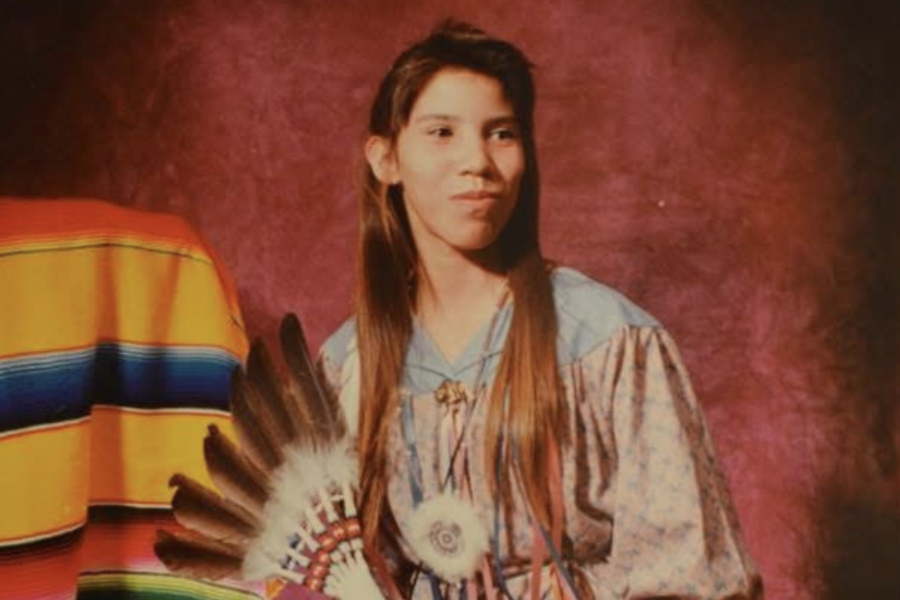
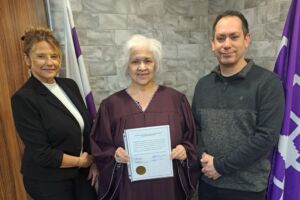
Karihwenhawe Dorothy Lazore (far left) at the first-ever Kanien’kéha Ratiwennahní:rats Adult Immersion Program graduation, with co-teacher with Konwaronhiá:wi Annie Deer (far right) and student Anna Tiorensowes Zachary (centre). Courtesy Lisa Phillips
Even at the end of her life, Karihwenhawe Dorothy Lazore was laser-focused on doing the work to preserve her language.
“She went her way, working on it right until the last day,” said Lazore’s sister, Grace Mitchell. “On her dying bed, she said ‘Can you go get my computer, there’s something I’ve got to finish.’ What a lady.”
Lazore passed away peacefully at the age of 77 on March 7, after a long illness. She had dedicated her life to teaching Kanien’kéha, and her legacy lives on in the generations of Onkwehón:we - both Mohawk and beyond - who have benefited from her contributions to the language-learning community.
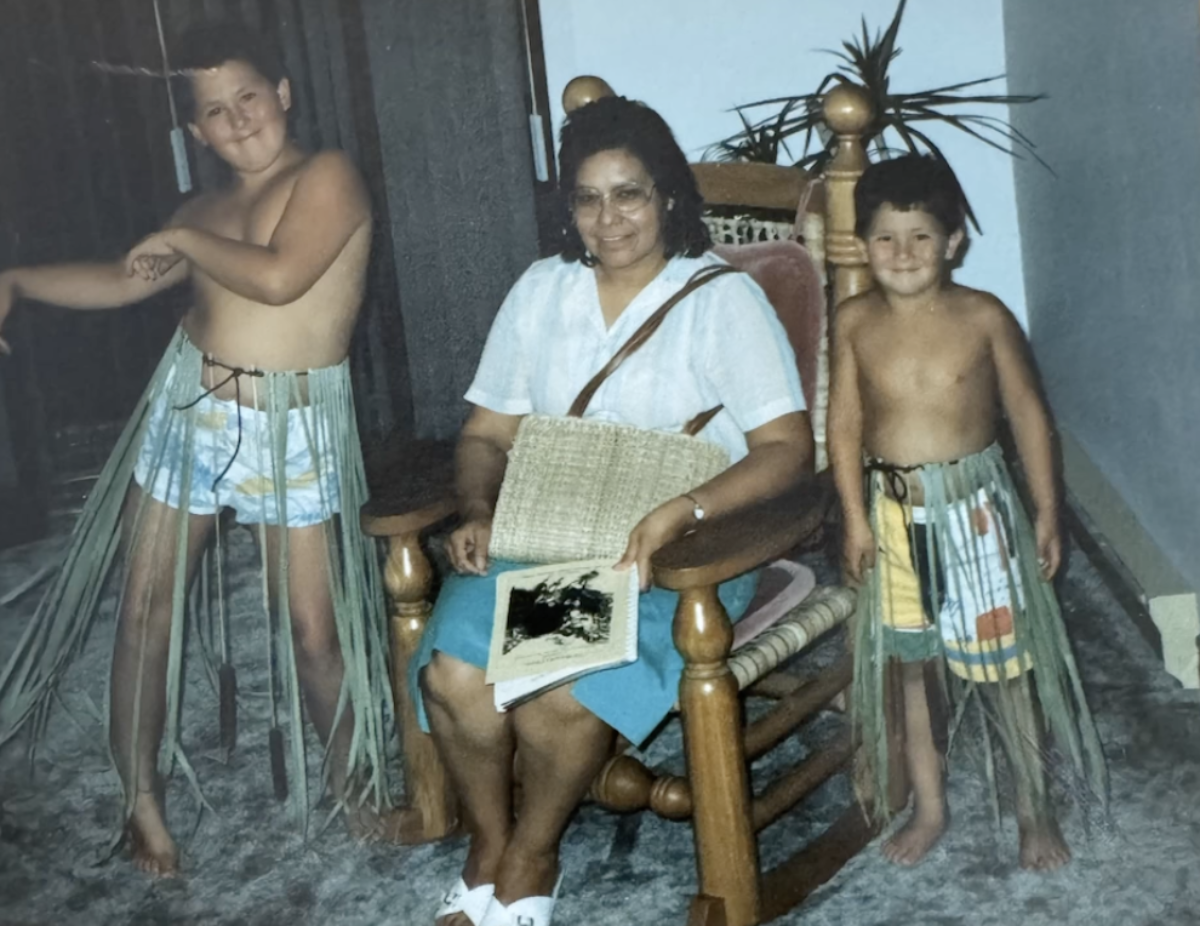
Kaniehtakeron Gilbert (right) and his brother Kaniatari:io Gilbert (left) in homemade grass skirts, as part of a send-off before Karihwenhawe’s trip to Hawaii. Courtesy Kaniehtakeron Gilbert
“She’s made a great impact,” said Emmy Lazore, also Karihwenhawe’s sister. “Everybody’s talking about her and missing her. People just really loved her. It’s not going to be the same, she was always there, recording every event.”
There were many chapters in Karihwenhawe’s colourful life.
She was instrumental at the beginning of the Kanien’kéha Ratiwennahní:rats Adult Immersion Program, serving as one of the programs first-ever teachers alongside Konwaronhiá:wi Annie Deer when it started in 2002.
One of her former students from the early days of the program, Kentiohkwarónkwas Margie Meloche, remembers how Karihwenhawe would wake up early each morning, driving from Akwesasne to Kahnawake to teach.
“I loved her, and how she could help us students to understand as second-language learners,” Meloche said.

After Meloche’s cohort graduated in 2004, she and some other community members continued to work with Karihwenhawe, themselves driving to Akwesasne at the end of a busy week. She still remembers those long weekends spent pouring over verb charts for double pronouns.

Karihwenhawe with one of the first immersion program pilot classes. Courtesy Terri Thomas
“She was always ready to help anyone with their language learning, and always welcoming new students,” Meloche said.
“I will never forget all that she taught me. She had an impact on my language learning, and as I continue today with my learning, I will remember her.”
Karihwenhawe was also a fierce advocate for early years immersion education, and former student Terri Thomas can remember her strong leadership in the classroom, where Karihwenhawe was her first and second grade teacher as part of a pilot project for the first immersion program in Kahnawake.
“I loved her. She was sweet and caring, but strong and stern when she needed to be,” Thomas said. “What amazed me was how she always remembered my Kanien’kéha name whenever I saw her as an adult, even after teaching hundreds if not thousands of people over her career.”
In the late 1980s, Karihwenhawe became the principal of Karonhianónhnha Tsi Ionterihwaienstáhkhwa, where generations of young Kahnawa’kehró:non took their first steps with the language.
Carol Boyer Jacobs, a former teacher at the school, said that Karihwenhawe impacted many children who passed through the school’s doors.
“Karihwenhawe’s legacy will continue through the many students she taught, carrying forth the language she worked so hard to preserve,” Jacobs said. “Her spirit lives on through the language she dedicated her life to and the countless individuals whose lives she changed.”


Jacobs has fond memories of Karihwenhawe outside of school too, during the two decades that Karihwenhawe spent as a nun with the Sisters of St. Ann. Jacobs recalls her younger days spent in the convent kitchen while Karihwenhawe, then Sister Dorothy, tutored her in algebra and geometry.
Her sisters, too, remember those convent years.
“I remember we would go see her in this big castle, I was only about 10 or 11, and we’d have to all dress up to go see her,” Emmy said.
“She’d be in that long, big, black robe, with her rosary around her. She made us pray and be nice, but she still laughed and joked with all of us.”
Her faith remained important to her, even after she left the nunnery and dedicated even more of her time to the language. She began to travel internationally, sharing and learning from other Indigenous communities near and far.
In 1987, she took a trip to Hawaii, where she spent three weeks studying a language immersion program taught at three schools in Honolulu, Kauai, and Maui.
After her visit, Hawaii’s education board adopted an early years immersion program similar to the Karonhianónhnha curriculum that Karihwenhawe had shared with them.
Kaniehtakeron Gilbert, a close family friend of Karihwenhawe, said that sharing her knowledge with other communities was part of her lifelong determination to promote Indigenous languages.
“She was such a great teacher that she was teaching other teachers how to teach their language. She just had such a grasp of things,” he said.
Sign up for email updates from The Eastern Door
He remembers her telling him about her Hawaii trip before she left, when he was just a little boy. He and his brother made grass skirts out of the bushes in the yard and performed a song which they sang in Kanien’kéha to wish her well on her journey, written by their father Tiorahkwáthe Gilbert.
“It was a nice little ‘see you later, take care, come back soon,’ a beautiful song,” Gilbert said.
To this day, he still remembers the tune and the words, reciting it to himself when he thinks of Karihwenhawe. He said that it’s imperative that speakers now don’t forget the impact that Karihwenhawe and other elders have had on their ability to learn and speak Kanien’kéha.
“People are going to realize that we lost a real strong speaker in Karihwenhawe. We owe a lot of our Kanien’kéha language to that lady,” he said. “We have to keep the legacy going, we have to find the passion they had for it in order to keep our language as long as possible. That’s the best way we can honour them and the work they did.”
Karihwenhawe is survived by her two brothers Joe and Angus Lazore in addition to Emmy and Grace, as well as her many other relations in Akwesasne, Kahnawake, and beyond.
Her sisters said they’ve never seen so many people gather than they did for Karihwenhawe during the weeks spent mourning her passing this month.
“People came from all over. Phone calls were coming in from everywhere, and the food was like a restaurant every day. People were coming and crying and grieving, it was something else,” Emmy said. “Even though we have a lot of death here, everyone is offering to help.”