Summit to mix research with memories
Courtesy Kahnawake Schools Diabetes Prevention Program
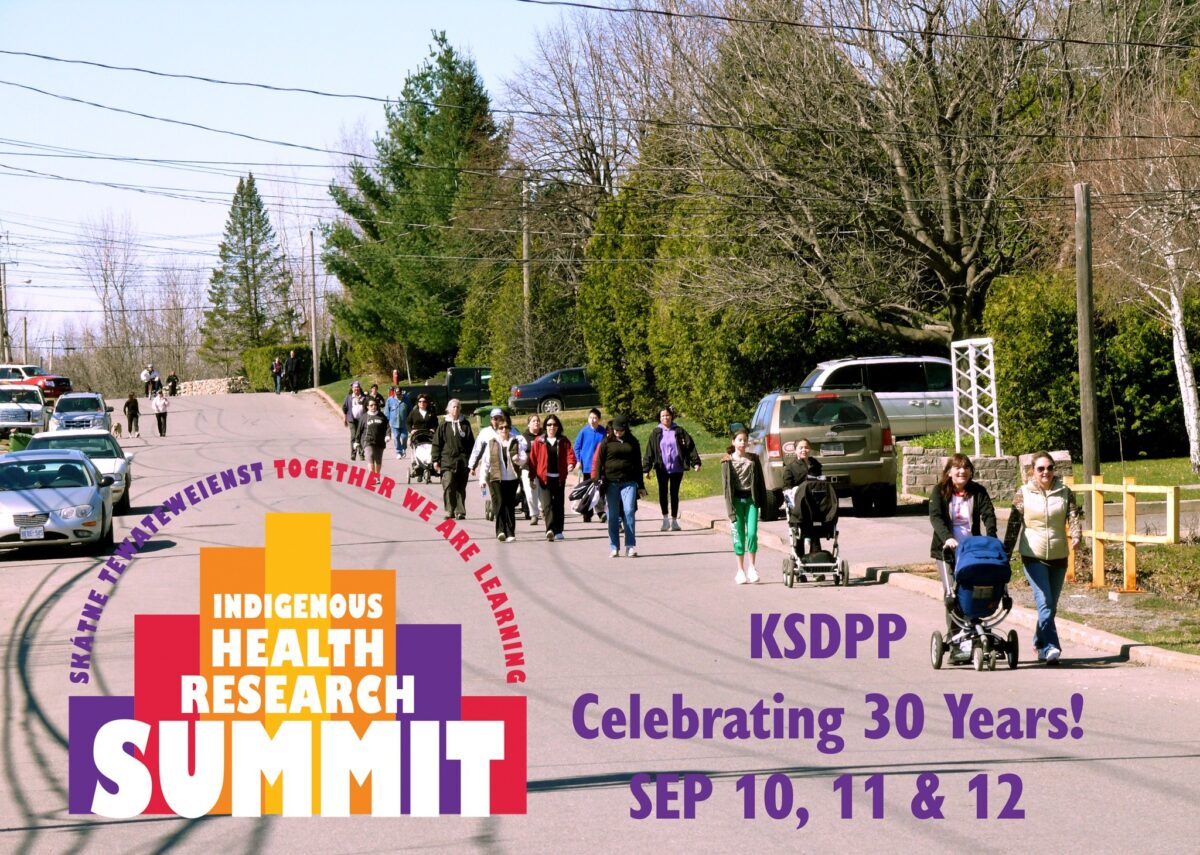
The Kahnawake Schools Diabetes Prevention Program will be hosting the Indigenous Health Research Summit (IHRS) from September 10-12 in a collaborative effort with the Tahatikonhsontóntie’ Quebec Network Environment for Indigenous Health Research (Qc-NEIHR).
The summit will take place in two locations: the Knights of Columbus will have interactive activity kiosks as well as an exhibit on the history of KSDPP with photographs and items from the organization’s 30-year history; while the Golden Age Club will be host to panels and presentations from researchers who have been involved with KSDPP - or still are - and other panelists from Kahnawake and outside of the community.
Presenters include Kahnawà:ke Shakotiia’takehnhas Community Services (KSCS) executive director Derek Montour, Indigenous Services Canada (ISC)’s senior manager of healthy living Mary Trifonopoulos - who did dietary intake studies with KSDPP as part of her Master’s degree, and Morgan Kahentonni Phillips, a research coordinator with Qc-NEIHR from Kahnawake.
For KSDPP program director Coreen Delormier, a succesful summit would be one that sees a lot of community members taking interest in what the program has to offer.
“I want people to come and see what KSDPP has done over the past 30 years, because a lot of people think we’re not here anymore,” said Delormier.
“Because of limited funding in the past, I don’t think we’ve ever done an event like this, so it really is something to be celebrated. It’s exciting that we’re able to do this now.”
This summit is one of several portions of a proposal to revitalize the program, and figure out where to go with it for the future - with research and training continuing to be a primary focus.

“The core has always been intervention, which is the program research, where we see if what we do is working, and training, which is about providing that opportunity for students to become researchers, but also to provide training to community frontline workers on how to promote healthy eating from an evidence-based approach, adapted to our community here. We’re always bringing the two together,” said Treena Delormier, KSDPP’s scientific director.
She herself was a researcher with KSDPP in the very early days of the program, when it had an initial three-year mandate, which rapidly was extended as the project gained momentum.
“Now I’m an academic researcher because of my involvement, and I credit KSDPP for where I am today,” said Treena.
Part of the initial momentum was the setting of their research code of ethics, which she said had laid the groundwork for community-based participatory research projects in Indigenous communities.
“That history of being one of the first ethical research guidelines is something that I didn’t even really realize the importance of when I was involved with that at first,” said Treena.
For her, a successful summit would be one where people involved with KSDPP over the years can see how far the program has come thanks to their help.
“It’s their efforts that made this a success,” said Treena.



Coreen, Treena’s sister, said that having the history of the program’s activities on display - Racers for Health, diabetes walks, presentations and work in schools in the community, and more - will serve to remind people of the program and get them interested in what they are up to now.
“A lot of people have been involved over the years and remember certain snippets, and by bringing that nostalgia out, there might be a renewed interest or get people more excited,” said Coreen.
To help with making the event attractive to the general public, KSDPP hired event planning consultancy firm PlanIt Consulting & Communications.
Charleen Schurman, founder of PlanIt, said that being involved with the summit is more than just another contract for her.
“It’s really special for me, because I was involved to a small degree when KSDPP first started, I actually was in attendance at their very first meeting,” said Schurman, who attended the event at the Lafleur Golf Club in 1994.
She said that the meeting then was the first time that many people, herself included, saw just how much of a problem Type 2 Diabetes was in the community - even today, while the number of new cases every year is steadily declining since 2001, it is still twice as high as in the rest of the province.
“For me, that was the beginning of opening my eyes to the problem of in our community,” she said.
Sign up for email updates from The Eastern Door
The opening ceremony on the morning of September 10 will feature a tobacco burning ceremony conducted by medical student Rotshennón:ni Two-Axe, who sits on KSDPP’s community advisory board.
“He’s the future of KSDPP, he’s going to hopefully be a part of taking it on into the future, and the fact that he’s going into a health career, and he practices his culture, I think was a very fitting choice,” said Schurman.