Reflecting on 150 years of the Indian Act
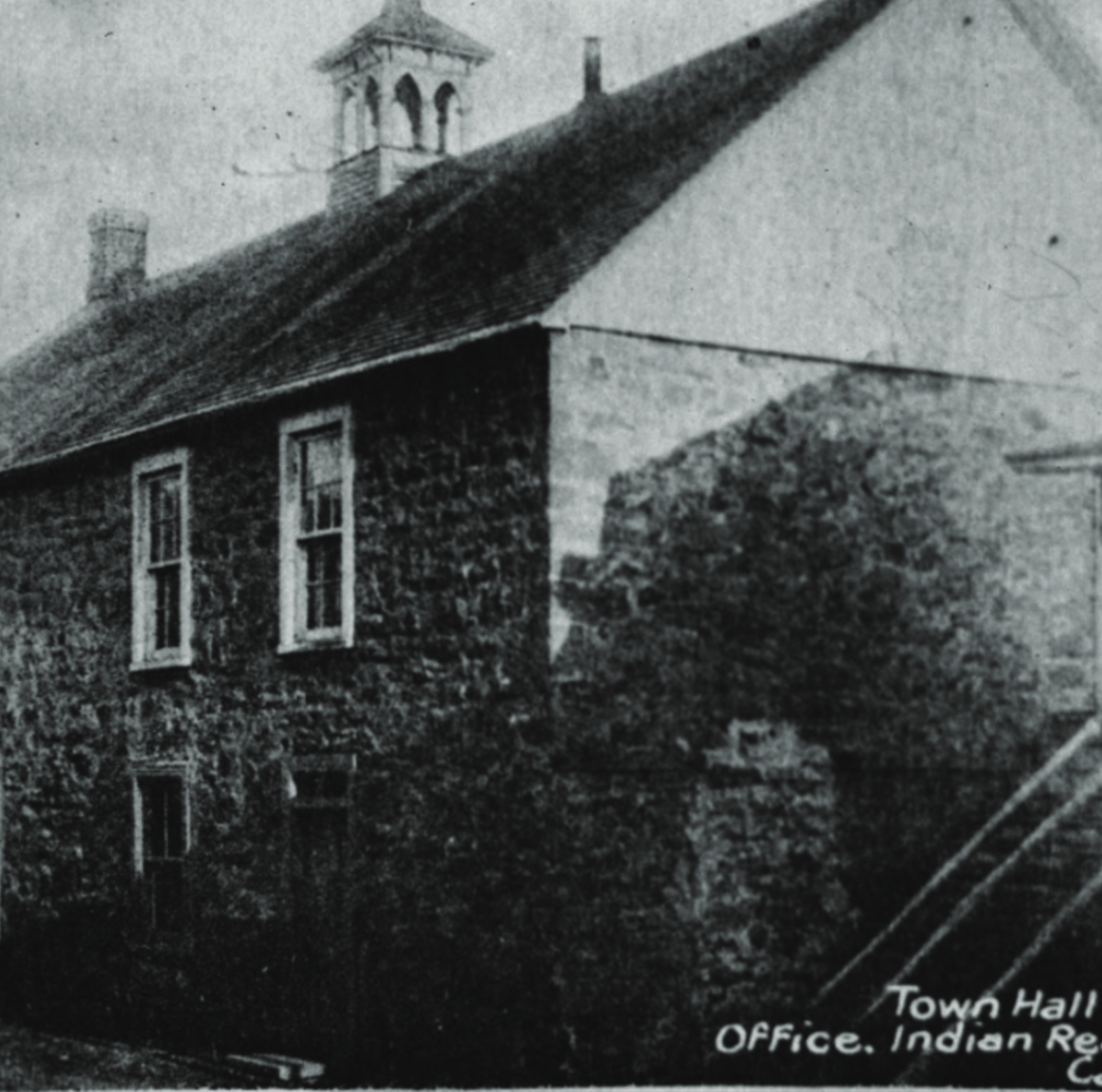
The former Indian Agent Office in Kahnawake. File photo
One hundred and fifty years ago, the Indian Act was introduced. Today, many are wondering how many more anniversaries will be marked before it’s gone.
“We know from our own experience that the Indian Act system has been divisive in the community. It’s proven to be, in spite of whatever motivations people had in thinking it would advance a better relationship with the government, a tool for the imposition of the Canadian government’s agenda,” said Gerald Taiaiake Alfred. “At that time when it came in, the agenda was basically assimilation. And it was the mechanism to put in place whatever policies and structures they wanted in the community.”
To Alfred, a historian who also coordinates the Kahnawake Governance Project, the Indian Act and its legacy is an ongoing way for the federal government to control Indigenous communities.
“Over the years it’s evolved from assimilation, to municipalization, to their vision of self-government, to whatever vision they have of self-determination based on UNDRIP (United Nations Declaration on the Rights of Indigenous Peoples), it’s always a tool for the Canadian government’s intentions,” he said. “It’s something that’s an obstacle to the expression of our vision of what governance is, and I think it took our people a very long time to realize that.”
Alfred said that while the band system is something that communities have engaged with, Kahnawake has expressed a desire to shift away from the Indian Act, and back towards traditional governance. That’s a mission that he wants to enact with the Kahnawake Governance Project, which has a mandate to restore traditional government in Kahnawake through creating a shared community vision.

“The historical context was that the government at the time was refusing to recognize the traditional form of government at the time, they were refusing to show our governing system the respect they had in previous decades,” he said.
He said that 150 years ago, the provisions of the Indian Act would seem like a way to build a relationship with the federal government that could protect communities - even if that’s not what the Act has done for communities.
“This system came in and our people grasped onto it as the way to communicate with and relate to the government. I think within weeks, and certainly in the first few years, people came to realize that wasn’t what was promised to them,” he said. “For me, 150 years is symbolic of how long we’ve been trying to get away from that system, which is set up to control us, rather than reflect our right to self-determination.”
Kanehsata’kehró:non Mary Hannaburg has listened to various governments debate the Indian Act throughout her career of political advocacy, including in her former role as vice-president of Quebec Native Women (QNW).
“How can something as oppressive and discriminatory as the Indian Act last all this time?” Hannaburg said. “How have they gotten away with it?”






Hannaburg said that the 150-year legacy of the Act has left First Nations reliant on the federal government.
“It’s the only written agreement that keeps the Crown having a fiduciary responsibility and relationship to us,” she said. “I don’t celebrate 150 years. It’s been assimilation policy since the beginning.”
She said that though there’s been amendments over the years - the most recent effort to amend it is Bill S-2, which is currently in the House of Commons and would remove the “second-generation cut-off” rule - the Indian Act remains a way for the government to control Indigenous people. She remains especially concerned about how the Act continues to dictate who is and isn’t Indigenous in the eyes of Canada.
“If we don’t stop it and continue to allow it, they’re going to extinguish us as people, we’re going to be extinct,” she said. “They’re still making it difficult for us to have full equality for our families.”
She agrees with Alfred’s categorization that the Act has “institutionalized divisions in our communities.”
Sign up for email updates from The Eastern Door
“It was designed for that,” she said. “It’s a controlling mechanism, and the whole idea is to destabilize our nations and to render inequality amongst the people. And they’ve managed to do it.”
Alfred said that there’s only one path forward, and that’s to push ahead with a return to traditional governance that can replace the Indian Act system.
He said he remains hopeful about that future, particularly with the success of the governance project and the acceptance of the MCK in 2024 that the organization become an administrative instead of political entity, a goal he believes can be reached in the coming years.
“Until then, the Canadian government has an excuse to keep saying the Indian Act has to stay in place,” he said. “I’m optimistic, as long as there’s unity in the community and there’s a stable structure that’s agreed upon by the collective.”