Rammed earth project advancing

A mockup of a rammed earth building, provided to The Pines Reporter in 2025, that could soon come to Kanesatake. Courtesy Amy Beauvais
The Housing Initiative Team foresees breaking ground on the first rammed earth triplex in Kanesatake in spring 2026, according to an update provided to The Eastern Door by Mohawk Council of Kanesatake (MCK) caretaker chief Amy Beauvais.
The aim is to deliver three triplexes by the end of next summer, the update said, built by community members who will be receiving training in the trade, with an eye to a future Red Seal program.
According to Beauvais, the team is in the midst of finishing up a feasibility study that was required by a switch to a stream of funding for innovative projects because of the unusual building material - rammed earth - which was chosen for a number of advantages it offers.
“The method uses compacted natural materials to create durable, energy-efficient walls with exceptional thermal performance and minimal environmental impact,” said the update Beauvais provided from the housing team. The soils will be locally-sourced.
The project, which was created to provide a source of social housing, was funded to the tune of $1.4 million as of this time last year, and Beauvais said this funding has grown with new sources, although she could not provide an exact figure by deadline.
“The triplexes will provide much-needed housing while demonstrating how Indigenous communities can lead the transition toward regenerative, low-carbon construction in Canada,” the update read, adding that the design will ensure long-term affordability and resilience.
SIREWALL and Terre Pise Quebec - builders with experience in rammed earth - will be working alongside participants on the project.
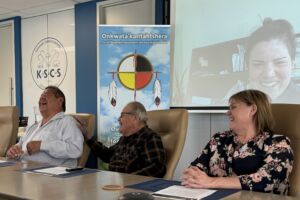
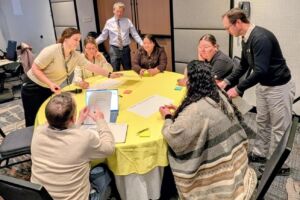
Training has already started, with a workshop two weeks ago giving people interested in the technique a chance to learn more and even to get their hands dirty.
A group of 20 took part, with around 10 from Kanesatake. Among those who participated were members of sister community Kahnawake’s Housing Unit, including housing inspector Jorden Diabo.
“It was very informative,” Diabo said. He took part in the workshop because it was an opportunity to learn about the technique.
“There’s rammed earth, inflated concrete, the classic stick frame, which everybody knows about. It’s good to know that there are other methods,” he said.
“What I see is it could be utilized in a way that’s beneficial.”
Members of the community of Listiguj also took part, according to Beauvais.
“We had a lot of fun,” said Beauvais. “It was that community feeling that I’ve been searching for where people are coming together for a common goal and that Native humour and laughing together.”
The initial triplex is viewed as a prototype for future community housing, according to the update provided.
Sign up for email updates from The Eastern Door
Marcus Bankuti, Local Journalism Initiative Reporter