Probation agreement affirmed
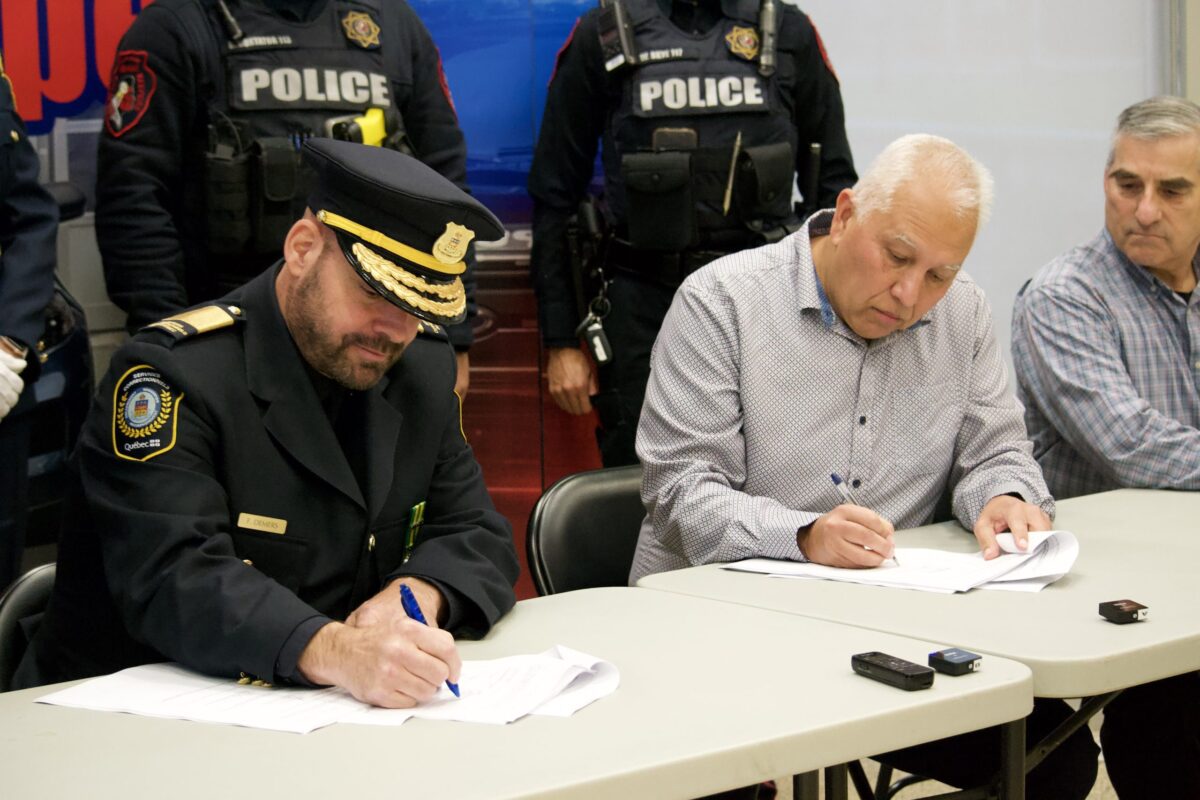
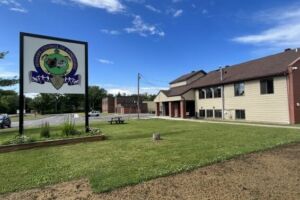
A signing ceremony was hosted at the Kahnawake Peacekeepers’ station last Friday as part of a celebration of a historic probation agreement signed in March between the Mohawk Council of Kahnawake (MCK) and the province.
Kahnawake is now the first ever First Nation in Quebec to gain jurisdiction over the supervision of locals facing court-mandated probation or conditional sentence orders. That means Kahnawake’s assigned probation officer is now a local, rather than being an outsider employed by Quebec’s correctional system, as was the case before.
“We all know that incarceration is the end game of a pre-existing problem. So whether it’s addiction services, family support, or work skills, we have a special system here that’ll definitely support the offender into becoming a successful member of our community,” said Ryan Montour, the Council chief who leads the public safety file.
“We have a 90 percent reintegration success rate on the federal side, and we’re hoping to mirror that on the provincial side,” he told those gathered. “We want to keep our people out of cages, that’s really the reason behind this.”
The MCK has had an equivalent agreement in place with the Canadian correctional system since 2016, but up until this spring couldn’t provide the same probation services to provincial offenders from the community, which includes those sentenced to prison terms under two years.
“We are blazing that trail to ensure that the services that are provided to our community are culturally appropriate, and that we are taking more control and more responsibility for Kahnawa’kehró:non in ensuring that the services provided to them are of the utmost quality,” said Lloyd Phillips, commissioner of Public Safety, who also turned out for the signing ceremony.

“As we know, issues between Kahnawake and Quebec are contentious at times, but here’s a collaboration where the benefits fall with ensuring the security of our community, while also ensuring the support for individuals who are incarcerated and leaving these institutions,” he added. “This is the beginning of our relationship that we’re continuing to build forward.”
The province has committed $108,000 in funding over the next two years to support the initiative. It covers salary and travel-related expenses.
“We always try to ensure that the services offered through corrections services throughout the province are adapted to those that rely on them,” François Demers, Quebec’s acting deputy minister of corrections, told The Eastern Door. “Now we’re confident that the services that’ll be provided to the people of Kahnawake will be adapted in line with their reality.”
He added discussions are also underway with Inuit and Cree communities in Quebec to sign similar probation agreements, mentioning the Innu community of Uashat near Sept-Iles.
“For us it’s really important that we work within those communities to develop these kinds of partnerships,” he said.
Clients officially transferred over
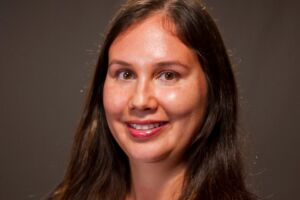

After beginning training in April, as of this June Petal McComber has officially taken over the clientele of Martine Lanthier, the former probation officer assigned to Kahnawake.
“I love my new role because I’m helping our community,” she told The Eastern Door after the signing ceremony. “Whether it’s a male or a female, that’s someone’s son or daughter, that’s someone’s brother or sister, that’s someone’s father or mother, so that’s the way I approach it. I don’t approach them as a former inmate. They’re my client.”
She’s now overseeing 18 locals, which includes those either on conditional sentence orders or court-mandated probation. Another seven are currently in the process of serving their community service hours, she said.
Each will be able to access various services tailored to their needs from Kahnawà:ke Shakotiia’takehnhas Community Services (KSCS) - services that were also available prior to the signing of the probation agreement in March, she clarified.
“They may have a worker through KSCS, or through the Family Wellness Center,” she said, which is also run through KSCS. “They may be in one of the groups from KSCS.”
Montour emphasized the approach taken will be holistic.
Sign up for email updates from The Eastern Door
“It could mean reconnecting the individual with traditional medicine, because obviously, Quebec would not know anything about traditional medicine, right?” he said at the signing ceremony. “It’s very powerful in the healing process.”
He said there’s also the possibility of holding reconnection ceremonies to support healing within families.
“There’s so many opportunities here,” he said. “We have a long history of trauma, but we do provide a lot more support services for both the family and incarcerated individuals, so that makes a big difference in the overall successful reintegration.”
The other perk is that KSCS can get these clients set up much quicker with psychiatrists and psychologists, whereas they would otherwise have to wait months on provincial waiting lists.