North Creek work kicking off soon
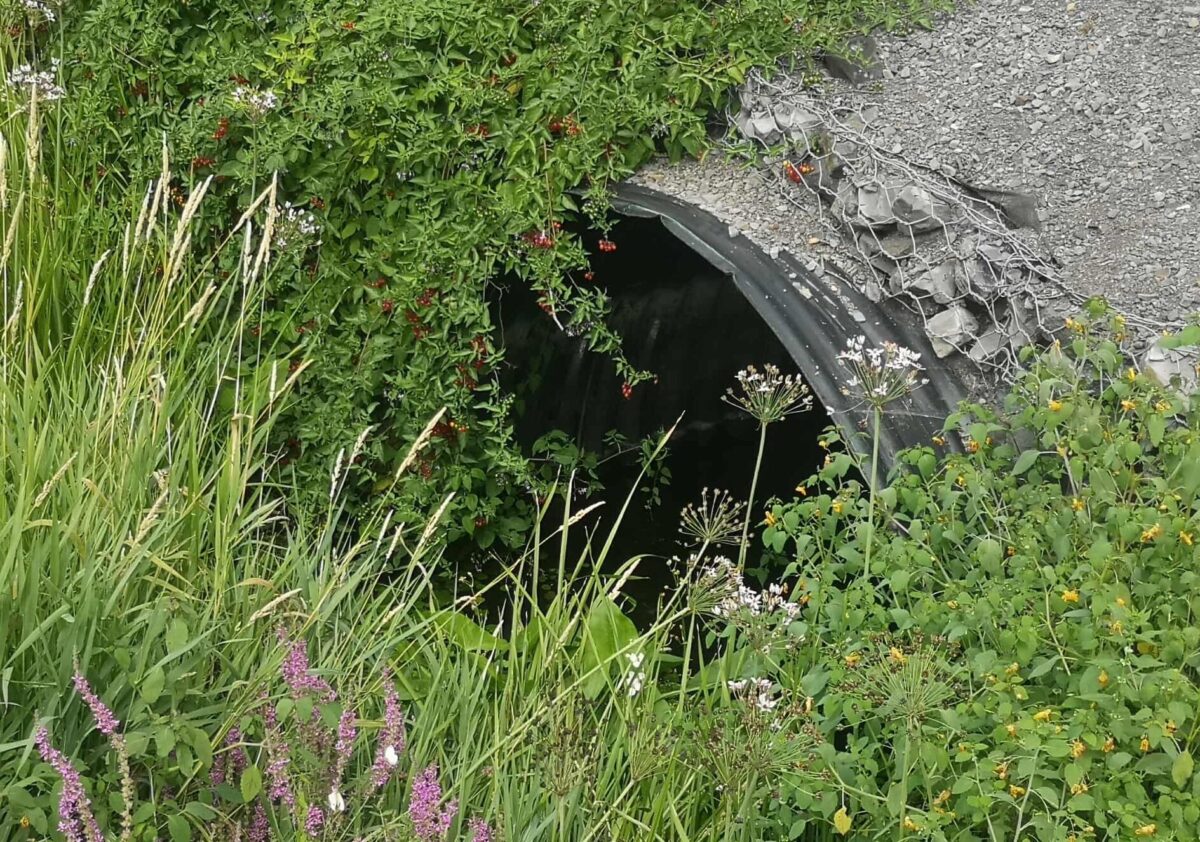
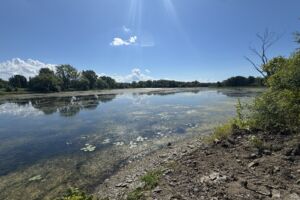
Water has a lot of trouble flowing in many places in the creek, due to factors like shallowness and the roots of invasive species such as phragmites stopping the current. Olivier Cadotte The Eastern Door
After years of planning and collecting community feedback, the North Creek Restoration project is finally set to begin work in earnest in the coming weeks and going until November 2025.
The goals are to improve water flow and decrease the risk of flooding, protect and improve the existing natural habitats, and naturalize the channel and banks to make them better for wildlife and community members alike.
Those goals come from the collection of feedback by the Kahnawake Environment Protection Office (KEPO) in the past years.
Tyler Moulton, KEPO’s environmental projects coordinator of aquatic habitats, said that while they can’t bring the creek back to what it was before all the development work that was part of what caused the creek to be in its current state, they can still dramatically improve the situation in the six or so weeks they have.
“We can probably bring it back to something a little bit closer to that,” said Moulton of the historical state of the creek, which KEPO learned of from archival documents and speaking with elders in the community.
Returning it to its original state would entail massive amounts of disruption to traffic and people living around the creek, as well as much higher costs.
Instead, KEPO intends to work with what they have and, in some cases, even improve the creek, Moulton said.

“Some changes that maybe weren’t there originally are going to help the creek to become a more natural system,” said Moulton.
The two channel culverts will be replaced with single channel ones, for example, to improve flow and make it easier for fish to navigate.
The creek bed will be reshaped to better improve water flow, providing a low-flow channel as well as different points of riffle and pools - shallow and deep water - to better move water and sediment even when the level is low, helping to prevent the current stagnation problem.
The banks will be made less steep, and efforts will be made to alleviate the current overwhelming presence of invasive species on the banks and on the creek bed, particularly phragmites, an extremely common reed grass that thrives in standing water. The roots oftentimes create standing water by blocking the flow.
Better water flow will make it harder for phragmites to thrive, as they don’t root well in current. That does not mean it is easy to eradicate, though.
“It’s going to start coming back, no matter what we do. So there just is going to be some more ongoing maintenance,” said Moulton.
“All of these things should improve the flow of the creek, so that it flows better during drought periods like now, but it should also reduce some of the flooding,” said Moulton.

Work will be started downstream and done in 50-100-yard stretches, one side of the creek at a time, to make sure that as creek water flow increases, where it flows is ready for an increase in volume, Moulton said.
“If you do a bunch of upstream work and make the flow nice, but it doesn’t happen downstream, then it’s going to fill in those nicely made channels upstream,” said Moulton.
Sediment disruption will be controlled, and before work is started in any portion, there will be checks to see if any animals need to be removed safely first.
The project is estimated to cost between $850,000 and $1,000,000, with funding coming from Fisheries and Oceans Canada’s Aquatic Ecosystem Restoration Fund.
The creek being improved is not just a matter of having a healthy environment, but also one of historical importance, said Mohawk Council of Kahnawake (MCK) council chief Stephen McComber, one of the chiefs on the environment portfolio.
“One of my elders told me many years ago that the people there along the creek area, they dug that themselves,” said McComber.
“After all these years, I know people try to upkeep it the best they can. But sometimes people should know a little bit of its history at the same time, so it gives them more sense of feeling proud to maintain it.”
Sign up for email updates from The Eastern Door
Although KEPO’s social media posts said that work on the restoration would begin in the month of August, Moulton said it will actually begin in September due to the work being done for another longstanding project, the removal of a leftover access road from the construction of Tekakwitha Island at the bottom of Recreation Bay.
That work was first scheduled to be done in the fall 2023, but Moulton said that contract issues delayed the work until now.
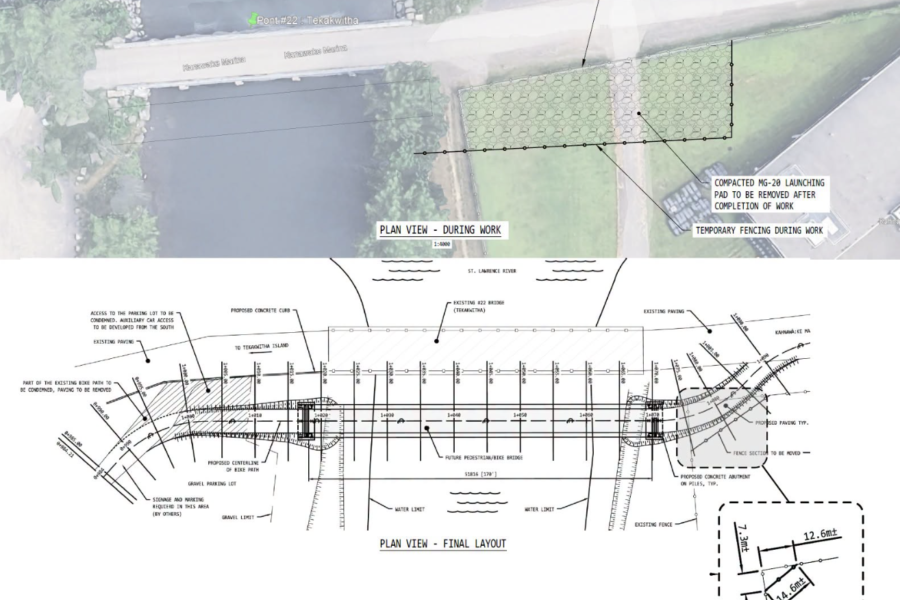
Excavators will be floated onto barges to remove the roadbed from the bottom of the bay, and instead of filling the space left by the removal, the sedimentation process will be allowed to naturally occur while KEPO will take measures to encourage the growth of local aquatic plant species in the area.