Nine take part in wheelchair challenge
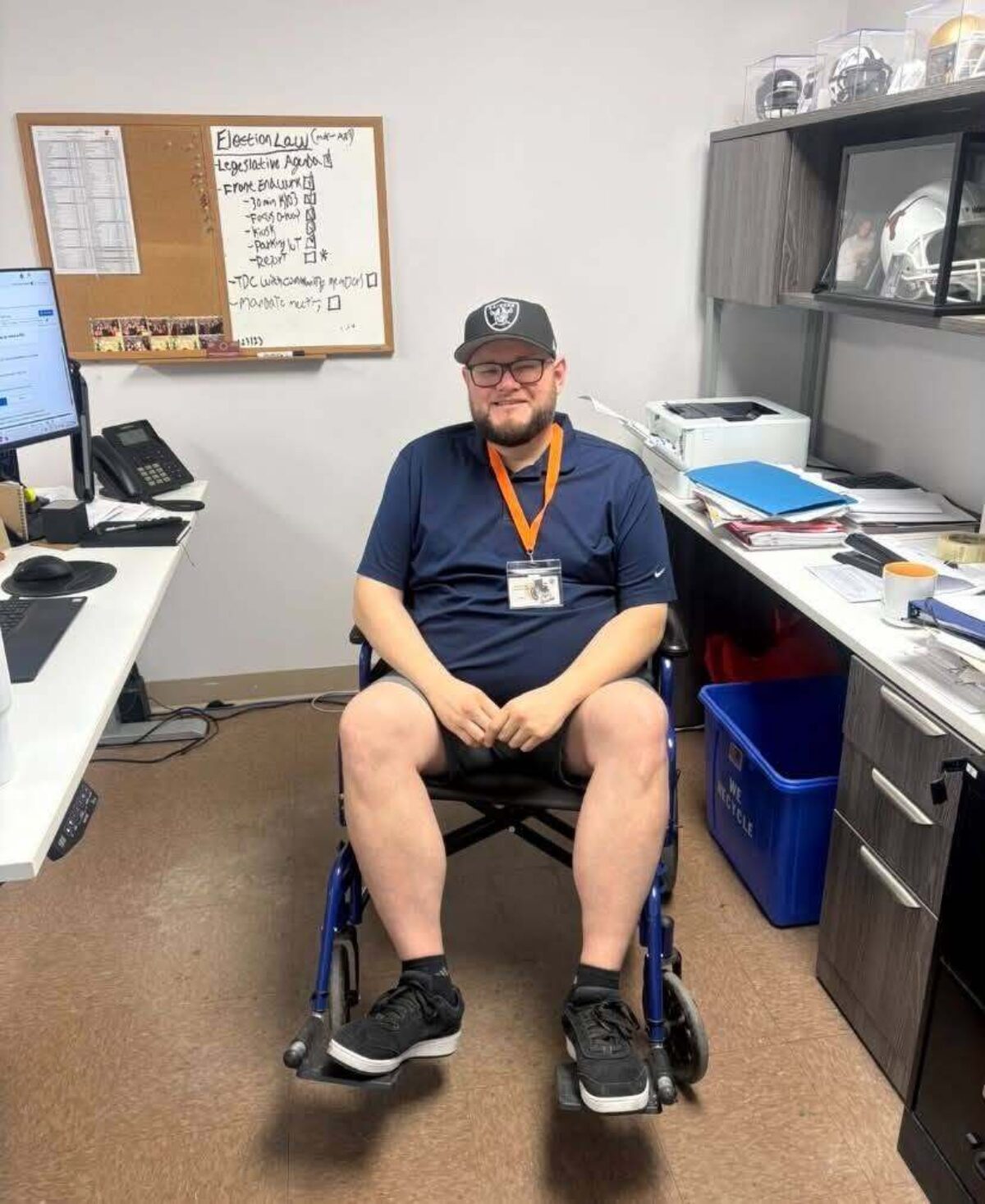
COURTESY CONNECTING HORIZONS
As part of National Accessibility Week, nine people who work in the community took part in Connecting Horizons’ third annual Office Wheelchair Challenge, to experience a day as someone with reduced mobility and to see just how accessible their place of work is.
Here is what seven of the participants had to say about their experiences.
Tonya Perron
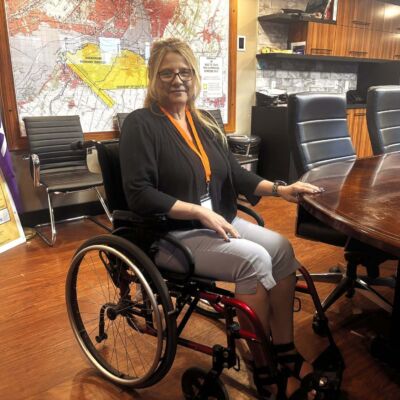
The MCK chief said that it is important to understand some of the challenges people with mobility issues face, especially in an environment that is not designed with them in mind.
“What better way to gain this understanding than to put yourself in that seat for a day,” said Perron.
The MCK building is not “user-friendly,” Perron said. Because of a lack of elevator access, Perron had to work in a conference room in the basement instead of her office. Opening doors alone was a challenge because of a lack of push bars or buttons, and there were no accessible bathrooms.
“If I was not able to actually stand up, I would have needed someone to assist me,” said Perron.
“I really wanted to maintain my independence and dignity, but realized that this would have been near to impossible to do in this instance.”
She said the experience was worthwhile to see how much work is still needed to make the community more accessible.
Roiatate Horn
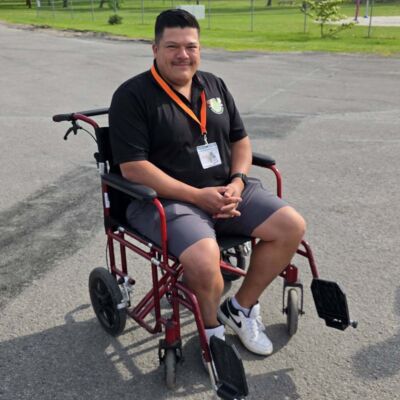
The director of the Sports and Recreation Unit (SRU) said that their partnership with Connecting Horizons and the status of the Sports Complex as a community space for everyone motivated his willingness to do the challenge.
“I wanted to experience what community members with limited mobility go through when visiting our facility,” said Horn.
“I learned about the realities that people with limited mobility live every day, and it was concerning as director that our building is not equipped to truly welcome everyone.”

In particular, he said that the washrooms, despite being marked as accessible, were actually very difficult to use.
He encouraged others in the community to take part in the challenge to see how their community spaces could be improved as well and see how others have to navigate spaces in Kahnawake.
Lindsay Jacobs
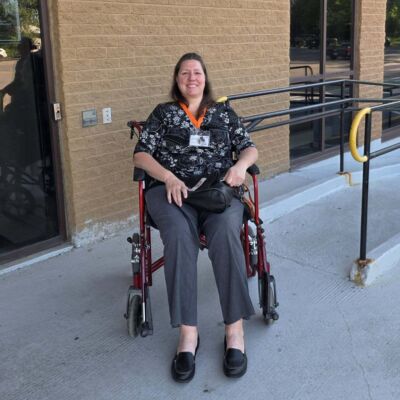
“I wanted to experience firsthand some of the challenges that wheelchair users face and develop a deeper appreciation for some of my family members’ experiences every day,” said Jacobs.
During her workday at the Caisse Desjardins Kahnawake, Jacobs faced a few challenges in accessibility.
“I encountered a doorway with a raised ledge that required significant force to get my wheelchair over it,” said Jacobs.
“There was also a public space that I tried to access during lunchtime that had a ramp. However, there was no railing to help get up the ramp, making it impossible for me to access without help.”
Jacobs said the challenge made her more aware of challenges wheelchair users face that she otherwise would have never imagined - making space for the footrests and calculating the turn radius of the chair, for example.
She said others should take the challenge to become more aware of how spaces in the community could be improved for wheelchair users.
Kayla Cross
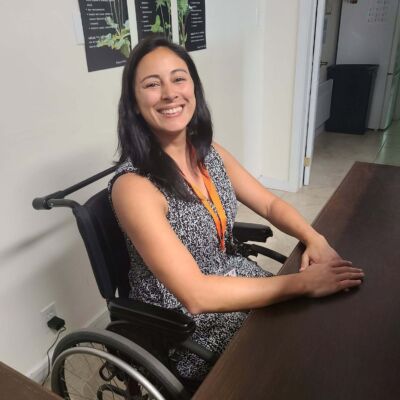
Kahnawake Collective Impact’s office manager took on the challenge to show support for Connecting Horizons.
She said the challenge was eye-opening for her.

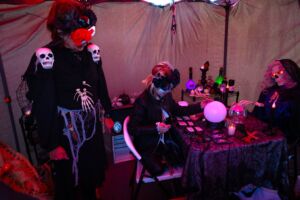
“I experienced a nano-fraction of what so many experience, and I am reminded of what I should appreciate: the freedoms of movement that I have every day. You never know when your world can flip upside down,” said Cross.
Everyday occurrences proved challenging for Cross: getting through the door, having to plan for multiple trips to and from her workspace, reaching a glass, and feeling the physical toll of sitting for long periods in the same position.
“Doing this challenge and having a small understanding of what it feels like builds community awareness and understanding – and, really, empathy for one another,” said Cross.
Scott Berwick
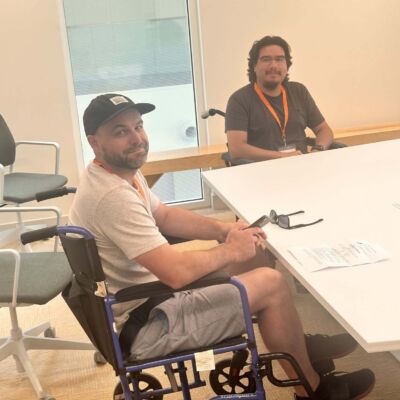
Berwick, the manager of Kanien’keháka Onkwawén:na Raotitióhkwa Language and Cultural Center’s Arts & Archives Department, said he wanted to see how accessible Kanatahkwèn:ke really was and experience what a day was like in a wheelchair.
Berwick said that trips to the washroom proved challenging, as did having to ask for help and not feeling like a burden on others.
“People should do this challenge, because it will expand their minds and give a better understanding of how challenging it can be living life in a wheelchair,” said Berwick.
Jordan Lahmy
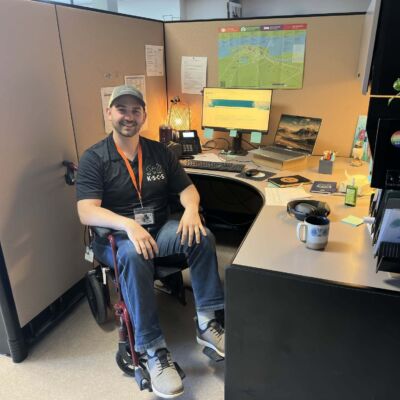
The Kahnawà:ke Shakotiia’takéhnhas Community Services (KSCS) youth protection caseworker said that the opportunity to actively live out someone else’s life experiences made the challenge worth doing for him.
He quickly learned how much of his day would be affected by being in the chair.
“My whole perception, from the moment I sat in the chair, was changed towards being able to get around places and reaching stuff. It definitely gave me a whole new appreciation for people who don’t get to walk back up by the end of the day,” said Lahmy.
He appreciated how willing those around him were to help him, and he said that the experience really changed his worldview.
Sign up for email updates from The Eastern Door
“I now really ‘get’ why having ramps is important, why we have an accessible bathroom, why smooth floors is a must. No one plans to be in a wheelchair, but wouldn’t it be nice to have your spaces make your life a bit easier when it’s already hard enough?” said Lahmy.
Sarah Gaudio
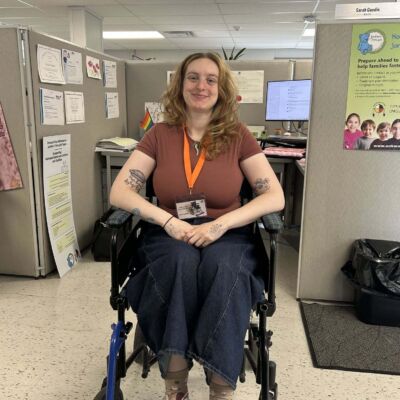
Gaudio, who is a communications staff member at Onkwata’karitáhtshera, said the challenge allowed her to see her workspace from a different perspective and identify challenges that those without mobility issues would never think of.
“Experiencing these challenges firsthand can increase awareness of accessibility issues and encourage people to think about how buildings, workplaces, and public spaces can be made more inclusive,” said Gaudio.
“It provides a meaningful opportunity to better understand the everyday realities faced by wheelchair users.”
Accessing the trailer that serves as her workplace was difficult: garbage blocked the ramp; the ramp itself was too steep for her; the front door opens outwards, meaning she ran out of room to open it fully; the inside is narrow and caused multiple bumps into walls and furniture; and, like many, she found using the washroom very challenging.
She said that workers in the community should take part in the challenge to help identify barriers and create welcoming environments for all.
Alan John Rice, the Mohawk Council of Kahnawake’s executive operations officer, did not respond by deadline.
Tahothorátie’ Cross said he requested a do-over since he could not get the full experience because of problems with his chair.