New van meets you where you’re at
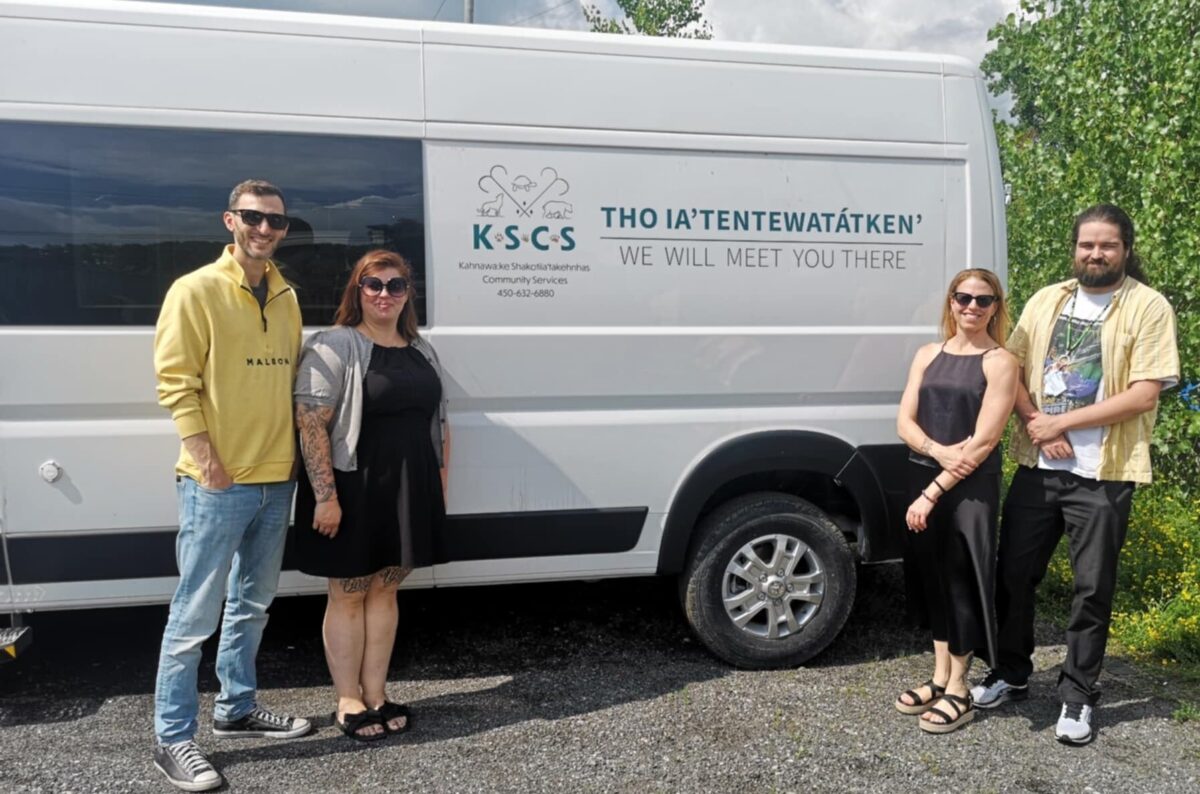
From left to right: Jason Stein, addictions response worker; Lilly Nicole, manager of mental wellness and addictions; Nancy Worth, clinical supervisor of response services; and Jo Roy, addictions response worker - all members of the KSCS team involved in the creation of a new mobile outreach unit. Olivier Cadotte The Eastern Door
A brand-new mobile outreach service is on the streets of Kahnawake, thanks to a more than $200,000 grant secured by Kahnawà:ke Shakotiia’takéhnhas Community Services (KSCS) that covered the purchase of a van to better support community needs.
“It’s about meeting folks in the community, folks who might not be as comfortable coming through the main building or one of our services buildings for example, or might not have the access to come there,” said Jo Roy, an addictions response worker at KSCS. “We want to support them by meeting them where they’re at.”
That concept is what gave the mobile outreach unit its name - Tho ia’tentewatátken’, which means “We will meet you there” in Kanien’kéha.
The funding for the van, which totals $211,000, comes from Health Canada’s Emergency Treatment Fund, an initiative which was launched in October 2024 to support rapid responses to the overdose crisis faced by local communities.
A spokesperson for Health Canada explained that the 2024 federal budget committed $150 million over three years for the Emergency Treatment Fund, and there will be another call for proposals in Spring 2026, with the maximum amount of funding per recipient being $2 million per fiscal year.

“Funding will address urgent and immediate needs, as defined by the communities, to bolster local capacity and provide access to culturally appropriate, trauma-informed, and evidence-based programs and services,” Health Canada wrote in an email to The Eastern Door.
Roy said that KSCS had been working on the concept of an outreach van for some time, and already had plans for how they could get the inside of a van custom-built to satisfy their needs.
The inside of the vehicle is fitted with visible storage so that the team can have easy access to items like harm reduction supplies and educational resources, and it’s envisioned that the van could be used for multiple types of outreach, including attending KSCS events, supporting individuals who might be unable to attend KSCS buildings in person themselves, or assisting in on-the-ground outreach scenarios.
“Let’s say, for example, I know a lot of youth like to have their parties on the island. Imagine the van going there on a Friday night giving out water, talking to the youth, and literally meeting people where they’re at,” Roy said.
“This is just an example of how it could be used to build those connections, build those relationships, so that the youth in that example would know who to reach out to, whether it’s the van or other services at KSCS.”


The service is going to be complemented by wraparound services that KSCS offers - it won’t be replacing any of the organization’s current offerings, instead enhancing what is already there.
An example of complimentary support in emergency situations could include overdose settings, Roy said.
“Let’s say there’s an overdose in the community, and the ambulance and the Peacekeepers go, and they’re treating the person who overdosed. Let’s say there’s family members or friends that either were using or were around the person at the time, the van could show up and do outreach there,” Roy said. “We could do intakes, we could complement the on-call social worker that we have after hours as well. It’s really a complimentary service to fill in those gaps.”
The unit will be used by multiple teams at KSCS, but will be managed under Family Services, though Roy said they expect teams like prevention, addictions, mental health support, and post-majority teams to benefit from using the van.
“I think prevention and addictions will probably get the most use out of it, but if any other service has a particular pitch about how the van could support their service delivery, we’d be open to supporting them where we can - and meeting them where they’re at,” Roy said.
Sign up for email updates from The Eastern Door