Child welfare advocates connect in Glasgow
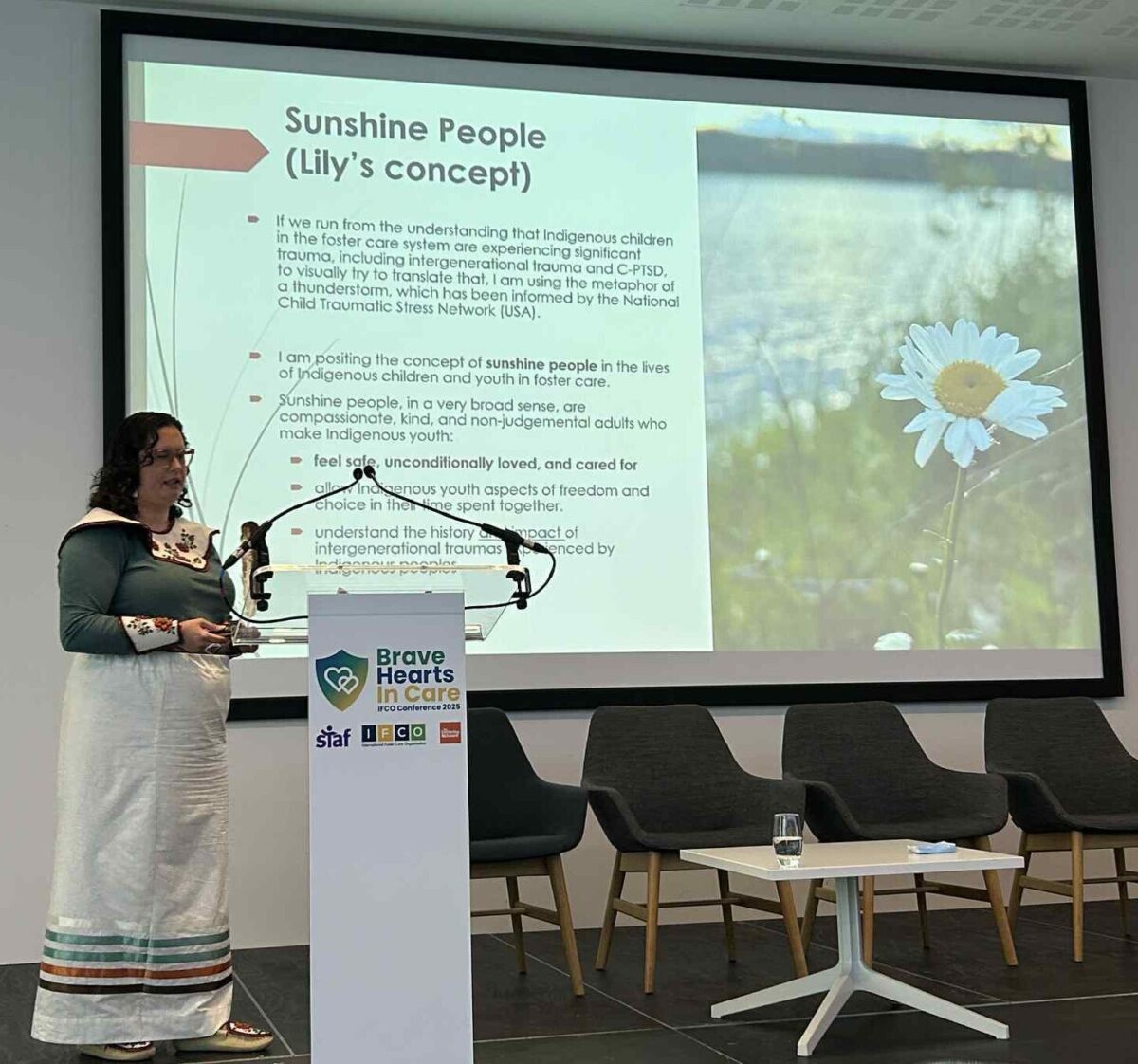
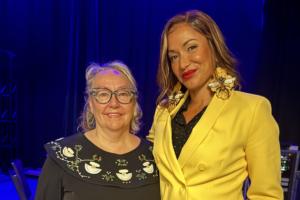
Deer wore beadwork she has been working on for the past five years as well as a ribbon skirt made with her friend at the International Foster Care Organisation conference in Glasgow last month. Courtesy Lily Ieroniawákon Deer
When Lily Ieroniawákon Deer was at her lowest points dealing with the trauma she experienced growing up in the child welfare system, there was one thing that made things easier: sunshine people.
“Sunshine people for me were people who weren’t my direct caregivers but were people who treated me with respect, who could take the weight of the world off your shoulders,” Deer said. “It was really about providing the sense of safety, and of support.”
Throughout the past several years, Deer has used her own experience in the system as a jumping off point to understand more about the history of child welfare in Canada, and the structures that continue to cause harm to specifically Indigenous youth.
Her work led her to Glasgow, Scotland, last month, where she shared her presentation, “On Creating More Sunshine People in the Lives of Indigenous Children in Foster Care,” with fellow attendees at the International Foster Care Organisation’s annual conference, which was focused on the theme “Brave Hearts in Care: Building Trust, Confidence, and Connections.”
“I was really nervous, because I didn’t know how the ideas of colonialism and intergenerational trauma with Indigenous people would be received over in the UK,” Deer said. “But they were really welcoming, they were very receptive. There was a lot of nods, there was also a lot of shock.”
Deer had applied to present her work at the conference earlier this year and received the news that she was accepted in early March. Getting the news that she’d been selected as a presenter was validating, she said.

“It was really exciting, I was being allowed to extend my thoughts even deeper,” Deer said.
To prepare, Deer practiced with friends and family, developing her presentation to include additional context for non-Indigenous attendees.
“This is an international conference, it’s not Indigenous specific, so I felt like I really had to go in and explain colonialism in Canada and the impact it’s had on our people before I could even talk about the concept of sunshine people and why they’re so important for the specific population of Indigenous youth in care,” she said. “It was nerve-wracking to have that kind of pressure.”
Deer shared her concept of sunshine people with attendees, explaining why it’s crucial for Indigenous youth to have people advocating for them who make them feel safe and unconditionally loved, who simultaneously allow those youth freedom and choice in their time spent together while understanding the history and impact of intergenerational trauma on their lives.
After the presentation, attendees came up to connect with Deer and give positive feedback on her research. She was especially happy to hear from Brenda Matthews, one of the keynote speakers, who is a Wiradjuri author and filmmaker who focuses on the forced removal of Indigenous children from their families in Australia.
“There was a sense of shared understanding of our histories between Canada and Australia with the colonization of Indigenous people, so that was really, really cool,” Deer said.



Deer met other Onkwehón:we too, including from New Zealand, and she said it was a unique experience to be able to share her work with advocates from around the world.
“It was really well received, and a lot of people really enjoyed the fact that I was sharing my lived experience and the fact that I was contributing this concept of sunshine people, they felt that was heartwarming.”
She also had the opportunity to learn from other attendees at the conference who came from all over, an experience that allowed her to soak in the moment and understand more deeply the experiences of youth in care.
“The best part was just being able to connect with other adults who grew up in the system in other settings,” Deer said. “I left there feeling that I could feel confident in even calling myself an advocate.”
In her down time, Deer also got the chance to travel around Scotland, spending some time in Edinburgh and the Highlands once the conference was over, and last week she shared her research with the community as part of the Tehontathró:ris, a monthly knowledge-sharing program hosted by Kahnawà:ke Shakotiia’takéhnhas Community Services (KSCS), who also sponsored her attendance at the conference.
She’s hopeful that in the future, she can continue her research to learn and share more about supporting youth in the system.
Sign up for email updates from The Eastern Door
“It’s about working out how we can provide youth that sense of safety, that sense of support,” she said.