Near-record number of calls to paramedics
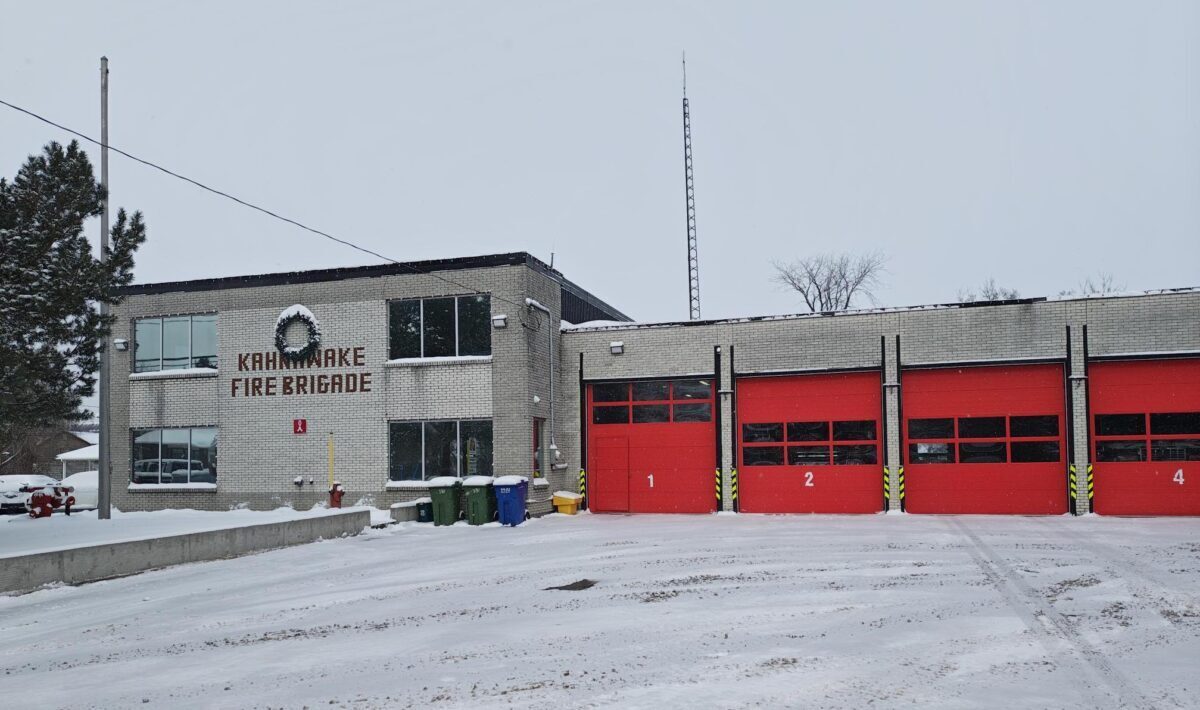
file photo
The Kahnawake Fire Brigade (KFB)’s recently released ambulance services statistics for 2025 show that it’s not about to get any less busy for local paramedics.
After setting a record with 1,568 calls in 2024, last year saw a very slight decrease, with 1,548 calls, representing almost 3,100 hours of service.
“Those numbers are likely here to stay. I don’t think that our call volume is going to go down,” said KFB fire chief Wihse Stacey.
Stacey said the reasons are twofold.
First, the community is continuing to grow, meaning the number of people who might need to call an ambulance is going to grow with it.
Second, the Kahnawake is expected to continue drawing larger numbers of people to its businesses.

“The number of establishments and businesses in the community is going up, and especially with the recent announcement from the Mohawk Council of Kahnawake for the increase in electronic gaming devices, it’s likely going to continue climbing,” said Stacey.
For the numbers themselves, the category of call that saw the highest increase was traumatic injuries, which climbed from 203 in 2024 to 259 in 2025, an increase of about 28 percent.
Traumatic injuries include anything from a twisted ankle to a broken bone to a laceration.
Stacey said the number did not seem linked to any trend or new activity.
“To be honest, no, there is not one simple reason to explain it,” said Stacey.
Other categories that saw an increase were calls for drowning (two up from zero), respiratory problems (108 from 96), chest pains (125 from 106), allergies (23 from 21), diabetic problems (13 from 10), pregnancies/deliveries (nine from five), psychiatric or behavioural (70 from 55), unconscious/fainting (41 from 31), exposure to heat/cold (four from zero), and burns (nine from eight).




The largest decreases were for falls, from 159 to 104; hospital transfers, from 116 to 87; and the catch-all category sick persons, from 566 to 536.
One figure Stacey could explain the increase of, though, was the number of service hours for calls, which went up by almost 300 when compared to the figure from 2024 (2,800 hours), despite a similar volume of calls.
Stacey said that was due to the high congestion in hospitals, with ambulances unable to move to other calls while waiting at the hospital to drop off their passenger.
“The ambulance crew is just sitting there, waiting, doing nothing. The usual cause is they literally need to discharge somebody in order to get a free bed,” said Stacey.
“Because you’re going by ambulance, everybody seems to believe that you will be seen faster. That couldn’t be farther from the truth, you will be triaged.”
Stacey said that this often happens with people who need to be in a bed, due to illness, age, or injury, but do not need to be seen very urgently. He also said it is not uncommon to wait for several hours with other ambulances.
Sign up for email updates from The Eastern Door
Right now, ambulance services has one full-time crew 24 hours a day, seven days a week, with another operating from Mondays to Fridays from 8 a.m. to 4 p.m. An additional on-call crew covers shifts or calls that the other two cannot.
Stacey said that in a perfect world, he would have two 24/7 crews, although they can still cover calls pretty well at the moment – he estimated the need to call a third ambulance, which would come from an outside community, to have been in the low double digits in 2025.