Medical Transport seeks flexible funding
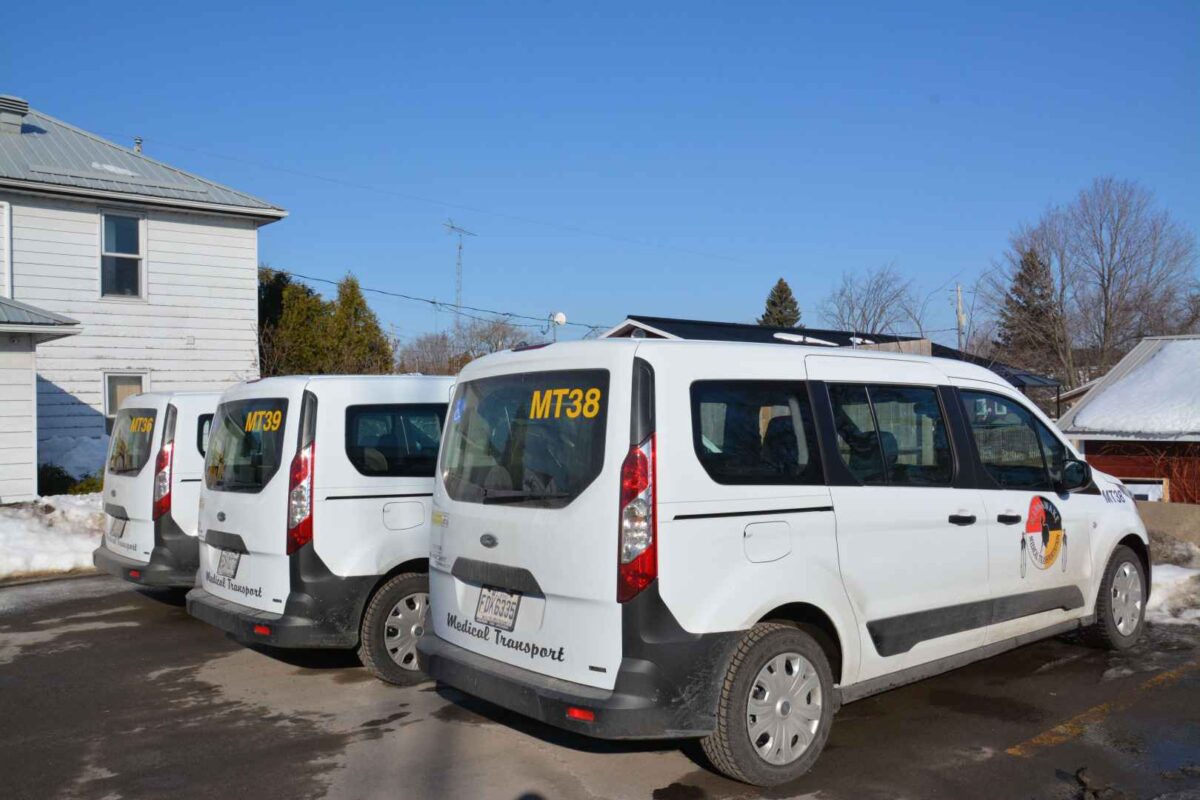
Now that Wihse Stacey has become interim fire chief of the Kahnawake Fire Brigade (KFB) after David Scott retired last month, he has taken over many of Scott’s files - including matters of KFB funding from Indigenous Services Canada (ISC).
With the agreement between KFB and ISC concerning Medical Transport’s funding up for renewal in 2025, Stacey said that they are looking to change from a “set funding” model to a “flexible funding” model, a process that was started by Scott two months ago while he was still fire chief.
“Being in a set funding model means that we need to spend the money the way they tell us to. If we don’t spend the money the way that they dictate, then we have to give the money back to ISC,” said Stacey.
Flexible funding, meanwhile, allows for money to be carried forward to the next fiscal year as long as it is for the same program.
“They were forced to give back money to the federal government, which is a big no-no for us,” said Ryan Montour, the lead on the Community Security portfolio for the Mohawk Council of Kahnawake (MCK).

Montour said that a change to flexible funding would be a big positive for Medical Transport’s ability to plan and manage the service, and that council was “dismayed” that under the set funding model, unused funds needed to be sent back to ISC.
To him, having Medical Transport be able to use their funds in the way that is best for them - not easiest for the federal government to manage - is what is best for the community.
“Our community members need this service. That’s why it’s better for us to properly manage the federal funding dollars, which we hold them responsible for, by dishing it out for our community member’s needs,” said Montour.
"After some discussion internally and with ISC over the past few years, their recommendation would be to request a change from set to flexible funding,” said Stacey.
There are certain requirements to be eligible for flexible funding, however. The program or organization must already have a longstanding relationship with ISC, have met a threshold level of capacity set by ISC, and must be willing to enter a minimum two-year agreement.

Stacey said that the main ways flexible funding would help is by being able to set money aside for vehicle replacement and attracting staff by being able to pay competitive wages.
“We’re having difficulties in maintaining staffing with Medical Transport. Because of that funding model, we are obligated to follow the national salary scales and national standards,” said Stacey.
As for vehicles, Stacey said that they have had to wait for a year or more to be approved for funding for repairs or replacements.
“In the flexible funding model, we can use some of that money put aside when we do need to purchase new vehicles. Sometimes, we need to do $5,000, $6,000, $7,000 repairs. These vehicles are easily doing 150,000 kilometres in three years. So, we generally get about three years out of these vehicles,” said Stacey.
Before going to ISC, KFB needed to go to the MCK to get approval to move forward with this request. That request was approved during the December 9 council meeting.
Sign up for email updates from The Eastern Door
“Now that we have the MCK’s approval, it should move forward,” said Stacey.
But, there is still one hurdle left to overcome: government bureaucracy.
“I don’t know how long it’s going to take. That seems to be one of the biggest problems when dealing with ISC, because there’s so much staff turnover,” said Stacey. “People that are familiar with what certain files are, they leave.”
This article was originally published in print on January 3 in issue 34.01 of The Eastern Door.