More electronic gaming permits coming

File photo
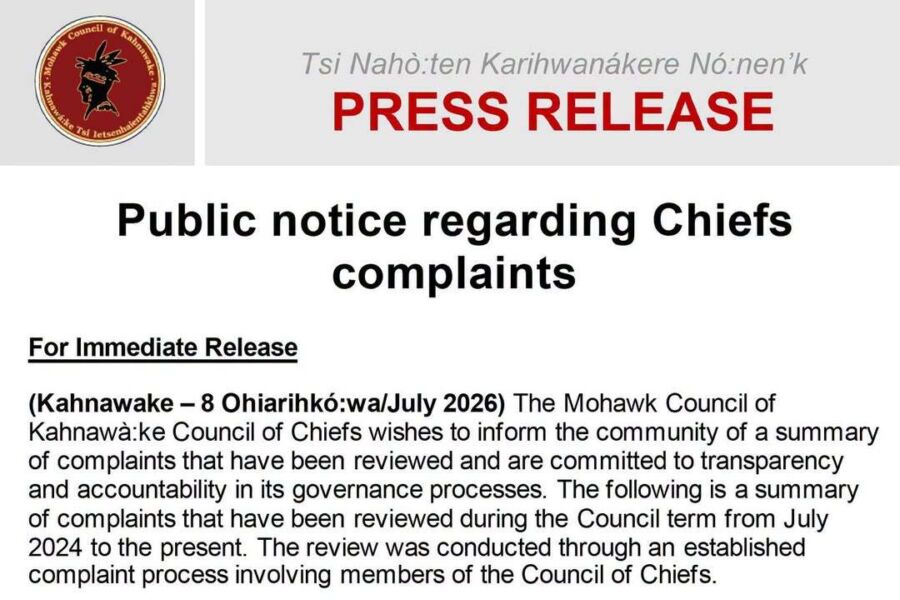
The Mohawk Council of Kahnawake (MCK) has announced a new initiative to increase the number of Electronic Gaming Device (EGD) permits, a move that Council chiefs could generate further revenue for Kahnawake, but that has caused concern for some community members.
MCK grand chief Cody Diabo said thorough community engagement will take place before permits are implemented, and that MCK will seek guidance from the community about other regulatory enhancements before proceeding.
“The engagement process is going to be very intense,” he said. “We’re talking at least one special community meeting just on that, we’re talking about different information sessions and kiosks, radio shows, everything will be starting.”
Over the past three decades, gaming revenues have generated more than $100 million in community revenues, with much of that coming in recent years from EGDs.
Until now, only two institutions had been given permits to operate EGDs: Magic Palace and Playground Poker.
Magic Palace was forced to close in the spring of 2024 when the MCK terminated its royalty agreement with the facility following allegations that surfaced in La Presse that it had been infiltrated by organized crime.
Since then, Magic Palace’s owners filed a lawsuit against the MCK and Diabo, seeking an unprecedented $220.57 million in damages. That case is still before the courts.

Right now, EGD revenue is close to $30 million a year, making it an overwhelming component of Kahnawake’s overall own-source revenue.
A third of Kahnawake’s revenue is generated from own-source funding, the most in the community’s history.
“Now that gaming has been here, we’re trying to do a better job to show the benefits. Money is coming in, the MCK has never seen revenues of that nature, and now we have the ability to do different things with it as well,” Diabo said, pointing to Council’s decision to cover more than $325,000 of tuition not covered by Jordan’s Principle for special needs students, and the recently announced one-time $500 inflation benefit that will soon be disbursed to community members.
While Diabo touted the potential benefits of increasing EGD permits in the community, other Kahnawa’kehró:non have expressed concerns about the decision. Winona Polson-Lahache, who served as the MCK’s chief political advisor for nearly a decade until late 2024, said she was surprised to hear the news.
While she acknowledged that MCK will be engaging the community on regulations and how to implement the permits, she said she was disappointed that MCK had already made the decision to increase the number of permits in the first place.
“My experience, from what I had been exposed to, was that they’d publicly committed to engaging with the community prior to any next steps that they might be taking,” Polson-Lahache said.
“To see them having made a decision now and make reference to wanting to engage the community makes the engagement seem superficial. The decision’s already made, so it tokenizes whatever it is that they’re expecting to hear from the community,” she said.





She noted that gaming has long been a controversial topic in Kahnawake – the community has voted multiple times against having community casinos, for instance – and while the revenue could increase Kahnawake’s financial independence, it’s especially important not to rush decisions related to gaming, she said.
“There’s a lot of history in this particular area. The community has flagged this throughout, and not just this Council but prior Councils have committed to engaging the community before taking steps,” she said. “To see another step being taken without hearing the community is, in my opinion, a very serious misstep.”
The announcement that EGD permits will proliferate has left her feeling disillusioned with the Council, she said.
“It really calls into question the integrity of the Council for making a commitment to hear what the people have to say, and then willfully not following through,” she said. “It’s a really serious mistake in my opinion. When you’re a body that’s supposed to be acting as a representative of the people, and the people can’t trust what you’re doing, it’s a very, very serious action.”
Community member Timmy Norton agreed with Polson-Lahache’s concerns and said that the decision could lead to more division in the community, with a lack of clarity about who would be receiving the permits. Diabo said that consultations would be a key part of establishing who would qualify.
“I think it’s a quick money grab without thinking about the chaos it will bring into the community. There’s no plan in their press release of who will get one, or two, or 100,” Norton said.
He said that while EGDs can be a major part of revenue generation for Kahnawake, the risks of the machines are often left undiscussed, and gambling addiction can have serious impacts on families and individuals.
Sign up for email updates from The Eastern Door
“The ease of getting to these machines means that they are extremely addictive,” he said. “Money made will come from poor Kahnawa’kehró:non, as well as from non-Natives.”
Diabo stressed that as of right now, nothing is a “done deal” concerning EGDs.
“This is exactly why the Kahnawake Gaming Commission is developing such a rigorous process, because the idea is always to do things stricter and better for overall benefits,” he said.
The engagement process for EGD permits is scheduled to start on February 1.