Midwinter ceremonies conclude
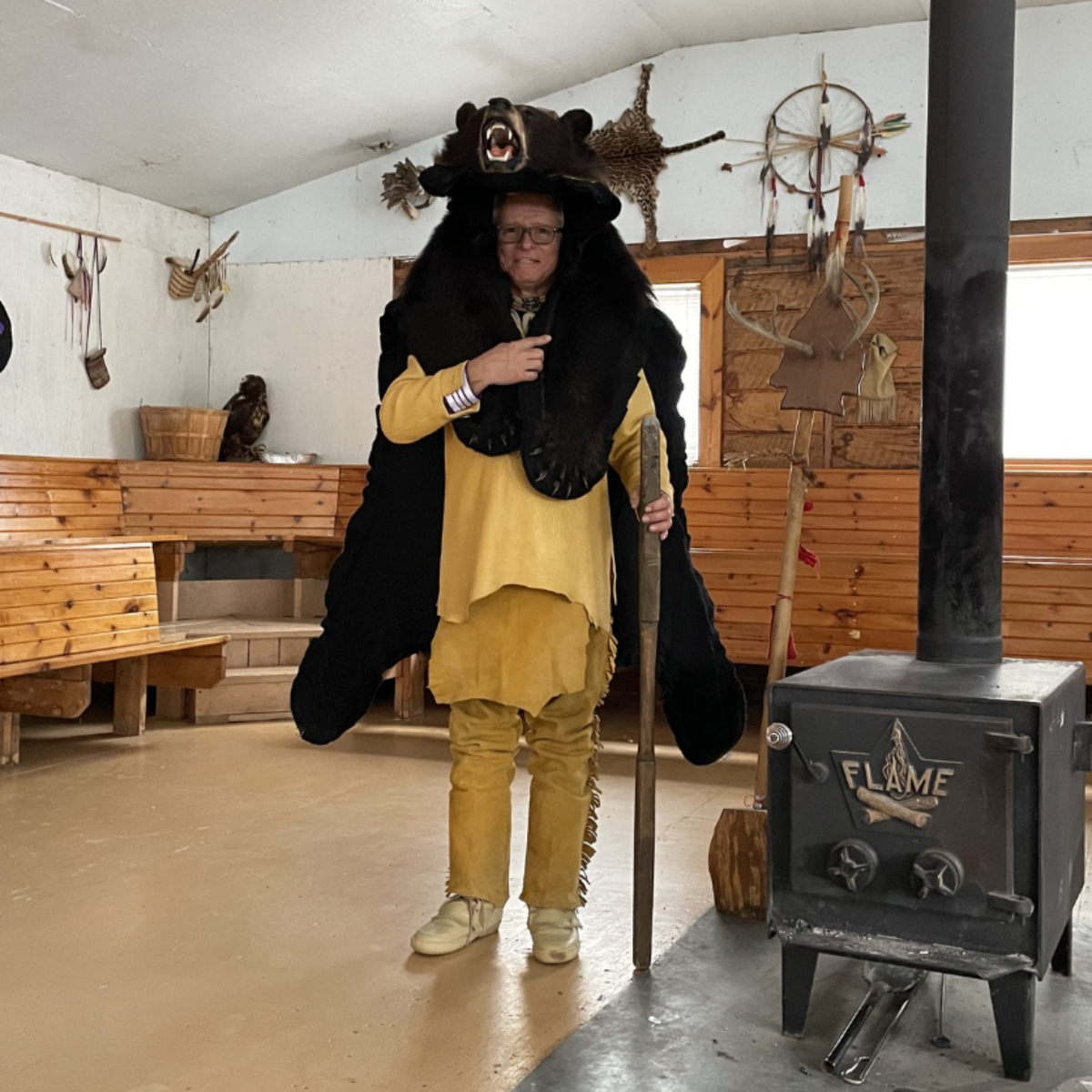
Ka’nahsohon Kevin Deer has held the role of an uncle during Midwinter ceremonies for decades, where he considers all those in attendance his nieces and nephews as they stir the ashes to mark the new year. Courtesy Kan’ahsohon Kevin Deer
With around four decades under his belt holding the role of “ratinontsistowa:nens,” or uncle, during Midwinter ceremonies at the Mohawk Trail Longhouse, Ka’nahsohon Kevin Deer said he’s glad to see the next generation of Kanien’kehá:ka youth excited to take up their space in ceremony.
This year, he fulfilled his duties as one of the uncles alongside Kanehsata’kehró:non Tehonerahtathe Nelson, who brought his young nephew along to learn about the role and its expectations.
“His nephew sang the special song, and we did the speaking. He’s only about eight years old, but what we’re attempting to do is bring some of the real young ones in so that they can take this on,” said Deer. “It was a great thing, because we’re reassured that the next generation are learning, and when we’re gone, we know that these ceremonies and these ways are going to continue on.”
Midwinter ceremonies concluded this week with community members of all ages coming out to mark the new year, focusing on renewal and setting a precedent for the year ahead.

“We acknowledge everything that we’ve completed, and now we hope that everything will do its work, that the maple will start to run, that the strawberry will come, that the women will sing the planting songs and our grandfather thunder will bring the rain, that our older brother sun will not shine too hot and burn the crops and that the moon will do her work,” Deer said. “When we get to the end of growing season again, our stomachs will be full, and we’ll start all over again, and that’s why we have to have this attitude of gratitude.”
Deer said there was strong turnout for the ceremonies, a positive sign for the future.
“It’s really important. It’s critical because in some of the old stories we talk about when the people gave up and the hardship that came, because then there’s no more love, there’s no more peace, there’s no more working with skennen’kó:wa (great peace), and then everything goes into disarray,” he said. “We’ve seen that happen numerous times in history, and it’s the ceremonies that are the glue that keeps everything together.”
Part of Midwinter ceremonies included naming ceremonies, where babies received their Kanien’kéha names.


“That’s always great because babies are sacred. They just left the ancestor realm to come to this world, so you think, when they grow up, what will be their gift? Will they be a speaker? Will they be a singer? Will they be involved with the medicines? Will they be a great supporter to help the Longhouse?” Deer said.
Deer has been glad to watch ceremonies grow over the decades, especially Midwinter, which is now seven days at the Mohawk Trail Longhouse but was initially a four-day celebration when he started attending, he said.
“A group of us went to other communities and other Longhouse people that maintained these ceremonies and songs and dances, and we brought it back,” he said. “We’ve got to be grateful that there’s other people that kept these traditions alive that were able to rekindle our spiritual ceremonial fires here.”
He said that he’s glad to see community members attend ceremony, whether it’s their first time or their 50th.
Sign up for email updates from The Eastern Door
“It’s a collective, we all have roles to do in the Longhouse. Even if you feel you don’t have a role, your role is to show up and do your best every day to be the best person you could be,” he said. “That’s good enough.”