Local named ambassador for Kidney Walk
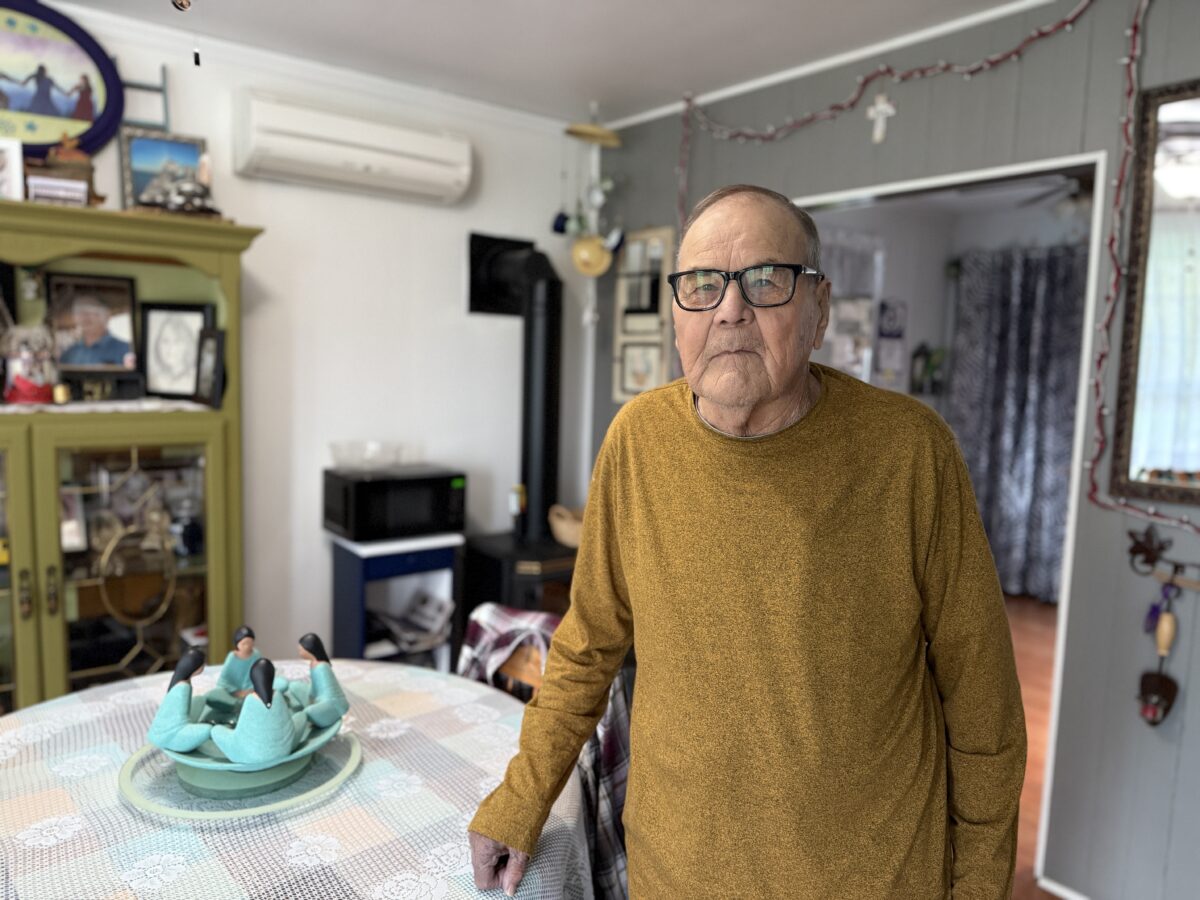
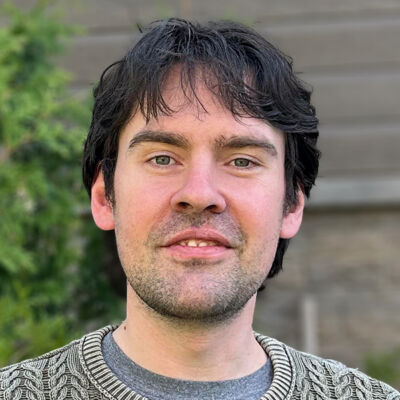
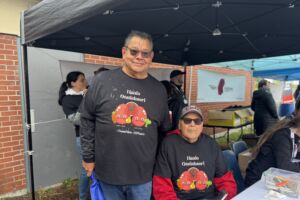
Angus “Nias” Bordeau, who has been in dialysis for 25 years, wants to see the vital treatment brought to Kahnawake for the benefit of the next generation of community members who rely on it. Marcus Bankuti The Eastern Door
When Angus “Nias” Bordeau buys his lottery tickets, he sticks with the same numbers - and the same dream for his big winnings: the foundation of a kidney dialysis clinic in Kahnawake.
In dialysis for 25 years, Bordeau knows better than most the hardship the treatment wreaks on those who rely on machines to filter toxins out of their blood because their kidneys can no longer do the job.
Dialysis is a gruelling regimen, and several hours hooked up to the machines three times a week is just the beginning. The treatments zap patients’ energy levels, so they have to plan their lives around constant bouts of fatigue, yet a break is not an option. Without dialysis, those suffering kidney failure will soon die.
Sleet, snow, frigid temperatures, heatwaves - the patient must persevere, and for those without support, the battle is even more arduous and lonely.
That’s why the septuagenarian is steadfast in his quest to bring dialysis to Kahnawake through the Kateri Memorial Hospital Centre (KMHC), where the opportunity to get treatment closer to home, in fluent English, could make all the difference for those who suffer with kidney failure in Kahnawake.
“Maybe I won’t see it in my time, but I would like to see it here,” said Bordeau, who suggested the location where the dilapidated former Indigenous Services building stands, across from the hospital, would be an ideal location for a clinic.
Kahnawake has more than its share of dialysis patients. According to Bordeau, there are over 20 Kahnawa’kehró:non relying on the treatment to survive. In many cases, kidney failure is caused by diabetes, which Onkwehón:we suffer from at a disproportionate rate.
“We’re just trying to make it easier for our people,” said Betty Bordeau, Angus’s wife, who has been by his side through thick and thin across a quarter-century of dialysis.
It is not unusual for the couple to receive calls from community members who are embarking on dialysis, seeking advice on how to cope with their new situation.
Now Angus is being recognized even outside the community, having been asked to serve as the ambassador of the Chateauguay Kidney Walk, marking the 10th anniversary of the Louise Auger Hemodialysis Center in Chateauguay.
Before that clinic opened, patients like Angus had to cross the bridge to get dialysis in Montreal, an even tougher ordeal.

That’s why more than 25 years ago, the namesake of the Chateauguay clinic, the late Louise Auger, painstakingly gathered more than 5,000 signatures over the last seven years of her life to bring a clinic to her city, according to her daughter, Christine Auger.
That petition was delivered to the local member of the National Assembly, at the time Pierre Moreau, and when a clinic was finally unveiled, Christine was asked whether it could be named in honour of her late mother; she accepted.
Christine has remained involved in the cause since, which is how she got to know Angus, meeting him and Betty at the first kidney walk with patients of the Chateauguay clinic.
“He’s one of the oldest patients that’s there,” said Christine. “He’s been there since the very beginning. But he is also such a positive person, and he’s proactive in trying to obtain the services for his community, which I completely encouraged him to do.”
When she had the opportunity for this year’s edition to pick an ambassador, a new feature of the walk, she knew whom she wanted for the honour. Not only is Angus a fixture at the clinic, but his drive to bring dialysis to Kahnawake mirrors her late mother’s vision for Chateauguay’s centre.
“He has a lot of those same values that my mother had when she was on this crusade to have this dialysis centre built up. She also had every reason to be negative, but she would sit there, as sick as she was, to try to help others that were being discouraged, to tell them not to give up,” said Christine.
“I see that in Angus, and I think he can bring this message forward, and I think he’s been able to give hope to other patients who see him being very positive, so he’s a good influence.”
Angus is known to be personable and outgoing, Christine noted.
The patients develop an affinity for one another, Angus said, and he can often be seen joking around with the nurses, whom he gets along with as well.
“I mean, I can’t just sit there,” he said. “I’ve even got some of the nurses talking in our language. Óksa means hurry up. Tesató:tat means be quiet. So one day I gave one nurse an Indian name – Tekáhstia’ks, parrot – always talking.”
One day he was looking for her when he finished his treatment. He put his legs down and caught a glimpse of her chatting with some of the other nurses.

“Hánio (Come on), óksa!” he joked.
Sure enough, she replied, “Tesató:tat!”
Still, despite his positive experiences at the clinic, there was at least one incident in which one nurse questioned another about why she was not speaking French to her patients, saying this is Quebec; language is one reason Kahnawa’kehró:non would be well served by a local clinic.
The Bordeaus have found an ally in Mohawk Council of Kahnawake (MCK) chief Arnold Boyer, who shares their desire to see dialysis treatments come to the community. The MCK has even entered a team in the kidney walk, which is being held in conjunction with the Kidney Foundation as a fundraiser for kidney research.
“For me, chronic kidney disease is very dear and close to my heart because my mother passed away from this disease last year,” said Boyer. His mother, Sheila Boyer, was not a candidate for dialysis, he added.
Still, since Angus approached him before last year’s election with the idea, Boyer has sought to help.
“We’re supporting Nias,” Boyer said. “He wants support, so we’re giving him all the support we can, and not just to Nias, but other community members who have kidney disease, and community members who have to take dialysis treatment.”
Boyer noted the hospital is exploring the possibility of bringing dialysis to Kahnawake.
“I’m doing my part. Everybody knows that I want this to get done,” he said.
“Somebody living with reduced kidney functions, it’s very hard on the family and it’s very hard on the individual. At the end of the day, we want to have more support in our community for people who have kidney disease.”
Team Mohawk Council of Kahnawake for Angus has raised $3,000 at the time of writing, which can be tracked on the walk’s official website.
Sign up for email updates from The Eastern Door
Last June, the hospital confirmed to The Eastern Door that it had taken preliminary steps at looking at the possibility of local dialysis, and provided a similar comment for this article.
“Presently, KMHC is exploring the feasibility of including a functioning dialysis unit at the hospital by looking into the space and technology needed to accommodate the service. KMHC has been consulting with a dialysis service provider in Chateauguay for information gathering purposes,” said Robin Guyer, director of nursing and community care at KMHC.
The Bordeaus hope to see everyone come out to the walk to show their support and get to better understand the impact of dialysis.
“I want them to see what their family goes through,” said Betty, “their family member, their father, their brother, their sister, their mother who are doing this dialysis, to do the walk, to support them, to let them know what it’s about.
“Everyone.”
The Chateauguay Kidney Walk takes place on June 1, with a start time of 10 a.m. and registration time of 9 a.m. It begins at Billings Park by Howard S. Billings High School.
Marcus Bankuti, Local Journalism Initiative Reporter