Local joins in on Northvolt lawsuit
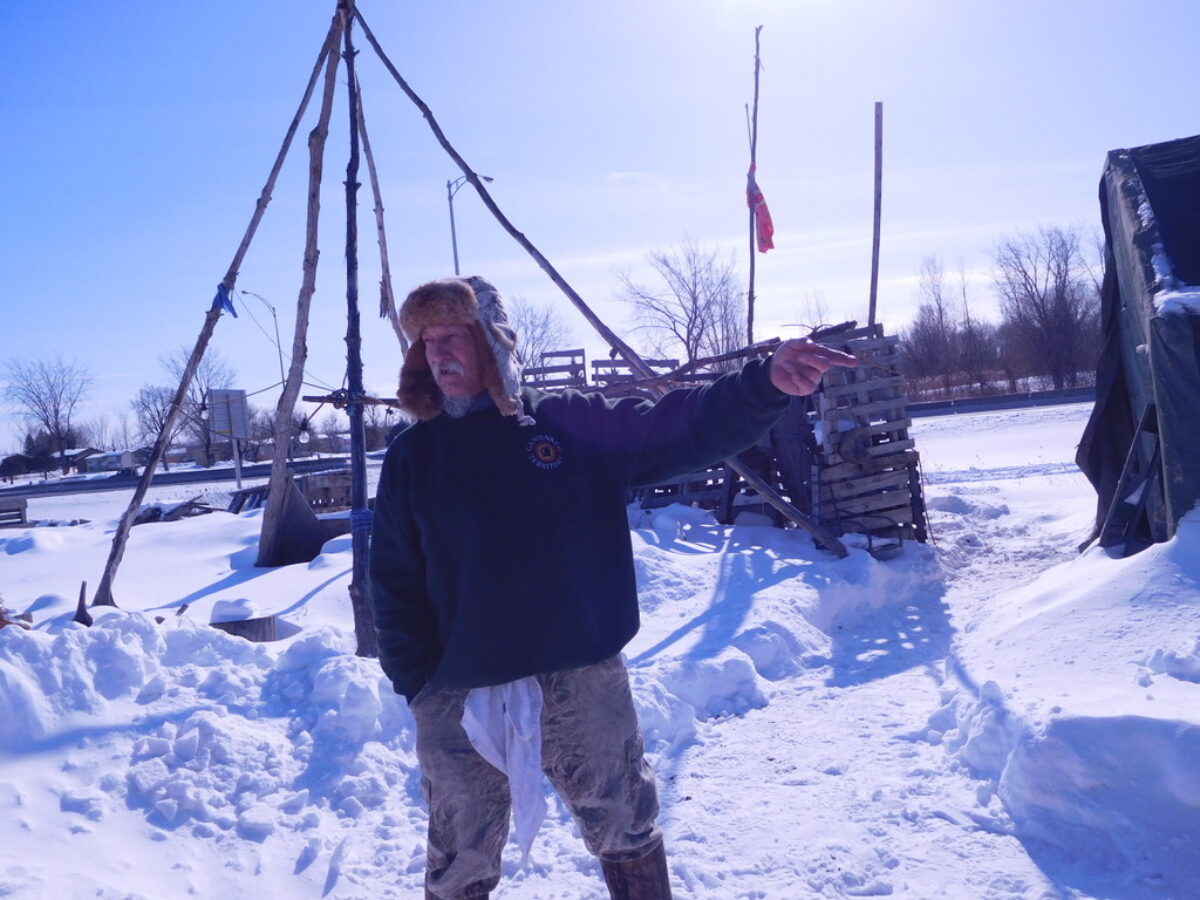
A community member has joined in denouncing the expected construction of an electric car battery plant before Quebec Superior Court - the first ever to do so since the Mohawk Could of Kahnawake (MCK) launched its lawsuit against Northvolt, the Swedish company involved, over a year ago.
“That’s our traditional territory,” said Eric “Dirt” McComber, who spoke to The Eastern Door as he fried up perch in his tent at the greenspace at the foot of the Mercier Bridge. “The Richelieu River, it goes into the St. Lawrence. Even though that’s on the eastern end of our territory, that’s still our traditional territories.”
Wetlands and woods have already been cleared at the site of the future battery plant that’ll rely on water from the river.
It’ll be located between Saint-Basile-le-Grand and McMasterville, but when it’ll be in operation still remains uncertain. A decline in the demand for electric car batteries, especially since the election of Donald Trump, coupled with its parent company filing for bankruptcy protection last year, has led some to doubt it’ll come to fruition. Quebec ministers have assured it will.
The lawsuit filed by the MCK in January of last year also targets the federal and provincial governments. Both failed in their duty to consult the community over the project, the band council is alleging. Each level of government has since maintained otherwise in their defenses to the court.

McComber has fished on the St. Lawrence for the last five decades, and so he’s seen just how much it’s changed over the years.
The period of time it’s frozen each winter declines each year. Cormorants that can eat twice their bodyweight in fish each day are a common sight now. There are more invasive species like zebra mussels. Local plant life is no longer as healthy as it was when he was a boy.
The “Big River” has the capacity to heal itself in spite of all the industrialization that’s disrupted it over the decades, McComber said. The Richelieu’s ecosystem, meanwhile, is fragile.
The eventual factory will pump millions of litres of water each day from the river, while also discharging recycled water back into it. That’ll change the temperature of the river, McComber emphasized in his sworn statement to the court, creating a domino effect on all the plants and animals there, some of which may not survive.
“There’s going to be environmental events happening immediately,” McComber told The Eastern Door. “They’re going to do this project - the project is going to affect the whole system.”




Quebec’s defense largely revolves around its assertion that the Kanien’kehá:ka hold no title to the land where the factory will be built.
It also rationalized its environmental ministry’s decision to authorize the destruction of wetlands there over the band council’s failure to prove its community members practice protected “ancestral activities” there, such as hunting and fishing. Its failure to meaningfully consult the MCK before that authorization is what prompted it to launch its lawsuit.
McComber said it doesn’t make any difference how often Kahnawa’kehró:non go out to fish on the Richelieu River, because they have the right to if they want.
“That land is our inherent traditional land for hunting, trapping and gathering,” he said.
McComber hasn’t fished there in recent years, but his brother still does often, at the mouth of the river.
Sign up for email updates from The Eastern Door
“I’m not in Russia. I go anywhere I want, anytime I want,” he said. “Nobody fishes it. How do they know? They don’t know nothing, the government.”
Though the band council had long held off on communicating with Quebec’s environmental ministry over the project, it’s since decided to agree to consultations. Preliminary discussions over how those consultations should proceed began earlier this fall.
Court proceedings are still ongoing, with the most recent happening on January 20. The Eastern Door is still waiting to learn when the next one will be scheduled.
Ross Montour, the Council chief that’s taken the lead on overseeing the lawsuit, declined to share comments for this article.