Governance project pushes into next phase
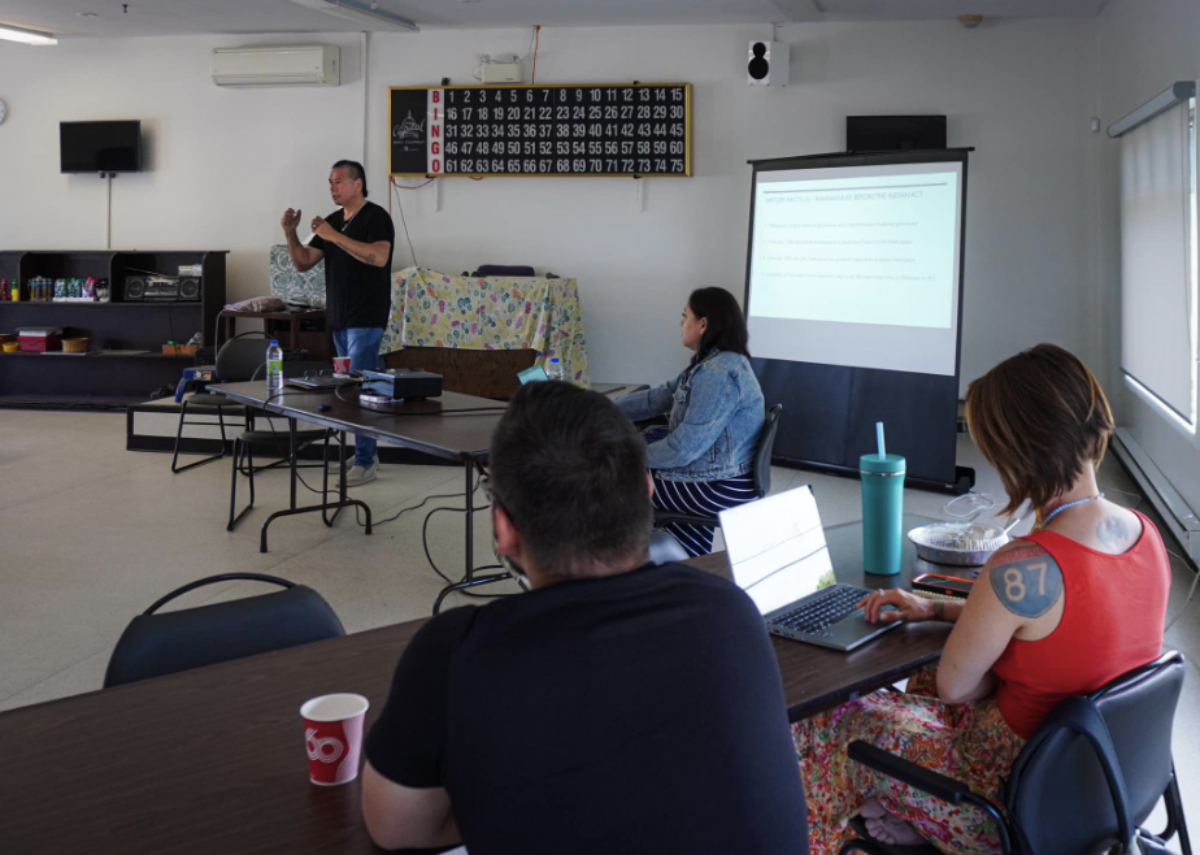
The Kahnawake Governance project is continuing to move ahead in its next phase, as organizers seek to draft a document putting forth a collaboratively constructed plan to transition to traditional governance in the community.
“We’re not just getting people together to throw stories around or share perspectives,” said project lead Gerald Taiaiake Alfred. “We’re actually putting our energies towards the work of developing this proposal.”
Part of the journey of working towards drafting a roadmap to restructuring governance in Kahnawake includes considering past attempts and discussions on the topic.
“From 1992 up until today there’ve been people that have put their minds to this question. We have these documents that are a result of people’s efforts in thinking through this problem in the past, and that includes Longhouse people, people employed by the Council, and individuals in the community who have thought about this,” Alfred said.

“We want to work our way through those ideas and see what makes sense for today, if there’s anything we can learn from them and bring forward and start putting some ideas on paper and circulating that in the community.”
Last June, the Mohawk Council of Kahnawake (MCK) approved the Kahnawake Governance Project’s charter to transition to traditional government, in effect committing to accept the project’s recommendations.
Part of those recommendations included the MCK taking concrete measures to transition towards being an administrative body as opposed to a political entity and the unification of the Longhouses.
“Council has made their declaration that they’re willing to work and follow the direction of the community in terms of getting out of the Indian Act and implementing traditional government, but they can’t do that on their own,” Alfred said. “They have made it clear that they want to follow the direction of the people via the governance project, so that’s exactly what we’re doing.”



Ideas from community members will be essential to formulating a plan.
“If there’s anything that can be used to advance us towards this goal of being unified under the Kaianere’kó:wa (Great Law of Peace), they’ll be considered and built into it,” Alfred said.
“If you have a great idea, or if you disagree with somebody, come and express that in a respectful way and hopefully convince us.”
Eventually, the community will be presented with the proposal for returning to traditional governance.
Sign up for email updates from The Eastern Door
“The community as a whole, through its various forums, will have to accept it or not,” Alfred said. “The Longhouses will go through their process, the elected Council will go through its process. In the end nothing happens without the consensus of the community as it pertains to traditional government.”
Part of the project also includes providing knowledge-sharing opportunities - the first of this year’s events is a presentation from Ahkwesahsró:non Ieieia’taiéri Charlotte Logan, who will be speaking at 6 p.m. on Thursday, February 20, about the history of oral tradition. The talk will take place at the Golden Age Club, and a meal featuring traditional foods will be provided to those who RSVP at [email protected].