First seeds of the season
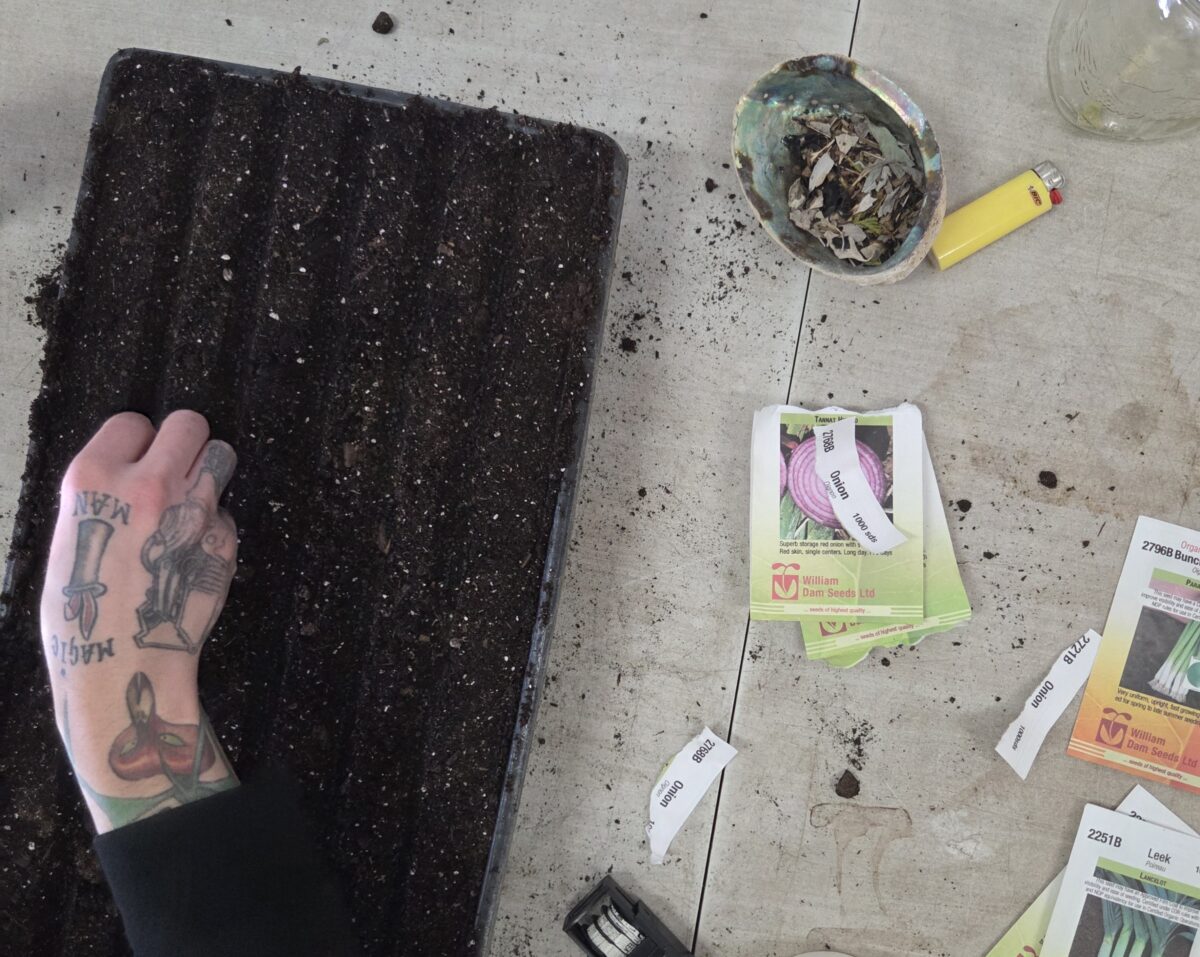
Maddey Orahkwasediabo planting onion seeds. Fern Marmont The Pines Reporter
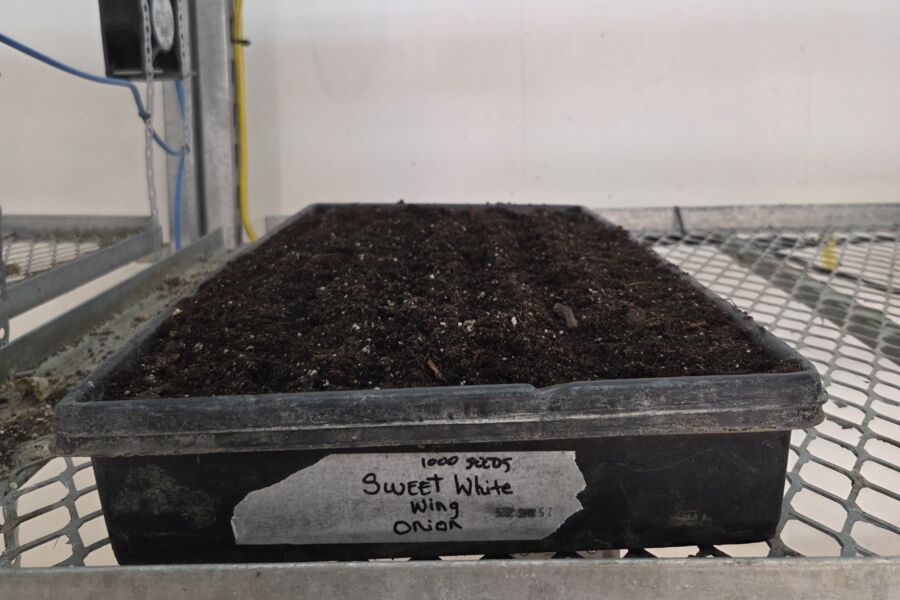
The buzz of fluorescent lights fills a quiet room lined with empty shelves, starter trays, and pots. The only movement comes from the soft rattle of onion seeds being poured from packets and softly planted into a tray of soil, some of the first seeds to be planted this year at the Tsontkwahtentionhátie farm.
Valerie Gabriel, a farmer and consultant at the Kanesatake Health Center (KHC) Tsontkwahtentionhátie farm, is preparing for her second year working in the gardens.
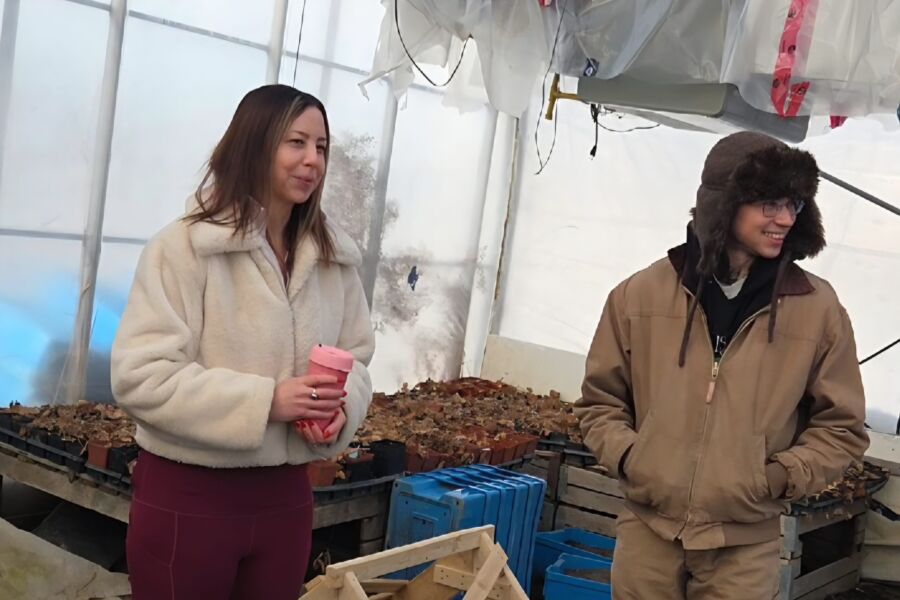
“My task here is to provide educational services and help integrate farming into our programs,” said Gabriel. “Right now, we’re starting seedlings, preparing for a big summer, and creating programming around cultural seed saving.”
With their seed order having just arrived, Maddey Orahkwase Diabo, lead farmhand under Gabriel’s direction, has begun planting onions, peppers, celery, and eggplant.
“It’s a thing of peace, at the end of the day. There’s spirit in the seeds. You’re providing them with nutrients and giving them life,” said Diabo.
“All that greenery that you put all that hard work into, it’s like finishing a painting that took you months.”
Gabriel described her first year as challenging, particularly when it came to building a team.
“The first year was scary, getting a team together was a challenge,” said Gabriel, who shared that taking over the program last year had been a daunting task, but now with experience under her belt, she feels more confident looking towards the new year.

“But people like Diabo keep showing up, willing to learn. It’s not about me, it’s about creating everlasting programs,” said Gabriel, crediting the returning staff for helping sustain the farm.
Gabriel said that food sovereignty isn’t about fear of rising grocery prices, but reconnecting with a shared past.
“Everyone used to farm. Not that long ago, it was a way of life,” said Gabriel. “We’re creating space for people to remember that and to learn to grow food without spending a fortune.”
A key part of food sovereignty for Gabriel is seed saving, having seeds that don’t come from large companies.
That perspective is shared with Karyn Wahsontiiostha Murray, founder of Gardens of Hope, another garden initiative in the community focused on sustainable growing and education.
For Murray, food sovereignty begins with returning to the land and its natural rhythms.
“We’ve grown accustomed to foods from all over the world,” said Murray. “But we should be eating within the natural pantry of where we live.”
Murray is also starting to prepare for the new planting season and plans to expand in the fall with canning and involving the youth in preparing food for the winter months. Long-term goals for Murray include growing white corn and producing flour for the community.
Gabriel and Murray collaborate informally, sharing knowledge and attending seed conferences together, while maintaining separate programming. At Tsontkwahtentionhátie farm, Gardens of Hope has access to greenhouse space.

Murray explained that Gardens of Hope serves multiple roles beyond food production, including therapeutic and educational roles.
“It’s about learning what plants are here, what they’re good for, and sharing that knowledge,” said Murray.
Both Gabriel and Murray highlight the importance of community engagement and involving younger generations, both of which are key to sustaining their work.
“We want them to get their hands dirty,” said Murray.
For Diabo, food sovereignty isn’t just a word, it’s the effort, the process of participating.
“Being out here, working with the plants, connects you to your community and to yourself,” said Diabo.
Gabriel echoed that sentiment, describing farming as both a personal and collective experience.
“It’s a way of life for me, growing food connected me to the land and to people,” said Gabriel.
Sign up for email updates from The Eastern Door
“You feel like you have family around you when you work with the land.”
She explained that the main focus of the gardens is to expand into other programs, supplying other parts of the community with plants and vegetables.
“It’s just figuring out the best, smoothest, most peaceful way to support the programs,” said Gabriel. “And to also have fun and to have peace.”
Despite the challenges of teaching agriculture, which includes helping beginners distinguish between crops and weeds, Gabriel remains committed to making the farm accessible and lasting.
When asked if he had any advice on how beginners could best start planting and engaging with food sovereignty, Diabo said, “Buy some seeds and put them in the ground. Simple as that.”
Fern Marmont, Local Journalism Initiative Reporter