Fire Brigade: “Lawns for mowing, not burning”
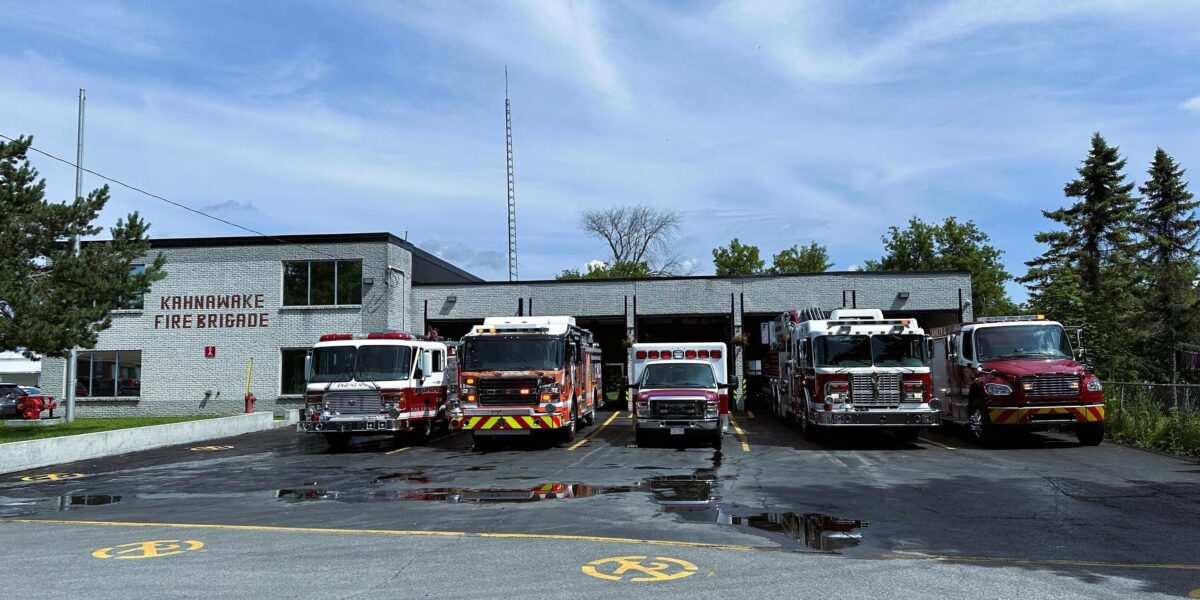
Courtesy Kahnawake Fire Brigade
As the weather warms up, the Kahnawake Fire Brigade (KFB) and the Public Safety Division of the Mohawk Council of Kahnawake (MCK) have issued a reminder that grass fires and other unsafe fire practices pose a big risk for the environment and for personal safety.
Wihse Stacey, interim fire chief for the KFB, said that the weather being warm and dry is what creates ideal conditions for brush fires and forest fires to spread.
“The primary reason is a lot of vegetation is dry or dead. It has stayed the same length as it was in the fall. It hasn’t broken down yet, so there is more of it that burns,” said Stacey.
Because dry vegetation is so flammable, these kinds of fires can spread quickly, and in a community like Kahnawake, it can spread to houses and other buildings because of the abundance of vegetation in most areas.
Brush fires and forest fires have similar causes, and while some are natural, Stacey said the majority result from human activity - burning grass, hay, leaves, or other vegetation trimmings outside of a fire pit or a controlled bonfire, causing it to spread into unintended areas; not properly extinguishing campfires or bonfires; sparks from fireworks or firecrackers; and dropping lit cigarettes or matches on the ground without properly extinguishing them.
“Sometimes, people do fires along the water, and they can get out of hand. The fires can go for days. We’ve been called for campfires that started 12-24 hours before because they were not properly extinguished,” said Stacey.

“If they turn into much larger events, there could be criminal charges.”
Intentionally setting fire to a lawn will also result in criminal charges.
In a press release, the KFB and Public Safety said that burning old grass to help the new grass grow stronger is a popularly held belief, but the method’s effectiveness remains unproven, and there are many safer ways to do lawncare. Dry grass is also extremely flammable, and it is difficult to contain a grass fire if control is lost.
Instead, the KFB and Public Safety strongly encourage community members to rake their lawns and have Waste Management do the pickup of the vegetation.
Stacey acknowledged that bonfires are important culturally for many in Kahnawake, and can be therapeutic. He did not discourage bonfires, as long as they were done safely.
“A backyard fire that is secured and contained, there is no problem with that,” said Stacey.






He added that during the pandemic, the KFB put out explainer videos on KTV and on their own social media on how to safely have a fire at home, which are readily available.
Stacey said that this year has actually been a relatively quiet one so far for brush fires, in line with a province-wide trend where rainy and cooler weather that has persisted through the month of May has decreased the risk of fires.
“Usually, there is not a lot of rain, but this year is different, we’re halfway through May and the grass is green and long already,” said Stacey.
Once it is warmer, drier, and less humid for many days in a row, the risk will increase sharply, so vigilance is key.
So far, Stacey said they have only had one incident that necessitated a big KFB response, with a handful of others extinguished by a first responder alone.
With safe fire practices, Stacey is hoping it’ll stay that way.
Sign up for email updates from The Eastern Door
In addition to outdoor fire safety reminders, the Fire Brigade will also be hosting an event on June 4 at 10 a.m. in collaboration with the National Indigenous Fire Safety Council and Kidde to distribute home extinguishers and smoke alarms to the community, as well as underline the efforts by the KFB to contribute to community safety.