Fewer trucks, but still no targeted enforcement
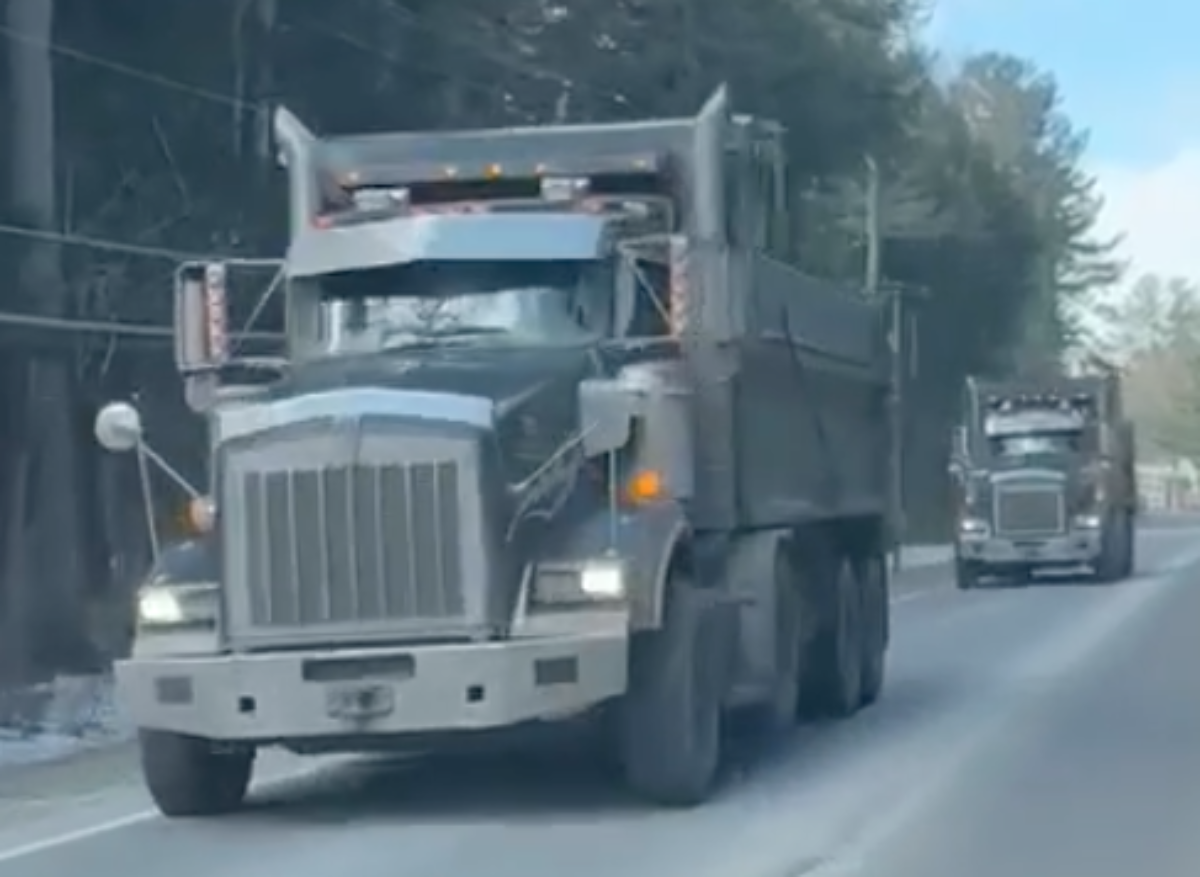
Roadside inspections of dump trucks entering Kanesatake on Monday were once again routine mechanical checks, but some believe the enforcement has been a step in the right direction.
“For one thing, I’m glad they’re taking any action at all,” said Mohawk Council of Kanesatake chief Serge Otsi Simon. “We see hardly any trucks coming in here now from what we used to see. It’s gone down quite a bit.”
The Eastern Door previously reported on routine checks of dump trucks in March, when some community members had assumed the operation was a crackdown on the dumping of potentially contaminated landfill on the shores of the Lake of Two Mountains, a problem that has received increased media attention in recent months.
The Controle routier Quebec (CRQ) has continued to implement checks, lately striving to come every week or two, according to CRQ spokesperson Jonathan Beauvais. However, the goal is simply to ensure the large number of heavy trucks on the road are mechanically sound, obeying weight limits, and properly registered.
“We’re going to do it all summer long because there’s a lot of transport,” said Beauvais.
The CRQ often partners with other organizations, such as Revenu Quebec or the Surete du Quebec (SQ). Asked whether a partnership with Environment Quebec would be possible, Beauvais suggested it could be if the ministry requested it.

“We could do it if they wanted to, but I’ve never contacted them, so I don’t know if they are up to that,” said Beauvais.
“The ministry is active in the matter and no recourse is excluded,” said Environment Quebec spokesperson Frédéric Fournier in a response to questions about why the ministry was not involved.
“For the sake of the effectiveness of ongoing actions, no additional comments regarding ongoing verifications and investigations will be issued so as not to harm the process.”
One citation was issued during Monday’s operation for a failure to renew registration. There were also three warnings given. Eight trucks were stopped in total, although other trucks went through without being pulled over.
“Could this discourage some businesses? Yes, probably. But we are not solving the problem at the source,” said Oka mayor Pascal Quevillon, who said it is the responsibility of the government to confront the problem.
“For our part, I myself followed trucks. I called businesses to raise awareness. There are many who have stopped coming to the territory following these interventions and interventions by the band council. But there are other more delinquent companies that have continued.”






He said the problem is 90 percent resolved but there is still work to be done.
Simon estimates there are fewer than 10 percent of the trucks coming onto the territory as compared to before, when they were coming by the hundreds. He said this may be in part because of the headache of mechanical inspections, but he still believes testing needs to be part of any enforcement regime.
“Environment Quebec could easily have gotten a court order to inspect. According to the rules, they can stop them, but they can’t search inside the dump truck,” said Simon.
He also credits increased media attention in recent months for the slowdown.
“I’d imagine these companies, they don’t like their names mentioned anywhere in the press publicly in a negative light. It’s bad for business,” he said.
However, companies still have a big incentive to dump potentially contaminated landfill, he said, by charging clients full fees to unload soils properly and then getting rid of it at a fraction of the price in Kanesatake.
Sign up for email updates from The Eastern Door
At least one lot continues to receive the potentially contaminated soil, he said.
On sunny days, Simon notes, a light brown cloud can be seen on the surface of the water on the shore of the bay. He suggested that this could be due to runoff from the sites that have taken landfill.
“A lot of the runoff is going to end up coating the bottom of the lake, and that’s it for perch beds, that’s it for walleyes, pike. We need to do extensive water studies, maybe even take samples of the sand, the lake bottom, and see if there’s anything more concerning – petrochemicals, heavy metals.”
Environment Quebec was going to test soils at a site in early May, but Simon and MCK chief Brant Etienne were violently ejected from the lot. This altercation led the environment ministry to cancel the tests after discussions with the SQ, according to Fournier.