Electoral officer defends online voting

File photo
The Mohawk Council of Kanesatake (MCK) election season is officially underway, with important dates now outlined, but the plan to introduce online voting has already garnered controversy.
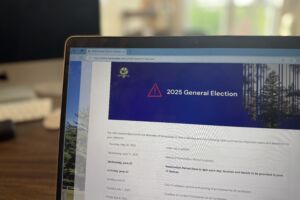
A section on the MCK website is now dedicated to providing information on the election, which will be held August 2, with advance polls on July 26 and online voting opening July 27 through election day. The deadline to request a mail-in or mobile voting ballot is July 18.
“The first thing we posted was a timeline of the key dates and steps throughout the process as defined in the Custom Electoral Code,” said Graeme Drew, the election’s chief electoral officer, noting some minor adjustments had to be made to account for anticipated holidays.
Drew has managed around 80 elections and other votes in Indigenous communities since 2014. He is a proponent of providing an online voting option to community members, even if the electoral code does not outline this as an option.
“Given there’s threats of another postal strike or pending disruption to that service, that’s the only other way that people living away from the community would be able to cast a ballot, and disenfranchising voters is a very serious issue,” he said, noting that more than half of Kanesatake’s members live off the territory, according to available statistics.
Even when there is no labour threat, he said he has encountered issues with the reliability of mail-in ballots in the past, although these will continue to be offered.
He has emphasized that the inclusion of online voting would be an additive method, not taking away from any of the voting means outlined in the Custom Electoral Code.
“With online voting, I’ve heard people concerned about it, but I haven’t heard anybody give me a good reason why. What’s the response to, what about your members that can’t come in and vote, and if there’s a postal strike, how do they get it? They deserve a chance to cast a ballot just like you do,” said Drew.

“If anyone can give me a real good answer for that, I might revisit it, but it’s a pretty hard one to argue.”
He said the code is 10 years old and suggested perhaps that’s why it doesn’t name online voting as an option, but he believes the change would stand up to scrutiny.
“I don’t make amendments or procedural adjustments to a code like this unless I’m pretty confident that the rationale for it is sound and solid in the event that someone could challenge it,” he said.
There is time to discuss it further, however, he said, noting he’ll be back in the community for the nomination period in June, and he’s always open to changing course while there’s still time.
“There has to be more to it, though, than just that it’s (not) in the code because to me, that doesn’t provide a reasonable solution for my concern, which is that a lot of members might be disenfranchised from being able to vote.”
Multiple likely candidates in the upcoming election have publicly criticized the plan to incorporate online voting despite it not being sanctioned by the Kanesatake Custom Electoral Code.
“Online voting is not a legal option for voting in the 2015 electoral code. Therefore, it is illegal and must be revoked as a method of voting, period,” said Amanda Simon, who has already announced her candidacy.
“This is not responsible governance. This is rewriting the rules mid-game - and it undermines trust, law, and the voice of the people,” she said, dismissing fears of a potential postal strike, which she said “does not grant anyone legal carte blanche.”



She said a failure to uphold the code puts the legitimacy of the election at risk.
Victor Bonspille, who was ruled to have vacated his seat by the MCK Ethics Commission but still claims the title of grand chief, expressed a similar sentiment on his social media, urging community members to contact the electoral officer and posting his phone number.
“Some people are against it for whatever reason, but we’re not taking anything away from the procedures,” said MCK chief Serge Otsi Simon. He acknowledged that the inclusion of online voting could be the basis of contestation, but said that despite this discomfort he still sides with colleagues on Council that the change is justified. He believes the results would be upheld, he added.
“We have members, yes, that live outside, some in Montreal, some in Quebec. We even have some in Florida, Texas, and Arizona,” he said. He said he’s seen late mail-in ballots result in disenfranchised voters in the past.
“It’s basically offering people a better choice to exercise their right to have a say in who manages the community,” he said.
“I’m really asking, why would you be against people exercising the right to vote through online voting? Isn’t that enhancing the democratic process?”
Drew has already heard from some Kanesatake members with concerns relating to online voting and to the election timeline. The election date has already been another major point of contention this cycle, with the code explicitly instructing that elections take place the second Saturday of June, while simultaneously defining a term as four years - the previous election was held July 31, 2021.
While Drew has acknowledged this discrepancy, he previously affirmed that he believes it is valid to hold the election according to the four-year guideline, and he said it is nevertheless not possible at this point to hold a June election.
Sign up for email updates from The Eastern Door
“There’s nothing we can really do to unwind the clock,” he said.
A voter list is being posted today, May 30, and the notice of nomination period goes up June 11, with that period running from June 25-27. A provisional list of candidates is expected June 29, with a final list to follow on July 4, leaving about four weeks before election day.
Marcus Bankuti, Local Journalism Initiative Reporter