Egg-cellent farm giveaway resumes
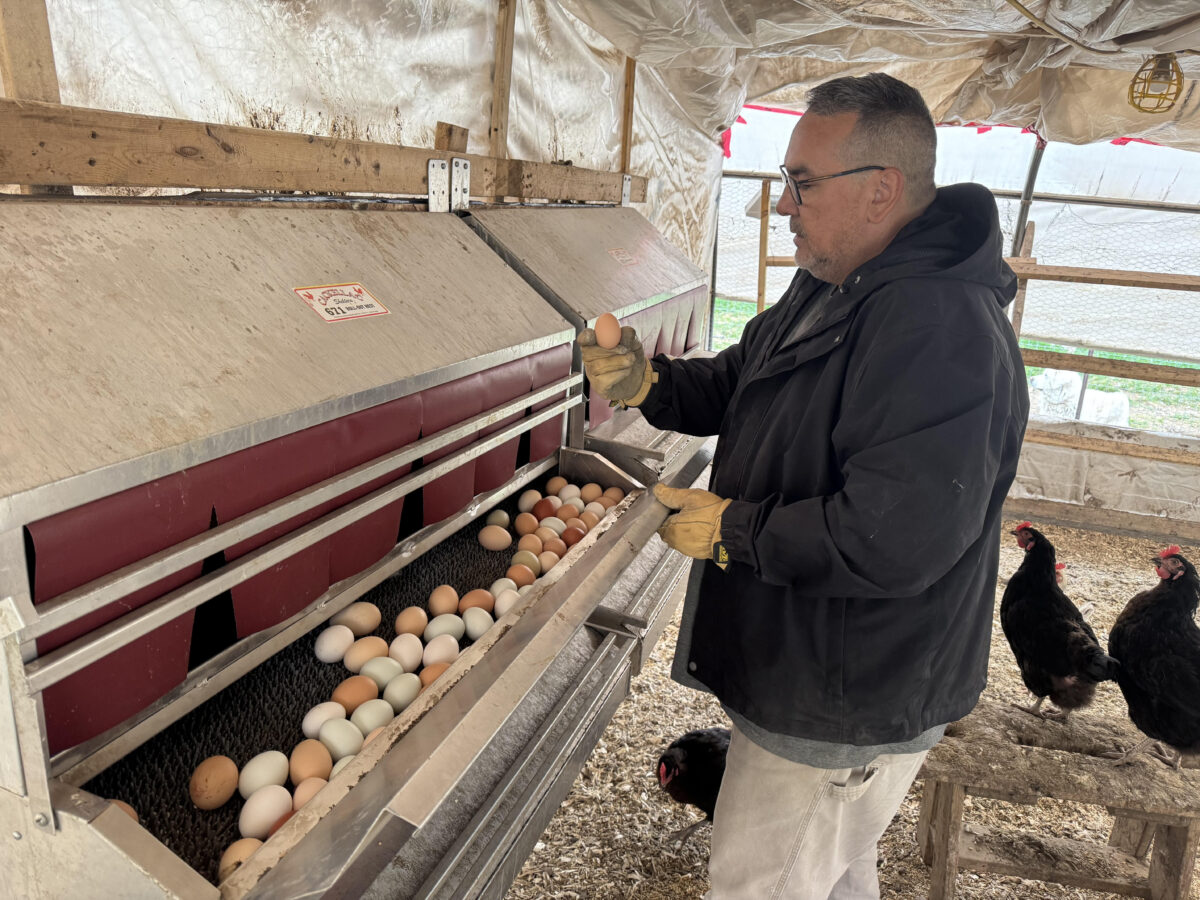
Jimmy Nicholas, farm lead and Indigenous healing and wellness worker at the Kanesatake Health Center, looking at a bounty of eggs at the farm last week. Hadassah Alencar The Pines Reporter
About 90 chickens at the Tsontkwahtentionhátie farm have begun laying enough eggs to allow the Kanesatake Health Center (KHC) to continue their annual free egg giveaway for the second year.
“The farm is all about reconnecting to land across the board for our people,” said KHC executive director Teiawenhniseráhte Jeremy Tomlinson.
“The giveaway is the excess eggs we get, and to share with the community some healthy animal-based food.”
Free eggs are available bi-weekly on Fridays for Kanehsata’kehró:non at the farm’s kiosk located on 225 Rang de l’Annonciation, said Jimmy Nicholas, KHC farm manager and Indigenous healing and wellness worker. Giveaways resumed in April, and another will occur today (Friday, May 8).
Community member Jasmin Gunn appreciates how farmland is being put to good use by providing for Kanehsata’kehró:non.
“Grocery prices have risen significantly, and eggs are a staple, especially since they are farm fresh,” said Gunn, who picked up eggs last year and this year.
“Every little bit helps, and self-sustaining community efforts are appreciated.”

This initiative happens during the warmer months when chickens naturally lay more eggs, said Nicholas. During colder months, hens lay about 40 eggs a day - just enough to donate to the elders’ home and the KHC food bank.
But when it gets warm outside, egg production increases between 60 to 90 eggs a day, said Nicholas.
The eggs are free, but any money given by adamant and generous community members is donated to local fundraising campaigns, said Nicholas. Earlier this year he gave egg donations to Ratihén:te High School’s Australia and New Zealand trip fund.
Since the birds joined the farm last year, the chickens - and one rooster - have seen some upgrades to their coop.
This past winter, the grain-fed birds enjoyed extra warmth generated by a propane heater, said Nicholas.
And they also have new nesting boxes that have helped eggs stay cleaner, said Nicholas.
All eggs given away at the farm are unwashed, said Nicholas. This helps keep them edible for longer because the protective coating around the egg - the “bloom” - stays intact, creating a seal that keeps harmful bacteria from entering the egg.



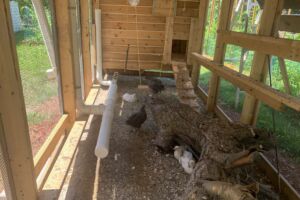
Last year the nesting boxes were wooden, and their design made it so eggs remained accessible to the chickens. This meant the eggs got dirtier and made them vulnerable to hungry chickens who could peck and eat the eggs.
“It was just too much bacteria that was going into the wood,” said Nicholas. “So, we ripped those out and we put these nesting boxes, which are made out of stainless steel.”
In the new steel nesting boxes, the chickens lay their eggs on an inclined mat, which makes the multicoloured eggs roll into a drawer inaccessible to the chickens.
This way, the community benefits from the long-lasting effect of an unwashed egg without having them get too dirty, said Nicholas.
And more upgrades are coming this summer.
Soon the coop will be disinfected from top to bottom, said Nicholas. On the floor of the covered portion of the chicken coop, a deep bed of litter measuring 45 cm deep of wood chips, dirt, chicken waste, and diatomaceous earth, have accumulated in layers like “a lasagna,” said Nicholas.
In the coming weeks, a tractor will remove the soft litter for use as fertilizer on farm fields growing corn and other vegetables this summer.
Sign up for email updates from The Eastern Door
“It’s already turning into black earth under there - it’s gold,” said Nicholas.
And children who attend the KHC summer camp will get a chance to see the chickens and help with their care, said Nicholas.
Gunn shell-abrated the hens for their tasty efforts.
“To quote Ms. Twain, ‘Let’s go girls!’” said Gunn. “But seriously, niá:wen kitkit!”
Hadassah Alencar, Local Journalism Initiative Reporter