Council joins national call for justice
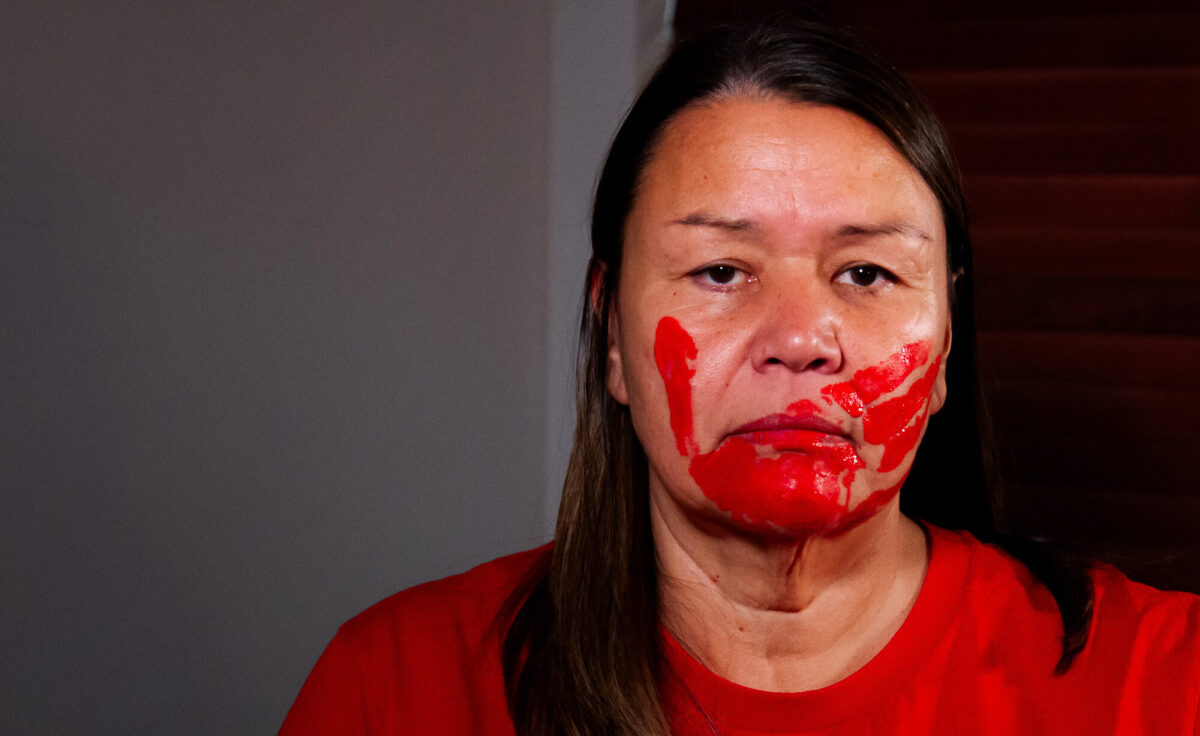
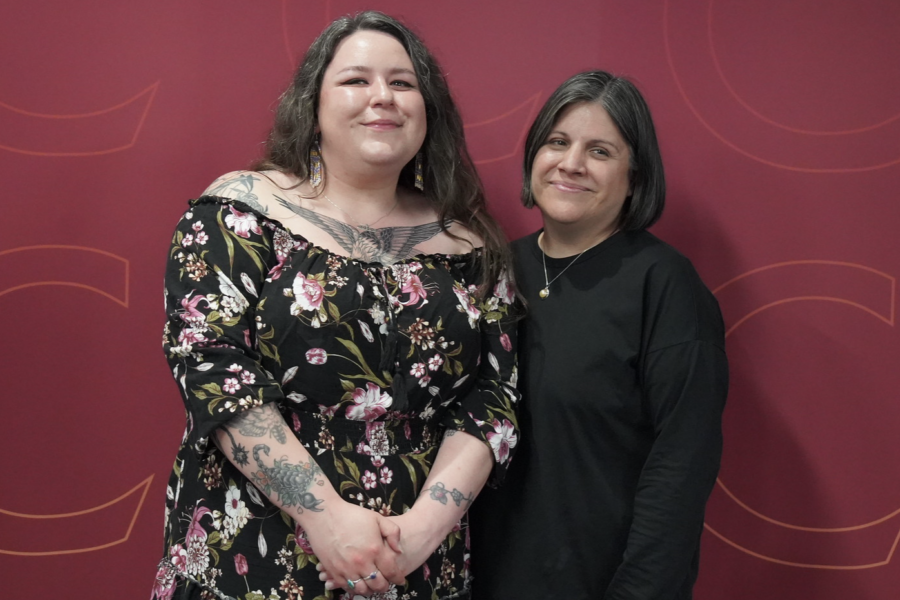
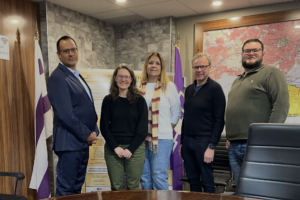
Melanie Morrison and the Mohawk Council of Kahnawake stand in solidarity with the MMIWG2S+ movement. Courtesy Melanie Morrison
On October 4th, the Mohawk Council of Kahnawake (MCK) joined communities across Canada in recognizing the National Day of Action for Missing and Murdered Indigenous Women, Girls, and Two-Spirited People (MMIWG2S+).
Marked with powerful imagery like red handprints and red dresses, this day serves as a national call to justice and a solemn reminder of the ongoing colonial-violence faced by Indigenous women and girls.
Despite the 2019 National Inquiry into MMIWG issuing 231 Calls for Justice, only two have been fulfilled by the Canadian government. “How many more lives will be lost while we wait?” was a question asked in a recent MCK Facebook post. This critical inaction fuels the urgency behind community-led awareness efforts like those emerging in Kahnawake.
Melanie Morrison, a long-standing advocate and MCK council member, has been instrumental in pushing for the inclusion of awareness events within MCK’s official calendar. “When I came into the office on October 4th last year, I expected something,” Morrison shared. “With my sister’s case and all the work, I’ve done for over 19 years, it was disappointing to see there was no acknowledgement.”

That changed when she and Carly Diabo, the Public Relations Engagement Liaison, worked to formally add May 5th (Red Dress Day) and October 4th (National Day of Action) to MCK’s annual calendar. These observances are now becoming part of the fabric of MCK’s internal culture, these are not just symbolic days, but opportunities to educate and unite the organization and broader community.
This year, under Morrison’s guidance and with support from Lisa Lahache-Delormier, MCK staff joined the movement for No More Stolen Sisters, with a red hand painted across their faces, symbolizing the silencing of Indigenous women through violence and erasure. Twelve staff members participated, forming a photo collage to visually represent their solidarity with every handprint being a call for Justice.
Morrison emphasized the need for more than performative gestures. “The government continues to fail us,” she said. “Every year, there’s a ‘report card’ on how many of the 231 calls have been addressed. The progress is almost non-existent.”
She also called for more structural changes, including the implementation of a Red Dress Alert system, improved funding and recognition for First Nations policing, and better mental health and victim support services, especially English-language services in Quebec.

Historically, community events such as vigils and marches in Kahnawake have been largely organized by Morrison and her family, rather than by institutions. “There’s never been anything I’m aware of that was done through any organization outside the family,” she noted. However, she remains hopeful that this will change, with MCK and other groups stepping up to support affected families more directly.
Morrison also stressed the importance of youth engagement and education. “We need to bring these conversations to the dinner table, to schools. Our young women are at risk not just in big cities but even in our own community. We must prepare them, raise awareness, and teach them to be alert of your surroundings.”
Looking ahead, she hopes that the MMIWG2S+ movement gains stronger support both within Kahnawake and across Turtle Island. “This is not an issue of the past. It’s happening now. Women are still going missing. Families are still suffering. We need to keep the conversation going so it doesn’t fall off the table like so many of our other issues.”
Sign up for email updates from The Eastern Door