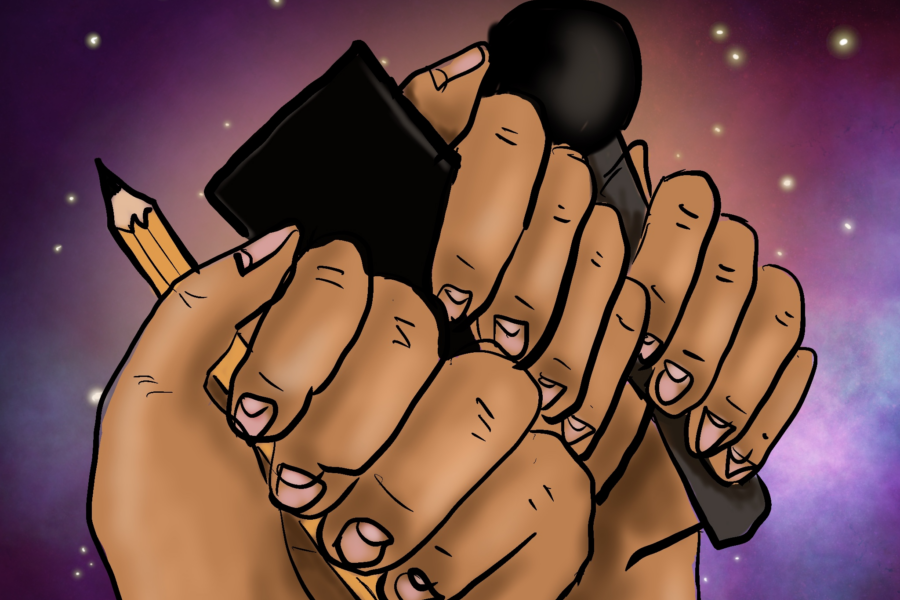
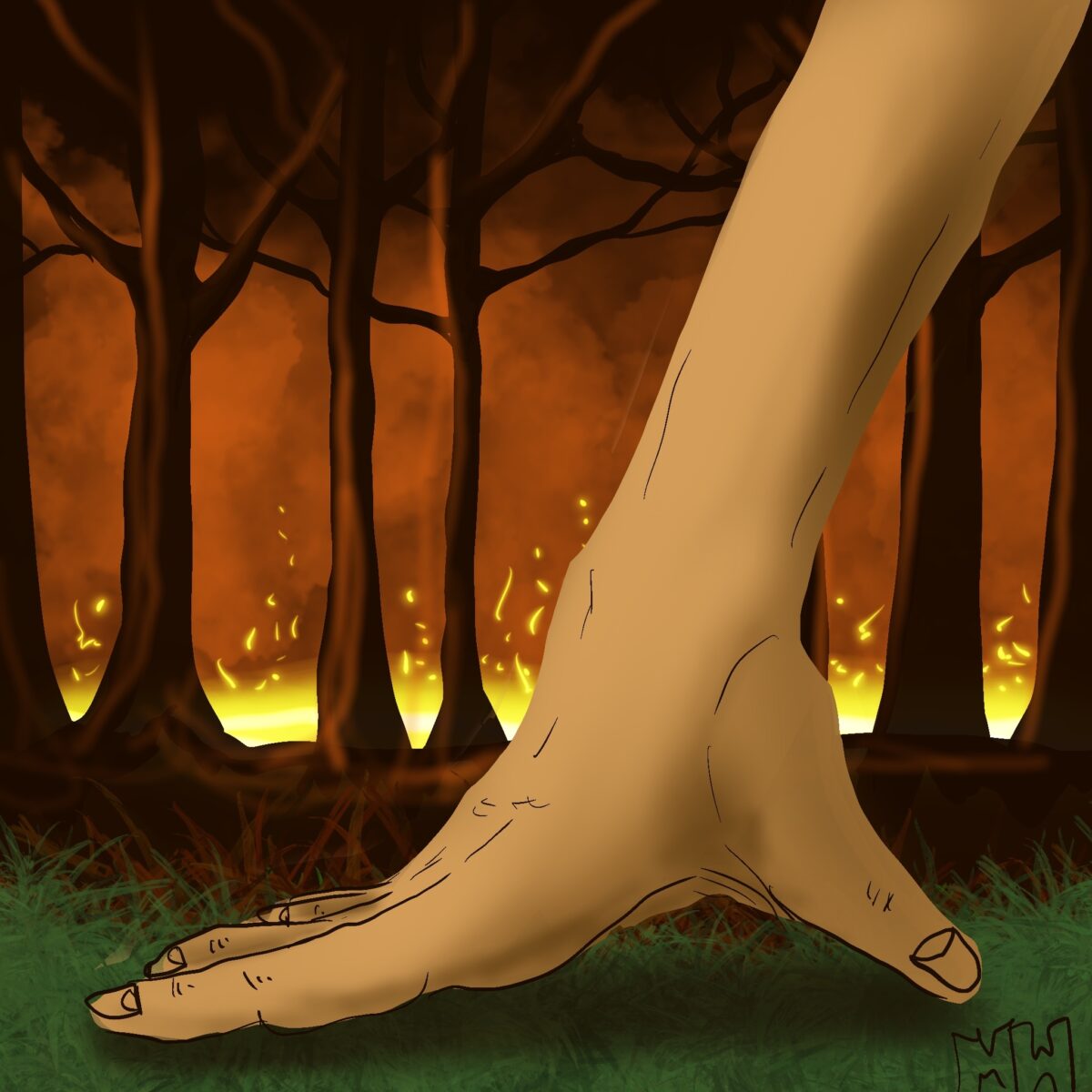
As forests burn, so must the spirit
Megan Kanerahtenha:wi Whyte The Eastern Door
For many years, Onkwehón:we and other climate advocates have warned of the dangers of abusing the environment for short-term gain, saying that it would soon be too late to come to the aid of Mother Earth.
Well, it’s become hard to ignore that the moment we all feared has arrived, to some degree - it’s now too late to avoid some of the worst consequences of climate change.
You don’t exactly have to be a rocket scientist to understand it, even if it is science: the global temperature keeps rising, and it’s not slowing down, and that has dangerous consequences for all life on Earth, human beings included.
It’s been six years since famed scientist-for-millennial-children Bill Nye resorted to lighting a globe on fire to make his point. Last month, renowned activist David Suzuki made headlines for going public with his belief that the fight is lost.
The unthinkable makes the rounds, and one of the world’s most revered environmentalists telling the world the fight is over, and we lost? Not long ago it would have been unthinkable indeed, although it’s not exactly what he said.
He did acknowledge that we’ve crossed disastrous thresholds that should never have been crossed, but what he wanted to convey is that the nature of the fight has changed. Gone are the days of lobbying and counting on politicians and governments to do something about the problem. They have, predictably, failed us.
Suzuki said in an interview with CBC that politicians can’t see past the next election. Instead, he said the fight needs to happen on a community and local level - including measures to mitigate the impacts that are now unavoidable.
Spring cleanups and better compost participation rates are not going to single-handedly save the world, but these are more important than ever.

Climate change is a vexing problem because it is so foreseeable yet so hard to avoid, simply because it is, as Al Gore famously called it, an “inconvenient truth.”
That’s to put it mildly. Colonialism itself is as short-sighted as can be, as is the economic system that naturally extends from it.
The dangers of climate change, seemingly far off, pertaining to an abstract collective need, never compare to the urgency of profit for the few. Acknowledging climate change as an existential threat is not just inconvenient, it’s a threat to the system that oppresses people as reflexively as most of us sneeze.
It’s not just politicians who are to blame, but the systems they are in place to reinforce. Corporations - most of which skimp where it counts to save pennies, offering little alternative for many of us but to be complicit in the destruction of the environment - have no conscience and breathe no air; they live or die on next quarter’s sales projections.
Meanwhile, roads are crammed with gasoline-guzzling cars driven by people just trying to make ends meet, and store shelves are crammed with single-use plastics.
It’s no secret that breathing the air has gotten a lot harder these past few years, at least during certain weeks as wildfires ebb and flow. It is frustrating to think that, as a professor put it to CBC recently, an area the size of New Brunswick already burned up in Canada in 2025 alone. Think of it - that’s over 7.3 million hectares of forest, a colossal area. There were more than 700 wildfires burning at the same time this month.
Humans are famously adaptable, but while we may now have to choke down the air every few weeks, we must never allow ourselves to get used to it. It is not a fact of life or nature, nor an anomaly that somehow just keeps happening.
Our children must grow up knowing this isn’t normal.



Right now, the Assembly of First Nations Quebec-Labrador is mobilizing against Quebec’s plans to pass Bill 97, a forestry bill, which would give industry the power to raze forests over First Nations’ objections, even if these forests are crucial to First Nations’ efforts to restore traditional ways, let alone to protect biodiversity and the air we all breathe.
That seems to be a trend lately, and we fear it’s a swing of the pendulum in the wrong direction. Enough is enough. First Nations have rights that have to be respected, no matter what loggers, miners, and the average Joe thinks.
It’s not just Quebec going out of its way to endanger forests. Over in Ontario, the government’s dreams of paving the greenbelt and handing it over to developers is a scandal that even led to an ongoing criminal investigation, but Doug Ford went on to win an election after that became public knowledge.
It was politicians who signed the 11th-hour 2015 Paris Accord, and politicians - well, one politician - who undermined it and pulled out of it. That politician was Donald Trump, and he went on to win another election.
Politicians are clearly not the answer, and neither is the voting public, so what is?
We don’t know, but David Suzuki is right that change happens locally. In fact, it starts at home, and most of us could do better when it comes to composting, recycling, and trying to avoid burning gasoline when it’s not necessary. Spring cleanup shouldn’t be a day of the year, but a way of life.
People on the territory firing up so-called controlled burns in record-setting heat while locking out the fire department, as happened last week? Well, that ain’t it. That’s individualistic behaviour.
What’s needed is a community spirit.
Sign up for email updates from The Eastern Door
Kahnawake, in a better position geographically than a lot of Indigenous communities when it comes to navigating the impacts of climate change, could have plans in place to open its doors to Onkwehón:we in need of shelter when fires touch their communities, perhaps even in partnership with other First Nations.
Meanwhile, for local residents, initiatives like the cooling shelter could be increasingly important in the future. As could the need to boost that neighbourly instinct, to check on not only elders but those with asthma or other health issues, caring not only for their safety but even their need to interact with other people when the great outdoors is not hospitable.
It’s depressing to know the air we breathe is full of smoke from fires burning thousands of KMs away, often directly harming Indigenous communities who have always advocated for the importance of being good stewards of the lands and waters of Turtle Island.
That’s the world we live in now, the world it seems is being passed down to our children. But we owe it to our children to give them a fighting chance for a happy existence on this planet, and that will take a fighting spirit and a community-first mindset.
After all, prioritizing the individual over the collective is part of the reason we’re in this mess. It only stands to reason that embracing the collective is a vital tool in reclaiming what has been lost.
TED Staff