Alliance brings border message to Washington
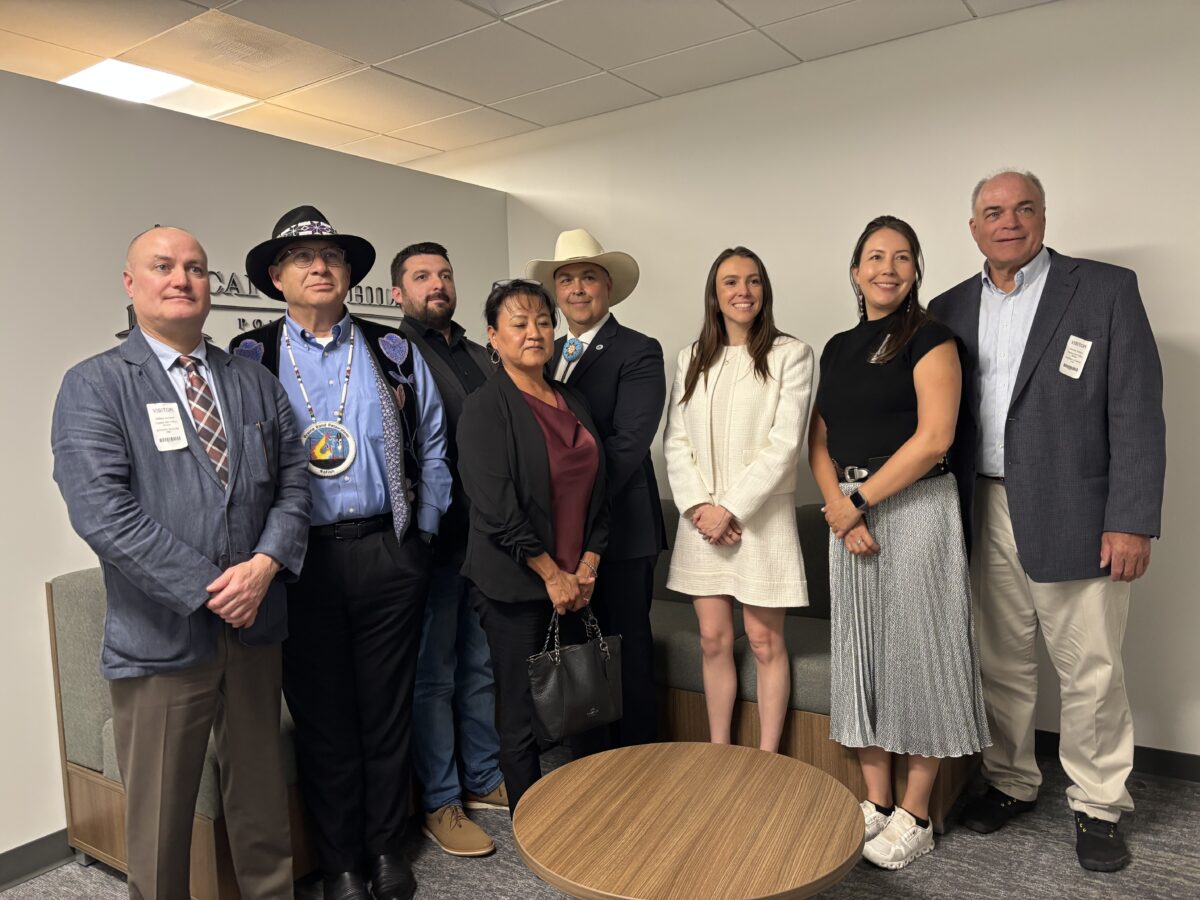
Courtesy Cody Diabo
The Jay Treaty Border Alliance brought a narrow focus to the capital of the United States this week, demanding the country end blood quantum requirements for border-crossing rights and respect that it is up to First Nations to determine their own membership.
“The issue is other people tend to make it about an immigration issue, a border security issue. It’s not about a border security issue. We’re simply saying remove the blood quantum requirement from the legislation,” said Mohawk Council of Kahnawake chief Cody Diabo, who was part of the delegation to Washington, DC.
The Alliance exists to advocate for the recognition of border-crossing rights as guaranteed by the 1794 Jay Treaty between Great Britain and the United States, which acknowledges the prerogative of Onkwehón:we to freely traverse the colonial border. However, the US requires that the individual demonstrate they are “at least 50 percent of the American Indian race,” whether through ministry documentation or a letter from the band along with other evidence.
“Many of the First Nations determine our memberships based more on lineage, and we don’t do blood quantum anymore,” said Diabo. “It’s kind of ironic because right now First Nations people are the only ones who get judged based off their blood quantum. Everyone else from the past, whether of Asian descent, or any others, that’s all been removed from US legislation except for First Nations people.”

The delegation, which included officials representing Indigenous communities from both sides of the border, met with staffers working for elected Republicans and Democrats as well as Sara Perkins, who is deputy assistant secretary at the Office of Intergovernmental Affairs under the US Department of Homeland Security.
While the new US administration under president Donald Trump has earned a reputation for being hostile to those it does not view as Americans, Diabo said a heightened degree of difficulty exercising Jay Treaty rights has been a couple years in the making, overlapping with the latter part of former US president Joe Biden’s term.
Diabo said he was optimistic that US officials were open to what the delegation had to say. He explained to them that communities like Kahnawake built skylines in the US and have a history of joining the US Armed Forces.
“I referenced my grandfather who was in the Navy, who lied about his age and signed up at 16 after Pearl Harbor was attacked, and it never seemed like a problem then, when they needed something from us,” said Diabo, who felt this message was well received.

Meanwhile, he said, officials from the Department of Homeland Security signalled a desire to keep the conversation going with technical tables and that one of the department’s advisors, who is Lakota, showed particular interest in ensuring the discussion doesn’t get sidelined.
“Overall, there were a lot of positive things that happened. Hopefully I can report back in a couple weeks or maybe by midsummer to see what kind of progress there’s been,” he said.
In terms of the government on this side of the border, Diabo said it is still essential that Canada recognize the Jay Treaty as the US and Great Britain do, adding that prime minister Mark Carney’s welcoming of King Charles for the throne speech should come with a willingness to acknowledge the validity the agreement, which predates Canadian Confederation.
Sign up for email updates from The Eastern Door
Marcus Bankuti, Local Journalism Initiative Reporter