Agricultural opposition to wind farms growing

A concept image of the Des Cultures Wind Farm project, which Kruger Energy operates and is co-owned by the Mohawk Council of Kahnawake. Courtesy Kruger Energy
As the Union des producteurs agricoles (UPA) and other interest groups call for a moratorium on new wind farm projects operated by private firms on agricultural land, the Mohawk Council of Kahnawake (MCK) finds itself having to plead its case to uphold its right to pursue own-source revenue.
Council chief Ryan Montour participated on March 25 in a hearing in front of the Commission de protection du territoire agricole du Quebec (CPTAQ), an independent regulatory body whose role is to look into projects that would affect farmland in the province.
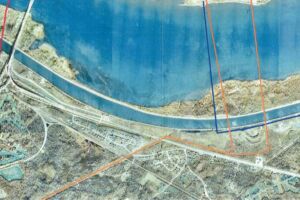
The hearing regarded the proposed Les Jardins Wind Farm project, which would be situated in Napierville, Quebec and would be operated by Kruger Energy and co-owned by the MCK, similarly to the already existing Des Cultures project, only bigger in scale.
The CPTAQ had previously recommended against the project in December, citing the agricultural importance of the land it would have been built on.
A hearing was requested, and granted, for March 25. Montour presented the MCK’s case in the hearing, taking the place of Iohahí:io Delisle, who recently resigned from Council. The MCK’s legal representative and Keisha Goodleaf, the director of revenue and business development, were also present.

Montour’s main arguments centred on the MCK’s right to pursue own-source revenue, and its efforts to do so with green energy projects.
“We needed to tell our side of the story,” said Montour.
“We’re a strong, resilient people. We’re definitely going to work on the different sectors of our economy.”
He described his presentation as “educational” on how the MCK has been pursuing green energy projects in the past, including with Kruger; the pursuit of own-source revenue by Kahnawake as a means to not rely on the federal government; as well as the food sovereignty movements in Kahnawake, to show that they were conscious of the importance of farming.
The six windmills in the Des Cultures project have already generated more than a $1 million in revenue for the MCK, and 21 windmills is what is planned for the Les Jardins project.

“Can you imagine what 21 windmills will produce us? This is us saying we have a right to an economy, we have a right to economic reconciliation,” said Montour.
“This decision from CPTAQ, it could cause a real harm to our community. What do we do with the revenues? Language and cultural education, the programming that we do, infrastructure projects, housing projects, different units within the MCK, different programs. It’s not just a saying. For us, it’s real for us to be able to have an economy.”
Both Kruger Energy and Hydro Quebec also participated in the hearing. Both declined to comment, citing the current deliberation by the CPTAQ.
The UPA, the citizen’s group Regroupement Vigilance Energie Quebec, the Canadian Union of Public Employees, and Vent d’elus, a group made up of current and ex-politicians in rural areas targeted by wind farm projects, released a statement on March 26 calling for the end of Hydro Quebec’s call for tenders of wind farm projects.
“The pressure on farmland is heavy and constant. For 10 years, more than 17,000 hectares of farmland have been sacrificed to urban sprawl, financial and real estate speculation, and infrastructure construction. All facets of the Quebec government, including Hydro Quebec, must avoid making this problem worse at all costs,” UPA president Martin Caron said in the March 26 statement.
Sign up for email updates from The Eastern Door
The necessity of Hydro Quebec being the sole owners of wind farm projects as well as the importance of rural communities to Quebec’s patrimony were also cited as arguments for the moratorium.