Aged out and left behind
The former youth in care left behind by post-majority support services
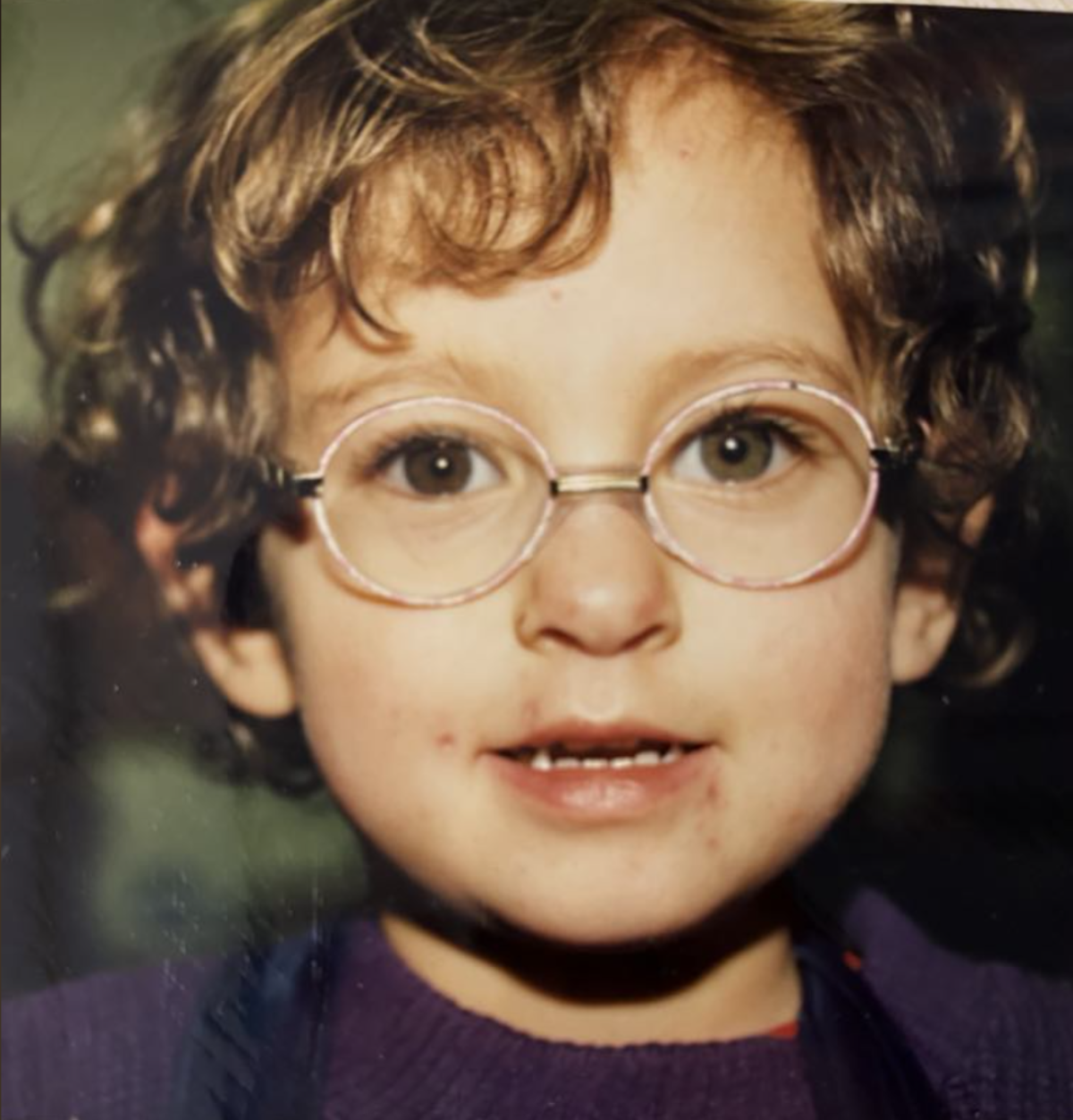
Lily Ieroniawákon Deer was just four years old when she was put in her first foster placement. Courtesy Lily Ieroniawákon Deer
It’s the little things that sting the most for Lily Ieroniawákon Deer. Small, day-to-day nuggets of knowledge that she doesn’t have, like knowing whether or not to paint the rust on her car.
“There’s still a lot of things I don’t know,” Deer said.
From the ages of four to 14, Deer was in the child welfare system, moving back and forth between a series of foster homes in Kahnawake, Kanesatake, and northwestern Ontario. She was never in one place for long, attending eight different schools throughout those formative years.
Now 30 and living in Kahnawake, Deer is still healing from the trauma she experienced growing up in the child welfare system. It’s been a lot to come to terms with, but what’s hurt especially badly has been the slow, creeping feeling that even now she’s been “left behind” by the very programs that were implemented to help adults who grew up in the system.
For many, the child “welfare” system is a continuation of the ongoing project of colonialism, the latest in a dark history book that includes chapters like residential schools, Indian day schools, the Sixties Scoop, and now what has become known as the Millennium Scoop. The legacy of foster care and adoption for many Onkwehón:we has been about ripping families apart and leaving parents and children without the tools they need to repair the harms the system has caused.
In 2022, the Canadian Human Rights Tribunal (CHRT) acknowledged that, and made sweeping orders for large-scale changes within the Canadian child welfare system, part of a case brought forward by the First Nations Child and Family Caring Society. One of those orders included that Canada would fund, at actual cost, post-majority care for youth aging out and young adults who had formerly been in the child welfare system.
The program kicks in as a youth approaches the age of majority and can be until a youth’s 26th birthday. The age of majority refers to the age at which a youth officially ages out of the system - in most places, including Quebec, this is at age 18.
The services, which are known as post-majority support services (PMSS), became immediately available to youth in the spring of that year, and youth who were past the age of majority but still under the age of 26 were also able to access support, even if they’d been out of the system for some time.
The program seemed like a step in the right direction. Finally, something to fill the gap that was too often overlooked when young people were abruptly cut off from the child welfare system at the age of majority, a program that could support youth with the big things like financial support and housing, but also the less obvious stuff, like applying for bank accounts, and having a network of responsible older adults to call with basic questions about the logistics of the real world.
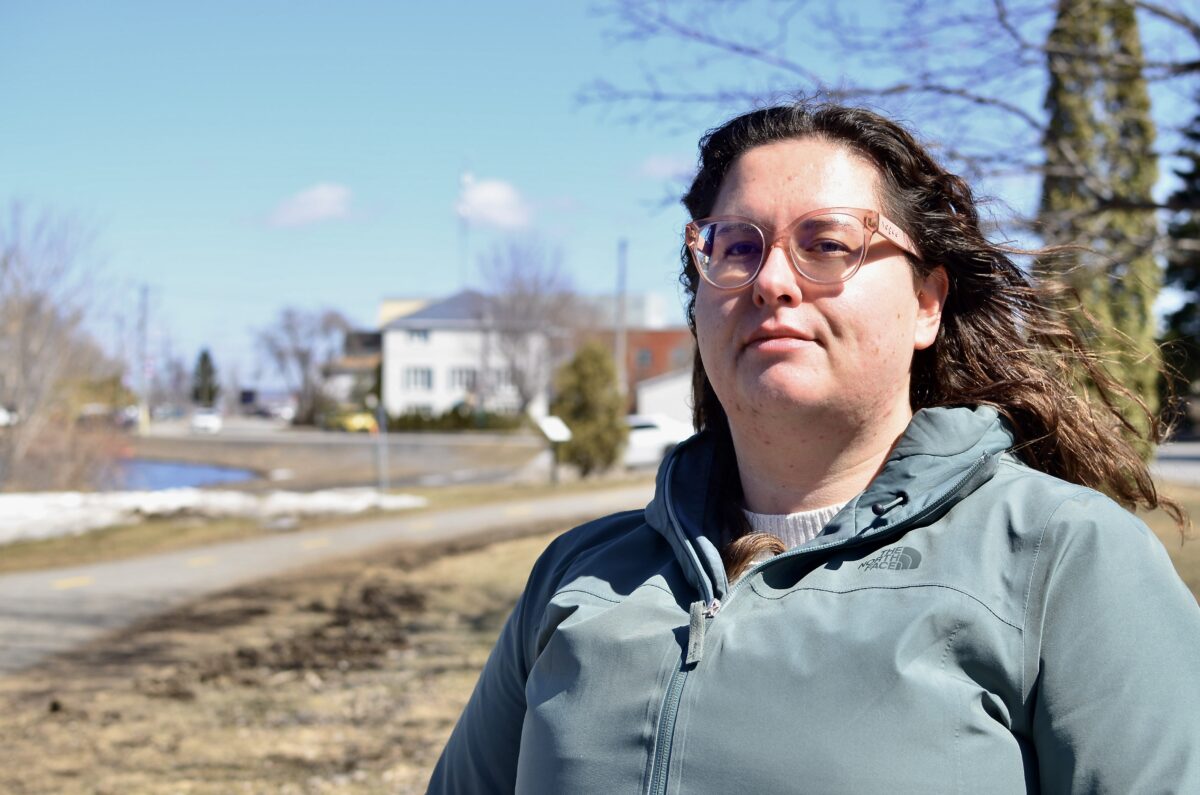
Now 30, Deer is a passionate community voice for youth currently and formerly in the child welfare system. Eve Cable The Eastern Door
The only problem? Those questions and needs don’t go away when a youth turns 26. Deer, who had just turned 27 when PMSS came into effect, still had plenty of support needs then - and she still has plenty of those same needs now.
“I have to admit it, I am jealous of the youth who are aging out now,” said Deer.
Deer said that it’s less to do with feeling resentment for youth aging out of care today, and more to do with an unshakeable feeling that people like her have been left behind - not just in terms of financial support, but also in terms of simple life advice and mentorship
“It’s help with navigating getting your medicare card, your driver’s licence, IDs, and you just need help to have those life skills,” Deer said.
Settlement agreements, like the historic $23.4 billion deal that was approved in federal court in 2023, recognize chronic underfunding but fail to address the trauma and abuse faced by children who went through the welfare system, and though long-term reform aims to make changes to how and why children enter the system, there’s still a lack of support and services for people like Deer, who don’t qualify for PMSS. While settlements are important, there’s no replacement for the support that Deer should’ve received, and badly needed, when she was starting her adult life.
“I just didn’t have that,” she said.
PMSS in Kahnawake
In Kahnawake, PMSS are handled by Kahnawake Shakotiia’takehnhas Community Services (KSCS), which manages child welfare within the community. Though PMSS grew in the community in the wake of the CHRT decision, KSCS had identified a need for support services for youth aging out of the system back in 2020, and a youth support worker was hired to develop a program addressing those needs.
Those supports grew when funding came in for PMSS in 2022, and now four youth support workers, a youth advisor, and an admin assistant support youth participating in the program.
Nowadays, Deer works for KSCS, and while she isn’t involved in child welfare operations, she does work in strategic planning, and she said she’s still hopeful for the future of the organization in Kahnawake, as old wounds are healed for many adults who have been through the system.
Keanu Hemlock, KSCS’s team leader of PMSS said that he and his team are working to build trust with the youth they currently serve.

“It’s been a lot of relationship building. It’s been a lot of land-based programming, a lot of creating connections,” he said.
That’s in line with what many former-youth-in-care advocates have called on as they push for reform within the system. A system of equitable standards outlining key supports for youth transitioning into adulthood was published in 2021 by the National Council of Youth in Care Advocates, with eight pillars addressing various needs validated by youth in care currently and formerly across Turtle Island.
Pillar four, for instance, discusses relationships, and states that “every young person should have people in their life that they can count on unconditionally and interdependently.” Criteria for youth to have the tools to forge lifelong connections and support networks are outlined, as well as the importance of stakeholders operating in collaboration and taking responsibility for helping youth form those networks. The goal in tracking these needs is to foster interdependence, with youth able to rely on support networks that they have been empowered to build and be a part of, rather than providing services with no resources for fostering interpersonal community connections.
“The whole concept is creating independency, not dependency,” said Hemlock.
PMSS facilitated by KSCS also helps youth connect with other potential services within their system, such as psychological services, traditional support services, or addictions counsellors. Youth have participated in activities like spearfishing in Tyendinaga and taken trips to Tioweró:ton, and the program has strong ties with Nova Career Centre in Chateauguay, where many youth have participated in vocational trainings.
“Whatever the extra help they need is, we try to create a circle for them of support,” Hemlock said. “The role is creating that network of support for them.”
When the program came into place in 2022, Hemlock said an effort was made to reach out to youth who had previously aged out of care, but who were below age 26, to make them aware of what the program could offer them.
But youth who were 26 or older in 2022 aren’t eligible to access the program.
“If you’re a youth that’s in that age bubble where you missed the program in its entirety, you might be missing those supports,” said Hemlock.
He said that while there’s resources available at KSCS for all community members that former youth in care are eligible to access, youth might not inherently know where to find them. That’s the gap that PMSS seeks to fill - and the gap that remains for youth that can’t access the services.
“You might have to research, or to have somebody help you find these things. That might be the missing piece of the puzzle, for them to have a support system to know where to look for those things,” Hemlock said.
Emerging adolescence
For Deer, figuring out what support she needs and how to access it has been a major hurdle to face in adulthood. At times, it’s felt like everybody else had some kind of guidebook for how to be an adult, one that she wasn’t allowed to read.
To her, it felt unfair that she wasn’t included in the PMSS program. Twenty-six felt like an arbitrary age for services to be cut off - and in some ways, it is.
Dr. Sidney Segalowitz, a professor at Brock University, is a neuroscientist whose research has focused on brain development. In 2020, an affidavit was made by Segalowitz, which was used as part of The Caring Society’s case for PMSS at the CHRT.
In that report, Segalowitz described a growing consensus in the neuroscience community that the brain is not fully developed at the age of 18, and that there is instead a time period known as “emerging adolescence” wherein the brain develops to maturity.
Emerging adolescence typically refers to the period from 18 to 25 years old, and Segalowitz identified the average age at which brain development in a healthy adult nears completion as being around 25 years old - meaning that there are many brains that develop sooner, and many that develop later.
There’s lots of factors that might mean someone’s brain develops faster or slower. One major factor is trauma - trauma causes stress, and it’s well documented in the scientific world that stress can negatively impact brain development. Going through the child welfare system puts individuals at immense risk for experiencing compounded trauma, with the harms they experience before, during, and after going through the system leading to overwhelming stress.
“These kids have been put through very high-risk developmental situations. We cannot possibly say who’s going to be affected and who’s not, because there’s such individual differences, but they’re going to be more at risk,” Segalowitz told The Eastern Door.
Deer has vivid memories of the trauma she experienced during her time in the child welfare system, which she has invested precious time and money in working through as an adult.
“I would literally call Kids Help Phone on my own. I researched the Canadian Mental Health Association, and I was going to walk there on my own,” she said. “I would call places from the time I was nine years old, because no-one else would. And it’s tiring.”



A mature brain is at peak performance for emotional self-regulation and complex cognitive functions, including in terms of risk-taking - adolescents and young adults whose brains have not yet fully developed may be more likely to make poor judgement calls, or engage themselves in more dangerous behaviours.
Youth who have experienced high-risk developmental situations, like the trauma of being in care, are more likely to be in the “sizable group” whose brain might still be developing well into their late twenties.
It would be reasonable, then, for services like PMSS to compensate for that potentially delayed development, and “fill the gap” caused by the trauma they’ve experienced.
“If they’re more at risk, then we should be applying some method or addressing that risk,” Segalowitz said.
According to Segalowitz, studies of brain anatomy and function demonstrate that there are continued brain developments well into the third decade after birth.
For many decades, 18 has been recognized as the official start of adulthood, but Segalowitz said that it’s time legal and social systems catch up with the neuroscience.
“I finished my PhD 50 years ago. At that time, people really thought that there wasn’t much qualitative change in brain structure after birth or just after infancy,” he said. “We’ve come to realize that things are much more fluid than that.”
“A red hot poker stick”
Cindy Blackstock, executive director of the Caring Society, is one of the country’s leading child welfare experts. Herself Indigenous, a member of Gitxsan First Nation, she’s continued to argue at the CHRT and beyond that Canada needs to take accountability for its role in the continued harm caused to Onkwehón:we children in the child welfare system.
She said that the research by Segalowitz and the entire neuroscience community “puts a red-hot poker stick into the arbitrary setting of 18 or 19 as dates of adulthood by colonial powers.
“We have a population of young people, who have had major disruptions in their childhood, and often as young people are left with the state being their parent,” Blackstock said. “They need that additional support, because other young people get that support naturally though their family unit. In the care system, that’s often not the case.”
When Deer needed stability the most, at a young age when her brain was developing, she found herself on her own.
“I feel like being in care is just learning that the only person you have is yourself, because even your social worker changes,” Deer said. “I don’t even know how many social workers I had. Some wouldn’t even say goodbye to me or tell me they were leaving.”
Being reunited with the family unit doesn’t always lead to stability. It didn’t mean that for Deer, who returned home to her mother at the age of 14.
It wasn’t until she built up a solid support system of “chosen family” well into adulthood that she really felt stability, and Blackstock said that’s not uncommon for youth who are able to return to their family before they reach 18.
“Even when your family is providing some support, they’re often living in poverty themselves, and not able to provide you with the range of support you actually need,” Blackstock said.
“This is a real critical period for setting young people up for success. That’s why PMSS are really essential for that young person in their transition to adulthood.”
Finding a support system
Over the years, Deer has put work into building up a network of people she considers family - some blood, many not.
It hasn’t always been easy, and she’s had to work hard to learn how to trust people.
Sign up for email updates from The Eastern Door
Deer said that process has helped her begin to heal the wounds she developed throughout her time in the system, and she’s been able to build support networks with people like her now-husband, who has helped her feel safe opening up about what she’s been through. Still, it took a long time before she fully shared her experiences in the system with him.
“There was this deep fear of ‘What if I tell him something and it’s going to be the last straw and he’s going to leave?’ and it felt similar to growing up, something being the last straw meaning that I was going to get moved. And now, instead of getting moved, people are going to leave,” Deer said. “I’m over it now, but in the beginning, it was a lot.”
Her husband grew up in a supportive home and continued to receive support from his family throughout university and into adulthood, something Deer said her mother didn’t have the resources to support her with when she was in her early adulthood.
“We just come from completely different worlds,” she said, adding that it’s been hard to reconcile the grief she has for her childhood self with the life she lives now.
But part of what heals that inner child is letting people like her husband in, and recognizing the type of love he shows her.
“It’s just unconditional,” she said.
Despite having hope for Indigenous youth today, Deer said that she’s still processing the additional trauma felt by herself and others like her who have been “left behind” by PMSS and other aspects of the child welfare system.
She’s forced to reckon with it on the big days - like when she found out McGill University started offering free tuition for former youth in care a year after she graduated from her own university program at Carleton, for which she’s still paying off loans to this day - and on the smaller ones, like when she feels under the weather, and she’s not sure who to call.
Processing her trauma by leaning on people like her therapist, her husband, and close friends has helped her to feel safe in stability - something that was a foreign concept to her as a child.
Still, it’s not always easy to find people that relate to what she’s been through.
“In the past, when I was a kid, I used to think that the only way I could relate to other people was by telling them my entire life story, because I needed them to understand exactly where I was coming from with the full details, the full emotions,” she said. “Over the years I’ve learned that’s trauma-dumping, that’s not cool. I try to be hyper-independent. If I need to find a solution, I’ll go and find it on my own.”
Deer says that what’s really missing is some kind of support system for youth like her, who weren’t covered by PMSS, but who are still dealing with the aftershocks of going through the child welfare system.
“My entire life has been an identity crisis. Even growing up, how many kids do you meet that actually went through the system?” Deer said. “There needs to be some sort of acknowledgement, there needs to be some sort of network of support. We still don’t all have people in our lives that we can rely on.”
Though some days feel like an uphill battle, Deer said that she’s forged ahead with healing her own childhood wounds. She’s travelled to Ottawa with other former youth in care to watch a federal judge approve a historic settlement deal to compensate youth who experienced discrimination due to chronic underfunding of on-reserve welfare services, and she now works for KSCS - a full circle moment, having spent so much of her childhood in their care.
Next week, Deer will be in Glasgow, Scotland, for the International Foster Care Organization annual conference, where she’s been selected to share her independent research about the experiences of Indigenous children in foster care with experts from around the world. The cost of the trip is being covered by KSCS, which Deer said feels like another little bit of healing, and she’ll be sharing her work with the community at a presentation in late June.
It can be scary to take big steps like this, but when she feels apprehension about sharing her experiences with others, Deer remembers a lesson one of her close friends once taught her.
“She told me, ‘You’re allowed to share anything you need. That’s your truth. Sharing is a part of the healing,’” Deer said. “It’s really nourishing, it really helps these deep wounds.”
This story is part one of a two-part series. It was produced as part of Spotlight: Child Welfare, a collaborative journalism project. Tell us what you think about the story here.