Two-Axe Earley, Cree part of metro project

A new interactive, online map of the Montreal metro system was launched this past weekend, which aims to “pay tribute to the women who have played a vital role in the making of Montreal and its social, cultural, and economic prosperity,” according to the project’s website.
The project is inspired by a similar project, first done in New York City in 2016 and also created for cities like London and Barcelona.
The author and scholar Chantal Ringuet was the creator of the project, which is supported by the Université de Montréal, in partnership with the Société de transport de Montréal (STM).
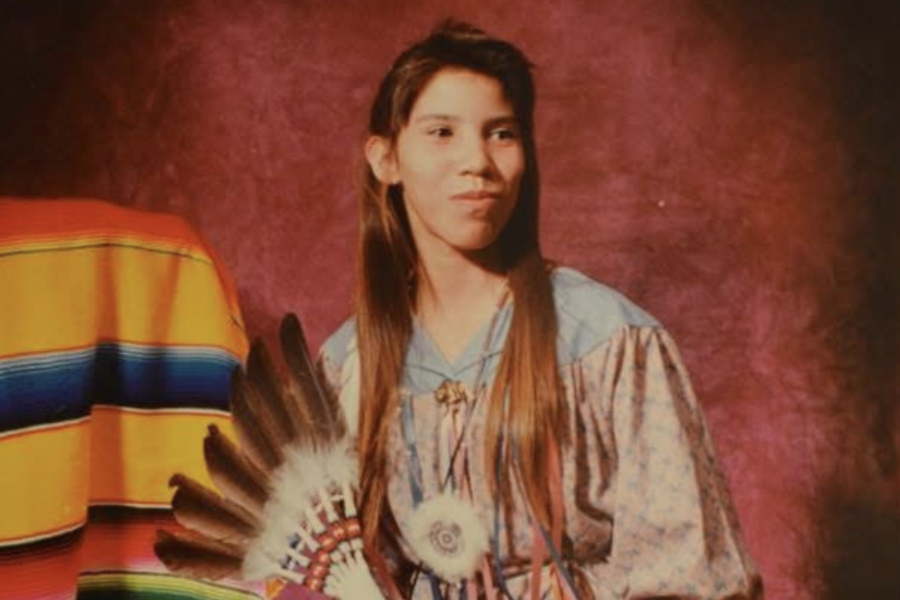
Among the 73 women who are in the project are four Indigenous women: Indigenous women and children’s rights activist Mary Two-Axe Earley from Kahnawake; news anchor, radio host, and activist Myra Cree from Kanesatake; Abenaki artist, activist, and documentary filmmaker Alanis Obomsawin; and Innu poet, director, and documentary filmmaker Joséphine Bacon.
“We wanted to give space to Indigenous communities, and the Mohawk community, as the territorial issue is important,” said Ringuet.
Ringuet said that each living person considered for the map was contacted by the project team to give their authorization to be included.

In the case of Two-Axe Earley and Cree, who have both passed, they instead spoke to their family and, for Two-Axe Earley, the Mohawk Council of Kahnawake (MCK).
“I think it’s a wonderful thing, to educate people and make people understand that the Indian Act affected our people in many different ways and different aspects of their life,” said Council chief Stephen McComber, who is on the heritage file.
McComber was the contact for the project on the MCK side.
He discussed the project with Annie Pullen Sansfaçon, the professor at the School of Social Work at the Université de Montréal, who is also Indigenous and said that Two-Axe Earley’s efforts to restore the rights of Indigenous women who marry non-Indigenous men helped her and thousands of women like herself.
“She wanted to honour her that way, with this project,” said McComber.
Although McComber did not know Two-Axe Earley personally, he was a good friend of her son, Edward Earley, prior to his passing.





“I think he would really appreciate a little bit the part that I played in making this happen,” said McComber.
Ringuet spoke with Cree’s daughter, Myra Cree-Bernier, to get her blessing for the project.
“She was rejoiced to learn that we had retained her mother among the women we were honouring. She liked our process, the project itself, and what it stands for,” said Ringuet.
The stations chosen for each woman were chosen based on where they were born or where they lived, as well as their field and where they worked or studied.
For example, according to Ringuet, Angrignon station was chosen for Two-Axe Earley, as it is the closest to Kahnawake, where she was born and lived. For Cree, Papineau was chosen because of her career at Radio-Canada.
Along with the interactive online map, it will also be displayed in STM stations.
Sign up for email updates from The Eastern Door
Ringuet said the project has garnered a lot of positive reactions, and she hopes to continue the debate on the question of recognition of women in the city and their presence in urban place names.
The Montreal Metro does not have any station named specifically after women, although three are named for locations that include women’s names - Côte-Sainte-Catherine, Square-Victoria-OACI, and Villa-Maria.
The STM, while a supporter of the project, said that there are no plans to permanently rename any Metro station at this time.
“The overall direction of the STM is to preserve current station names, which are part of Montreal’s toponymic heritage and are integrated into the habits of our customers. Furthermore, any name change would entail significant expenses due to the necessary changes to signage and customer information tools. These expenses would not be wise in the current financial climate.” said Renaud Martel-Théorêt, spokesperson for the STM.
“However, we fully support the objective of the Montreal, City of Women project, which aims to highlight the women who have shaped today’s city.”