Initiative launched to support renewable energy
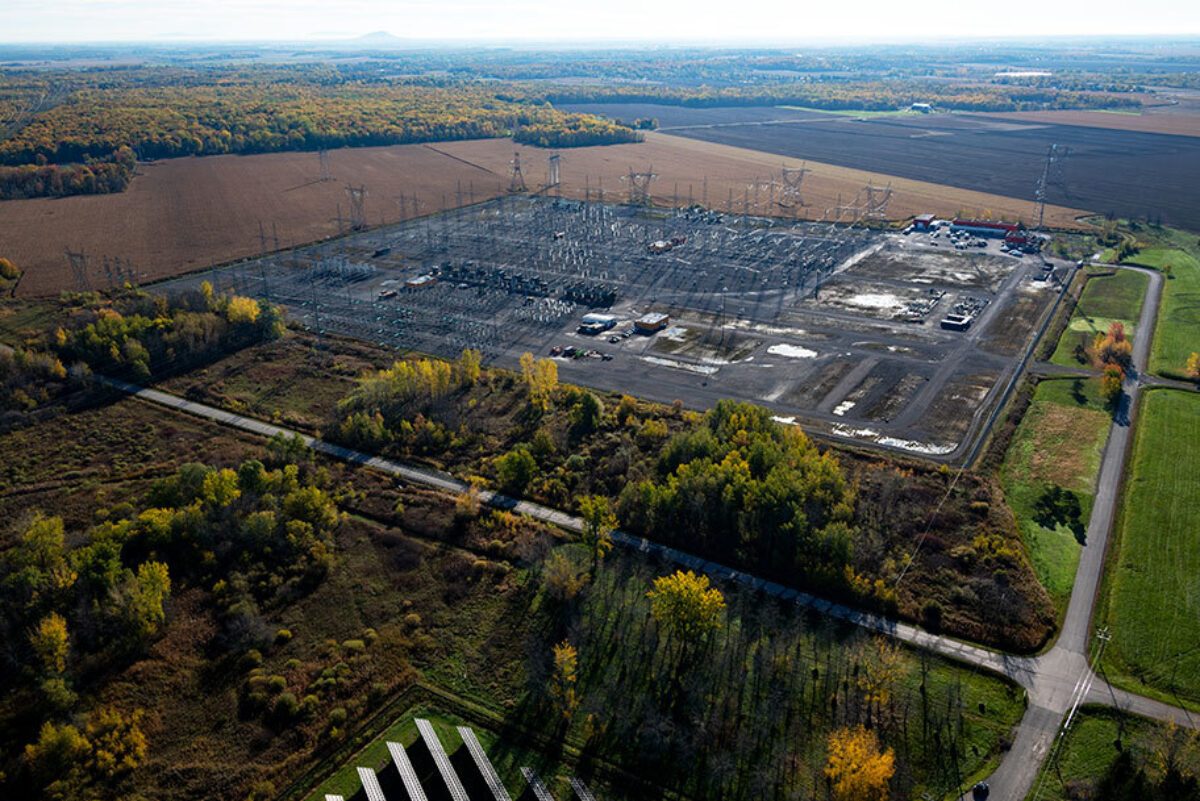
First Nations communities looking to get into renewable energy can now seek investment through a new partnership between the Mohawk Council of Kahnawake (MCK) and the Caisse de dépôt et placement du Québec (CDPQ).
Both the MCK and the Caisse, the largest institutional investor in Quebec, are ready to jointly invest in renewable energy projects in the province, all while providing the technical expertise needed to make them profitable.
“We do know financing is always difficult for First Nations communities, so this is going to be an amazing opportunity for people who have very similar, if not exactly the same, visions and ideas about the environment and stewardship,” MCK grand chief Cody Diabo told The Eastern Door.
It was the prior Council table that reached out to the Caisse about the idea to co-invest in Indigenous-led renewable energy projects, he said, following the MCK becoming a co-owner of the Hertel-New York transmission line alongside Hydro Quebec last spring.
The line, which is still under construction, will run underground from La Prairie through the Richelieu River into New York State, and is expected to deliver 1,250 megawatts of electricity to New York City. The MCK owns 10 percent of the project.

“It was the very first time that any third party, let alone a First Nation community, had the opportunity to own a piece of Hydro Quebec infrastructure,” said Éric Doucet, a lawyer for the MCK overseeing its partnership with the Caisse.
Both he and Emmanuel Jaclot, the Caisse’s senior vice-president, were also there for the announcement of the partnership, made at a virtual press conference last week.
Ever since that agreement was signed the MCK has been hearing from First Nation communities looking to cash in on renewable energy, Doucet said, sparking the idea to launch a partnership with the Caisse.
“We saw an opportunity to help other Indigenous communities get what Kahnawake was able to get with Hertel, and to help with the access to financing,” Doucet said.
The new partnership aligns with goals Hydro Quebec has already set for itself through its 2035 action plan, he added, which prompted the creation of an economic reconciliation strategy with First Nation and Inuit communities in the province.



“We need to make sure the community impacted is happy with the project to start, because this is not a way to push a project down anybody’s throat,” said Jaclot, also the Caisse’s lead on infrastructure. “On the contrary, we want our project together to be the best in class in terms of consultation. Bringing all the stakeholders around the table will be the signature of this partnership.”
Hydro Quebec has already committed to investing upward of $110 billion into new renewable energy projects between now and 2035 to meet growing demands on its network.
“The challenge for Quebec is we need a lot of energy. We’ve come to realize that we’re short energy over the last five, six years, and so there’s going to be a lot of renewable projects throughout the province,” Jaclot said. “For me, it’s critical that we bring First Nations to the table as co-owners and as investors in these projects.”
The renewable energy projects - whether they’re wind, solar or hydro - don’t strictly have to be with Hydro Quebec either, he said. Private energy providers like Energir could also be involved.
There’s no set cap on how much the MCK and Caisse will be willing to jointly invest in the projects.
Sign up for email updates from The Eastern Door
“We’re going to try and negotiate the best deal possible, get the maximum return possible and get the biggest share of the capital,” Jaclot said.
The two partners will also be there to help communities find other investors, like banks, if need be, he said.
Diabo said some projects are already under their review, but no firm commitments have been made yet. Under their partnership with the Caisse, the MCK is also considering a possible co-investment into the coming modernization of the Beauharnois dam, built over 1911 and 1971.
“On the political end, that’s what’s good for Kahnawake,” Diabo said. “But again, we have to have those conversations and see what’s viable in the long run.”