Diabetes wampum belt back in town
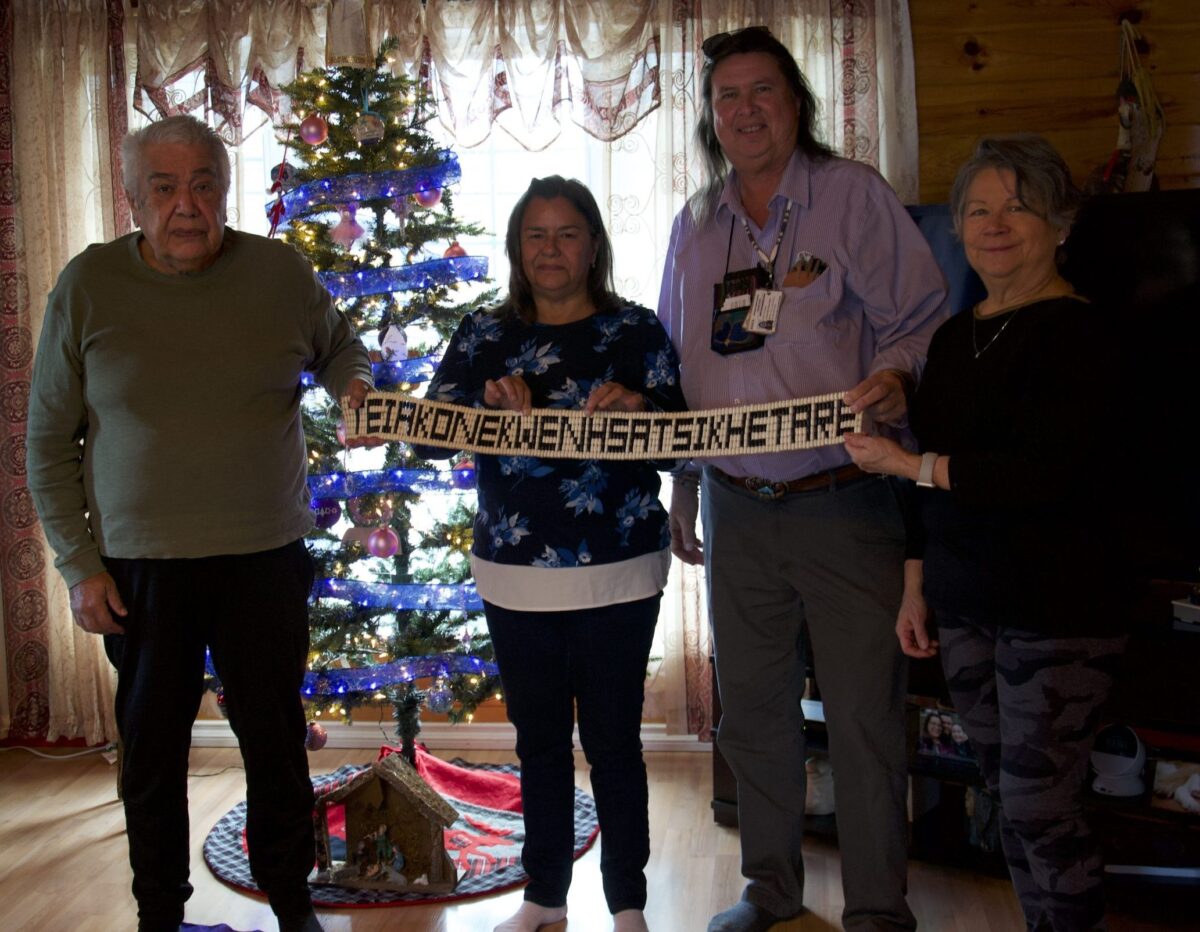
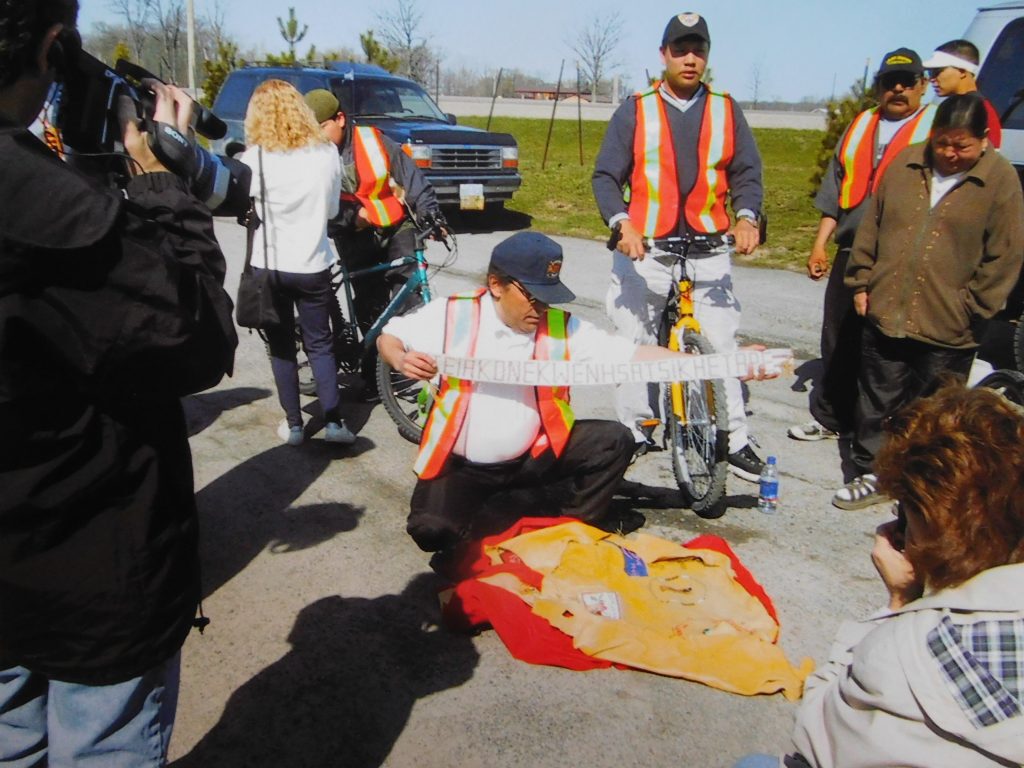
After over five years, Joe Jacobs has been reunited with the diabetes wampum belt he created back in 1997. The famed belt and leather bundle it’s carried in has been brought to over 20 First Nations since the late 90s. It’s traditionally travelled by foot, bike, and canoe, all part of an initiative to raise awareness about the disease that disproportionately impacts Onkwehón:we.
The belt, which reads Teiakonekwenhsatsikhe:tare – our blood runs sweet – has been at his home since last week after it was returned to him.
Treena Wasonti:io Delormier, an associate professor, and Dr. Brittany Wenniserí:iostha Jock., an assistant professor, both at McGill University, have been using it as part of a research project since 2019.
But for now, it’s made a pit stop with Jacobs. It’ll be handed off next to Alex McComber, a colleague of theirs at McGill, where he works as an assistant professor in family medicine.
The Eastern Door had the privilege to come see the belt and accompanying bundle last week. The bundle is adorned with emblems, many of them made of beadwork from the communities across Quebec and Ontario that have accepted it.
The message to create the belt came to him from the Creator, Jacobs said.
“I started having dreams,” he said.
It was a series of them, and so he started to write them down.
“It was an instruction to do something concerning diabetes, especially for our children,” he said.
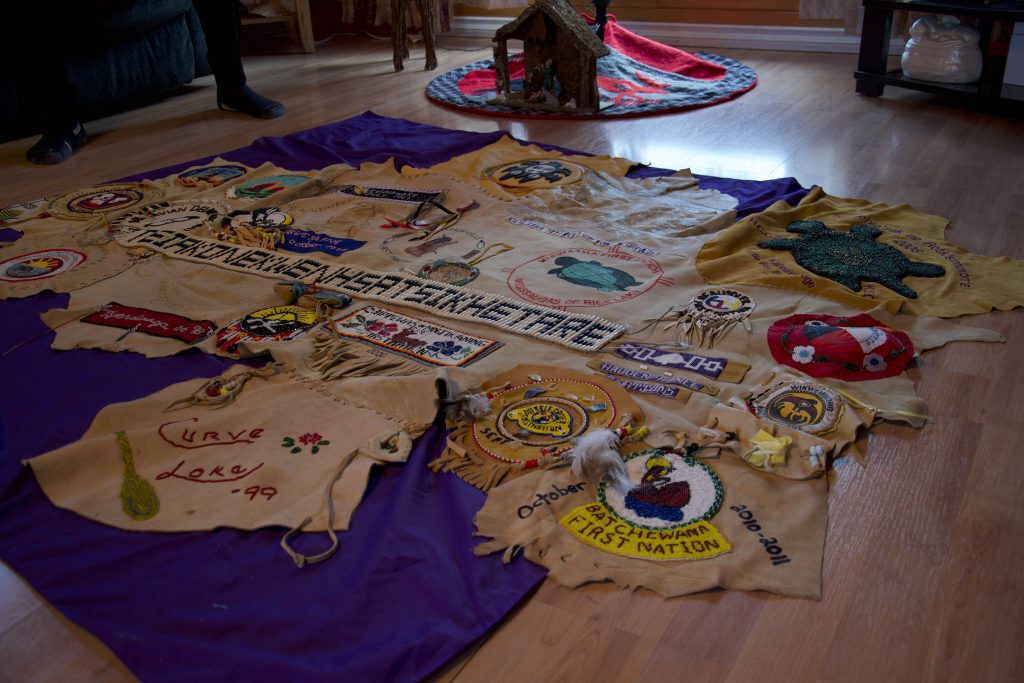

Even though as an adult he’d yet to have the disease or be seriously impacted by a family member with it, he knew he had a mission he needed to accomplish. So, he crafted a loom and got work beading the belt, which he made using plastic from old electrical wires.
Kahnawake already had its own diabetes prevention program aimed at youth back then, but other Onkwehón:we communities weren’t as lucky. Each First Nation that agreed to accept the belt had to also agree to creating programming for children aimed at preventing the disease by promoting exercise and healthy eating, he decided.
“It’s about taking care of the seven generations,” Jacobs said.
The belt soon became the centerpiece of educational talks, often in schools. Each community was also encouraged to take part in walks to whichever community was next on the itinerary.
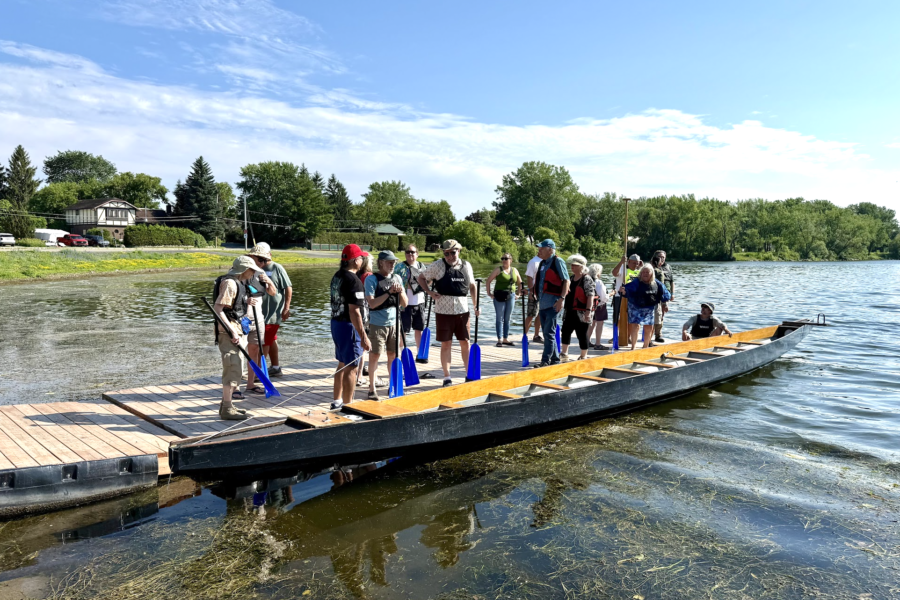
By 2002, it had been walked, biked, and canoed from Kahnawake to Akwesasne, Tyendinaga, Alderville, Hiawatha, Curve Lake, Mnjikaning, the Barrie Native Friendship Centre, Beausoleil First Nation, Six Nations, Oneida, Moraviantown, and Walpole Island.
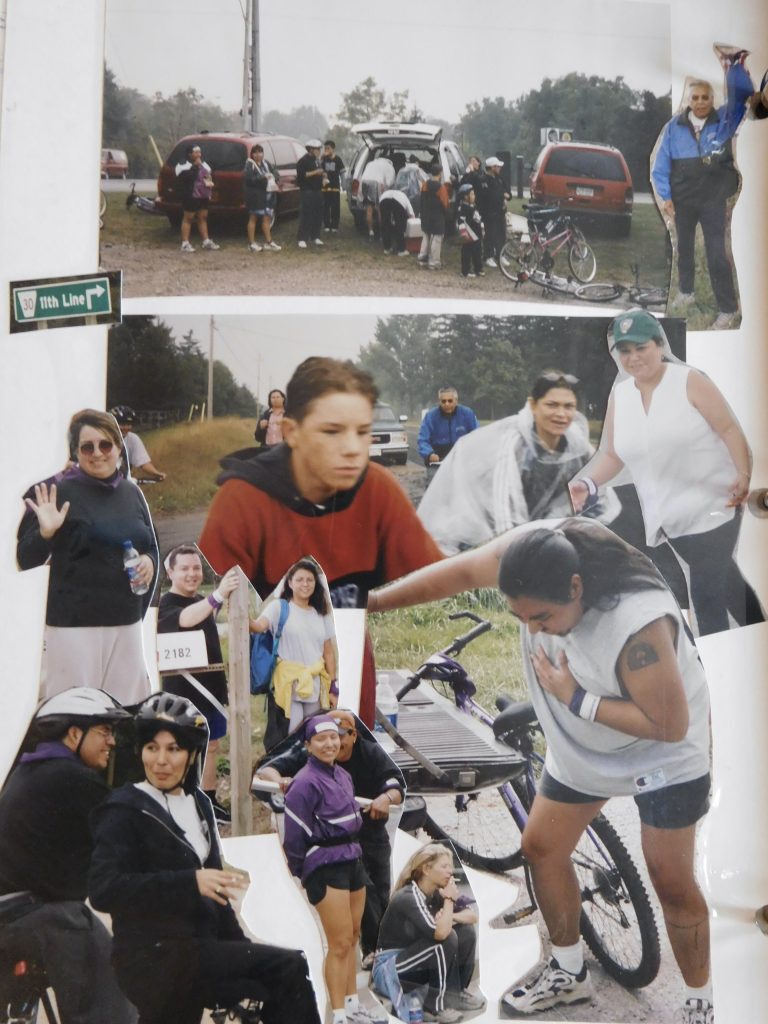
Jacobs and his wife Carol Boyer-Jacobs and many other Kahnawa’kehró:non took part in those early voyages.
“I’m struck by several memories,” said Tom Dearhouse, “by the activities that we took part in. Walking was one, to Akwesasne. Biking around Peterborough, I think that was when it was on its way to Curve Lake. And then the two-day paddling trip in Lake Simcoe.”
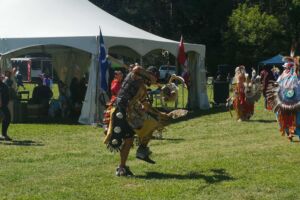
Jacobs’ wife Carol was among those that took part in the first trip, the walk from Kahnawake to Akwesasne.
“There was a huge gang, there were like 50 people for the first one,” she said. “We walked in at the border, and then on the other side everybody was waiting for us.”
Kateri Memorial Hospital Centre executive director Valerie Diabo’s daughter Rebecca, just one-year-old then, also came along for the voyage.
“She was always with us, whether in a stroller or behind the bike,” said Diabo. “It was such a rewarding experience, meeting other First Nation communities, sharing Joe’s vision of the belt.”
Katsitsoronkwas Jacobs, a schoolteacher back then, also took part in three of the walks.
“You go and you share your stories, and they share their stories. And it’s just a whole… just a feeling of community, no matter where you go,” she said.
Up until 2019 when the belt was given to Delormier, it had been sitting in Jacobs’ home, unseen, since 2017.
Delormier had started getting involved in a research project aimed at gathering health data on children and youth in First Nations across Canada. She decided to reach out to Jacobs for advice on how she could get the communities engaged in the survey.
“We wanted to use Indigenous methodologies to engage the community meaningfully, so that it wasn’t just about collecting data,” said Delormer, who was also involved in Kahnawake’s diabetes program in the mid 1990s.
It was then he offered her the belt and bundle, asking her to bring it to the communities the researchers would be visiting.
“He handed it to me and said, ‘I think this is what you need,’” Delormier said. “When you ask for things, you have to be ready for what comes your way.”
Sign up for email updates from The Eastern Door
The project – the Food, Environment, Health and Nutrition of First Nations Children and Youth – which is still ongoing, is being led by various universities with funding from Indigenous Services Canada (ISC).
Their team works alongside community members in each First Nation that carry out the survey, in collaboration with local band councils, schools, and health and health centres. The survey’s results have yet to be published.
“It was really great seeing that the belt and the bundle really inspires and draws people in,” said Dr. Jock.
In the time since 2019, her research team has also gone on to craft its own leather bundle, just like the one created by Jacobs.
The belt and bundle at Jacobs home right now will soon be passed back to Alex McComber. From there it’ll continue to be brought to more communities under another research study. Dr. Jock, Delormier, and researchers Lucie Lévesque from Queen’s University and Université du Québec à Rimouski (UQAR), are all involved.
“This is a project where we’re trying to learn from and replicate the successes from the Kahnawake Schools Diabetes Prevention Program, and learn about how we can support community mobilization for diabetes prevention in other First Nations communities,” Dr. Jock said.
“It’s about spreading this message about diabetes prevention and how we can promote health for future generations.”