Uplifting women leaders

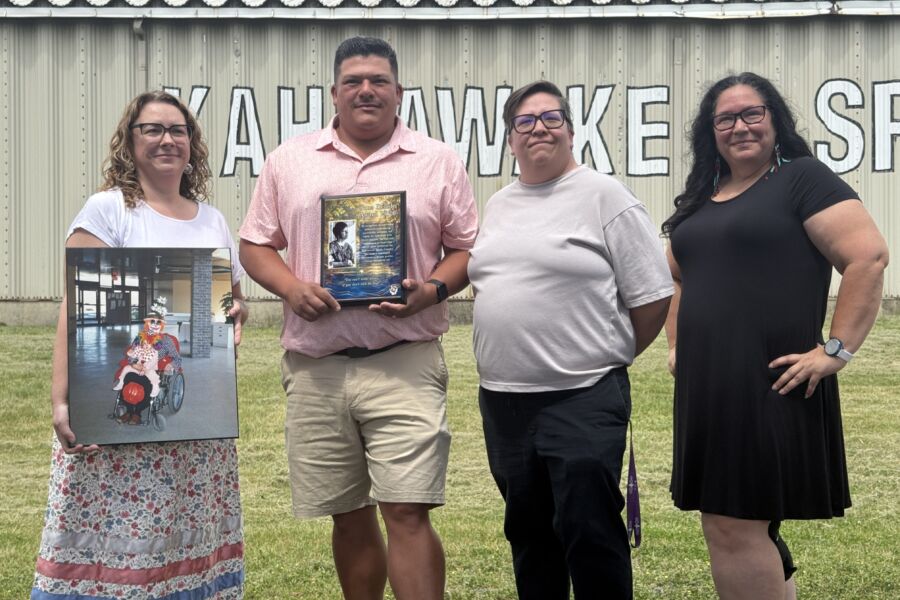
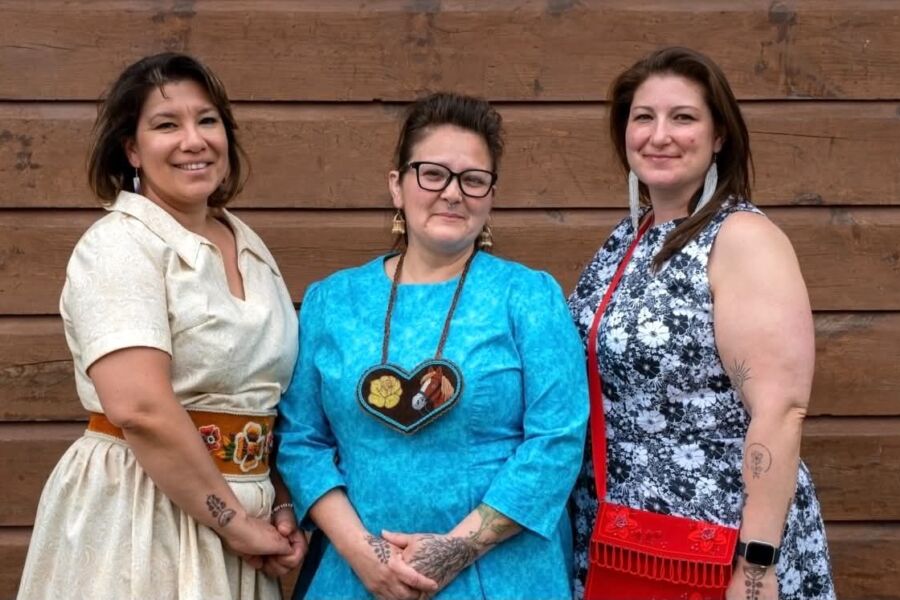
Kimberly Cross (far left) and Brooke Rice (second from left) with two of their classmates at the Women and Leadership Program, offered by HEC and the FNEE. Courtesy Brooke Rice
Community member Brooke Rice has taken professional development classes before, learning how to use her voice and get to know her leadership style better. But she’s never had the opportunity to be in a course made up entirely of fellow Onkwehón:we women until last week, when she went through the First Nations Executive Education (FNEE) Women and Leadership Program, offered at Ecole des hautes etudes commerciales (HEC) Montreal.
“It was peaceful,” Rice said. “It was grounding. It was very empowering. Everyone had passion projects and dreams to fix things, everyone was solutions-based and community-oriented.”
Rice was one of two Kahnawa’kehró:non in the cohort, alongside Kimberly Cross. Cross, who is the tourism development manager at Kahnawake Tourism said that she too has been a part of leadership focused courses before, but that this course left her with a host of new connections that were unique to the FNEE classroom.
“What surprised me was how open everybody was, and how great our women are at storytelling, how they teach through stories,” Cross said.
The class was made up of women from across Turtle Island, who shared their unique perspectives from their own cultures. Cross said it was meaningful to learn about the different opportunities and challenges faced by different communities.

“It was nice to be in that space and it to be not just all Indigenous people, but all Indigenous women for once,” Cross said. “It was beautiful, and we all share similar pasts with our peoples, so being able to identify with them at the same time as moving forward and bettering our communities really gave that extra weight to what we were doing.”
The program was five days long and took place at the HEC campus in Montreal. Students were entitled to free tuition as part of the program, which was co-created by HEC and FNEE, part of the organizations’ mission to get more Indigenous women building community in the leadership sphere.
Rice said that part of why she wanted to complete the training was to help with Tkà:nios (It Grows), a grassroots initiative that she has spearheaded with the goal of promoting food sovereignty here in Kahnawake. While she’s knowledgeable about agriculture, Rice said that trainings like this help her fill in the gaps in terms of managerial knowledge, as she embarks on expanding the project.
“I never had any managerial or business training, and now that Tkà:nios is in its third year operating there’s so many more high-level skills that I need to be a better project lead,” she said. “I was already learning about business tax and land trusts and how to navigate incorporating, just from those other women in the room.”
For Cross, training like this helps her be a better leader in the Kahnawake Tourism office, as well as on the ice, where she is a coach with Kahnawake Figure Skating.

From the course, she and her classmates discussed universal topics, like dealing with difficult issues and how to balance passion for projects with the risk of burning out, to ensure that goals can be met in a healthy way.
It was impactful, Cross said, to have space to hear the personal stories of how other women navigated those situations.
She said that throughout the training, she kept a list in her notebook of powerful women in Kahnawake that she thinks would benefit from taking the course.
“I just kept adding peoples’ names, and I’m going to be sending them a personal link to it, because it was just really motivational,” she said. “As women, we need to support each other and we need that motivation, because sometimes that’s all we have.”
Having been inspired by the course, Rice said that she’s already preparing to take the management and the entrepreneurship training offered by HEC and FNEE.
Sign up for email updates from The Eastern Door
She said she’s looking forward to continuing to meet likeminded people - especially women - in those classrooms.
“It’s really nice to have a sisterhood where we all came together and uplifted each other,” Rice said. “It’s rare that we get to do that.”