Sisters’ superpower comes from language
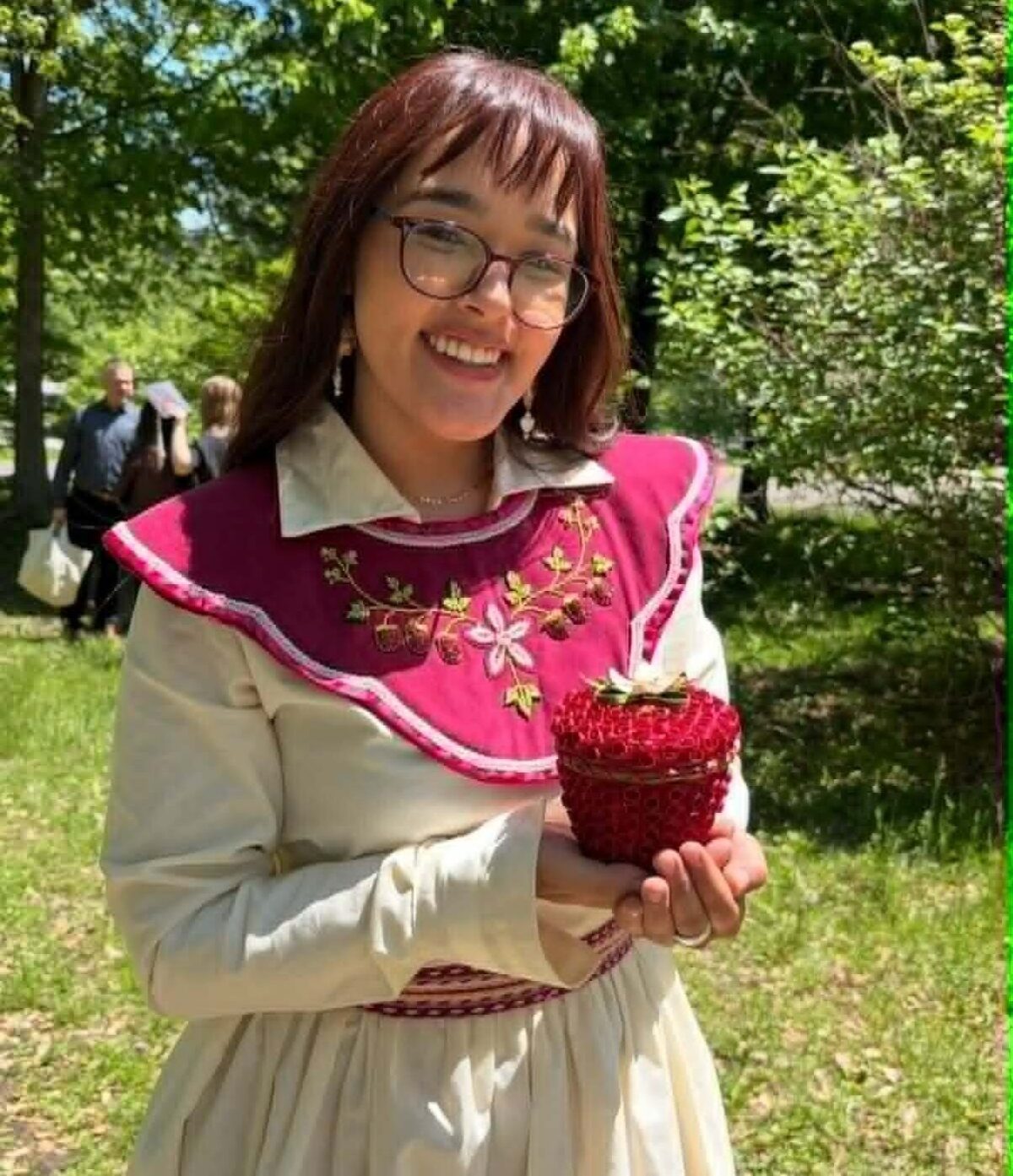
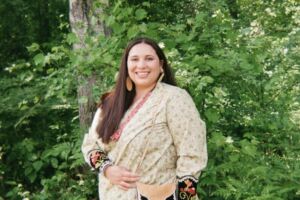
Karihwenháwi Caira Nicholas at her OFNIE McGill graduation ceremony. Courtesy Karihwenháwi Caira Nicholas
When Karihwenháwi Caira Nicholas made the decision to enroll in the Ratiwennenhá:wi Kanien’kéha language immersion program three years ago, she never realized that it would inspire her younger sister to follow in her footsteps.
After watching her older sister immerse herself into learning a language in three years, Karahkwinéhtha Kailey Nicholas realized she wanted to do the same.
“It was just so cool to see that even within one year she was able to learn that much,” said Karahkwinéhtha. “It inspired me, as older sisters tend to do.”
While Karihwenháwi graduated from the immersion program on June 6, and Karahkwinéhtha is just a year into the program, they have become each other’s biggest supporters; sharing questions and advice.
“If I have any last-minute questions, I can just call her,” said Karihwenháwi. “I always feel like I have somebody just a phone call away.”
For Karihwenháwi, learning Kanien’kéha has been a life-altering event.
“It’s probably the most rewarding thing I’ve ever done in my life,” said Karihwenháwi, who added that she always felt guilty for not pursuing higher education.
After Karihwenháwi finished high school out of the community, attended trade school, and moved to Lake Louise, Alberta - far from her communitty and culture in Kanesatake - she began to miss home.
“I decided I really needed to just go home and spend time with my family,” she said, adding that it was COVID-19 that really intensified the feeling of homesickness. “I felt like I needed to contribute to the community.”

After moving back to Kanesatake, she began reconnecting with her culture through beading and spending time with community members and elders.
“It felt so warm,” said Karihwenháwi, referring to hearing Kanien’kéha spoken around her. “That’s what it was like as a kid. I didn’t understand everything, but I would get excited when I’d catch a word here and there.”
Karihwenháwi said that as a child, she attended immersion school, and now, 25 years later, she has returned to her roots.
When the flyers went out from Ratiwennenhá:wi that applications had opened, she was ready.
“I just threw all my eggs into the basket. I was really hopeful that I could get the language back to what I had as a kid, and then surpass that and see where it could take me,” said Karihwenháwi.
“There was a lot of growth, a lot of challenging moments,” she said, adding that the three years of the program demanded her dedication and perseverance.
Now able to speak Kanien’kéha, one of the most meaningful outcomes is that Karihwenháwi can speak the language with her grandfather.
“Out of the grandchildren, I’m really the only one that’s able to speak with my grandfather,” said Karihwenháwi.
Karihwenháwi’s grandfather grew up in Oka speaking Kanien’kéha at home, and then French with neighbors and English at school. Now, the two of them regularly speak in all three languages.

“It’s made me cry many times,” she said, adding once she realized the importance of those conversations, she began recording them.
“I started recording to try and ensure that I can keep these memories for myself and then also for my family in the future,” said Karihwenháwi.
Currently, Karihwenháwi is living in Cornwall with her partner, whom she met at a language conference and is also fluent in Kanien’kéha.
She now works at the Akwesasne Freedom School (AFS) language nest, where she helps teach young children and supports parents who are learning alongside them.
Her work often brings her full circle, as she sorts through educational material and finds books and stories she remembers from her own childhood education in Kanien’kéha.
“Now I get to read those same books to these babies and to these moms who are coming in to learn the language,” she said.
In one particular full circle moment, Karihwenháwi opened an old language book and found that it had been illustrated by her mother decades earlier. She aims to incorporate her own art with Kanien’kéha.
While watching her older sister’s hard work and dedication at the language school was a major motivator for her to join the current cohort at Ratiwennenhá:wi, other family members are also learning Kanien’kéha.
Both sisters often talk about encouraging more relatives to enroll, and Karahkwinéhtha said she imagines a future where speaking Kanien’kéha becomes commonplace in the family group chats.
Sign up for email updates from The Eastern Door
“Little by little, we’re going to start trying to incorporate Kanien’kéha into our cousin group chat and on Snapchat. Even if it just starts small, it’s still something,” said Karahkwinéhtha.
Karahkwinéhtha added that one of her favourite moments was with her older sister.
She was dealing with social anxiety in public and called Karihwenháwi. Worried that passersby would hear them, they both realized they could both just speak in Kanien’kéha, their own secret language.
“Karihwenháwi said it in her graduation speech,” said Karahkwinéhtha. “That Kanien’kéha is a superpower.”
Fern Marmont, Local Journalism Initiative Reporter