School registration policies a ‘barrier’
Hadassah Alencar The Pines Reporter
As the school registration period in Kanesatake comes to an end, school staff navigate the restrictions for funding on First Nations students who seek an education in Kanesatake.
Since 2012, Indigenous Services Canada (ISC) only allows school funding for Indigenous children who live on Crown land within the J0N 1E0 postal code, a policy school staff say unduly restricts Indigenous children’s ability to learn in Indigenous communities.
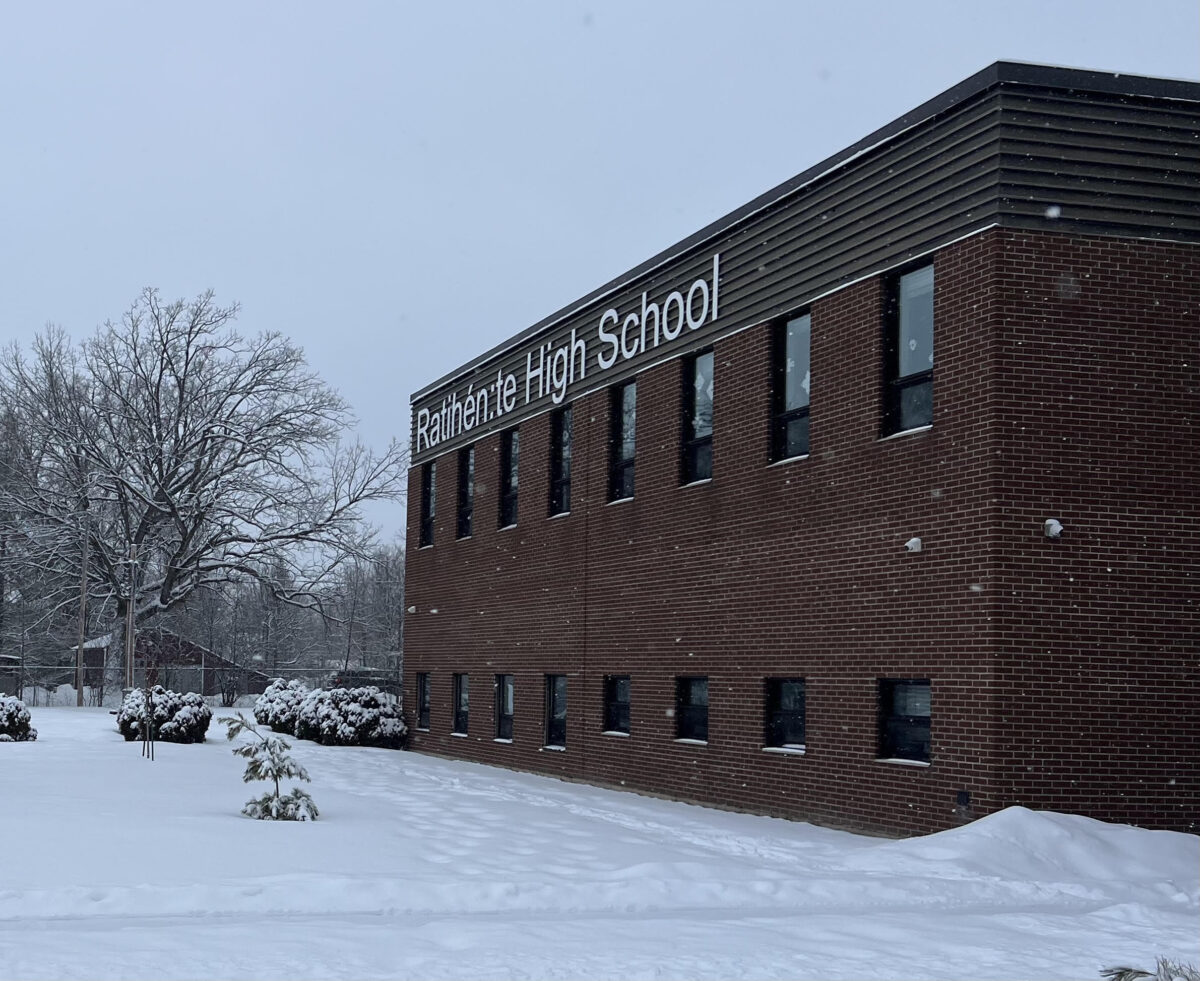
“It puts up a lot of barriers,” said Kimberly Simon, Ratihén:te High School principal.
“There might be some Indigenous students that even live in Oka within the J0N 1E0 area code, but they might not live on Crown land, and or they might be living, let’s say, in a neighbouring town and maybe they want to attend school here, but they can’t.”
Prior to 2012, Ratihén:te High School and Rotiwennakéhte Elementary School would receive funding for Indigenous children living in the J0N 1E0 postal code, which includes Kanesatake, Oka, and Pointe aux Anglais.

Once the policy was changed to only allow students on crown land with the J0N 1E0 postal code, the school had to remove 27 students.
“It really angers me that this is a thing, because we have community members that want to send their child to our schools, but at the end of the day, we have to make a decision, we won’t receive any funding for them, so it’s like a loss for us,” said Watsenniiostha Nelson, director of education of the Kanesatake Education Center (KEC).
Nelson said the policy is a colonial construct that inhibits Indigenous students from accessing their communities and culture.
“It’s just another colonial way of doing things and forcing our community members to make a decision on either staying on the rez or leaving,” said Nelson.
“Any Indigenous student should have the right to be able to go to school within the closest community possible.”




The First Nations Education Council (FNEC) is advocating to change this policy, said Nelson. In a statement, the FNEC declined to comment on this issue at the moment.
ISC did not respond to a request for comment in time for publication.
But the policy also exacerbates the challenges the two local schools already face when enrolling students at the school, said Nelson. Housing and land are limited in the territory of Kanesatake, and many families unwillingly must move to nearby towns.
“It very much limits us in our school population,” said Nelson. “Housing and land is very limited here in the community, so that makes it harder.”
And if the number of students does fall, the school could face closure. About 11 years ago, Ratihén:te had more than 20 students and officials at the time discussed whether the school should teach fewer grade levels or close entirely, Simon recalls.
Sign up for email updates from The Eastern Door
A study commissioned in 2015, called An Evaluation of Kanesatake Education Services, showed the student population would decrease to 64 students at Rotiwennakéhte and 19 at Ratihén:te by 2019.
But the schools’ numbers have surpassed these projections. This year, Rotiwennakéhte has 74 students and Ratihén:te has 48.
“Although we’ve had a lot of growth, our school is still considered very small,” said Simon. “It’s just interesting to think, let’s say these policies were more flexible. What would our new number be?”
Hadassah Alencar, Local Journalism Initiative Reporter