Short-term care unit expands

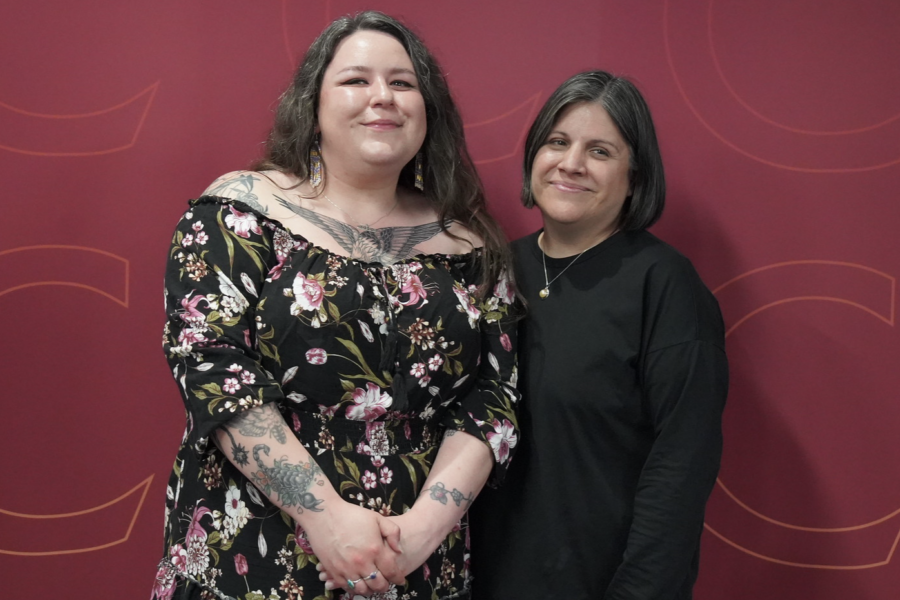
From left to right: Samantha Cross, KMHC’s short-term care manager; Robin Guyer, director of nursing and community care; and Valerie Diabo, executive director of KMHC. The trio announced changes to the hospital’s short-term care unit on Monday morning. Eve Cable The Eastern Door
As part of a push to support patients locally, the Kateri Memorial Hospital Centre (KMHC) has announced increased capacity in its short-term care unit - including one bed specifically reserved for patients undergoing treatment for substance use disorders.
“They can come to us for those services and be in the community where there’s free parking, and it’s easier for family to come,” said Robin Guyer, director of nursing and community care at KMHC. “We know there’s all the benefits here because you’re around your own people and it helps with healing, so we really encourage it.”
Prior to this development, patients could stay at KMHC on a short-term basis, but there was no formalized ward for them, meaning they were assigned to whatever bed was vacant at the time of admission. The new expansion means that the hospital now has a formal capacity of 15 beds, which can support community members with short-term care needs for several weeks - those short-term care needs can include individuals needing post-surgery care, or treatments like IV antibiotics.
Individuals who need long-term care, or who are medically unstable, won’t be admitted to the short-term care unit, to ensure that they can access emergency medical care and specialized support as needed.
Issues that need to be dealt with at larger hospitals include unstable angina, acute pulmonary edema, acute hemorrhagic process, and cases of toxic ingestion or overdose. Additionally, clients who are in a coma or who need intubation will need to be cared for in hospitals with more expansive resources.

“What we really want to do is empower our community if they feel like they’re not ready to go home,” said KMHC executive director Valerie Diabo.
Patients will be managed on a case-by-case basis, with the duration of their stay decided by their doctors. Some patients will be in the unit for a few days or weeks, whereas others may be admitted for up to 45 days.
Currently, 10 of the 15 available beds are occupied - once all 15 beds are filled, a waiting list will be implemented for additional patients.
The sole detox bed will also have a waiting list for those needing short-term care when recovering from substance use disorders - right now, that bed is primarily being used to support those who are recovering from alcohol use disorder. Prior to this expansion, no short-term care beds were reserved for substance use disorders.
“Our goal is always to meet community needs, and adding the detox bed is a prime example of that,” said Samantha Cross, manager of short-term care at KMHC.





“Starting with one (bed) is sustainable for us right now.”
Cross said that KMHC’s short-term care social worker will work with clients to ensure continuity of care for those using the detox bed, so that they are able to access long-term resources, such as those from Kahnawà:ke Shakotiia’takéhnhas Community Services (KSCS), after leaving the hospital.
So far, one client has used the detox bed as part of what Cross called a “pilot project,” which she said was successful.
“We’re just moving slowly with it and hoping to work well and continue to work closely with KSCS for this project, so that we can have the support there after the detox process is done,” she said.
Patients from Kahnawake receiving treatment outside of the community are encouraged to ask their doctor if it’s possible to be transferred to KMHC for follow-up or ongoing treatment. Should that be possible, their doctor will communicate directly with KMHC to facilitate the transfer - the process must be handled on a doctor-to-doctor basis, KMHC staff said, in order to ensure patient’s medical needs are prioritized.
Sign up for email updates from The Eastern Door
For community members currently at home but in need of short-term care, an admission request can be made through their family doctor or Access Clinic.
“We encourage everyone to reach out to us,” Guyer said. “We want to serve the community as best we can.”