Orange Shirt Day Kahnawake
Marcus Bankuti The Eastern Door
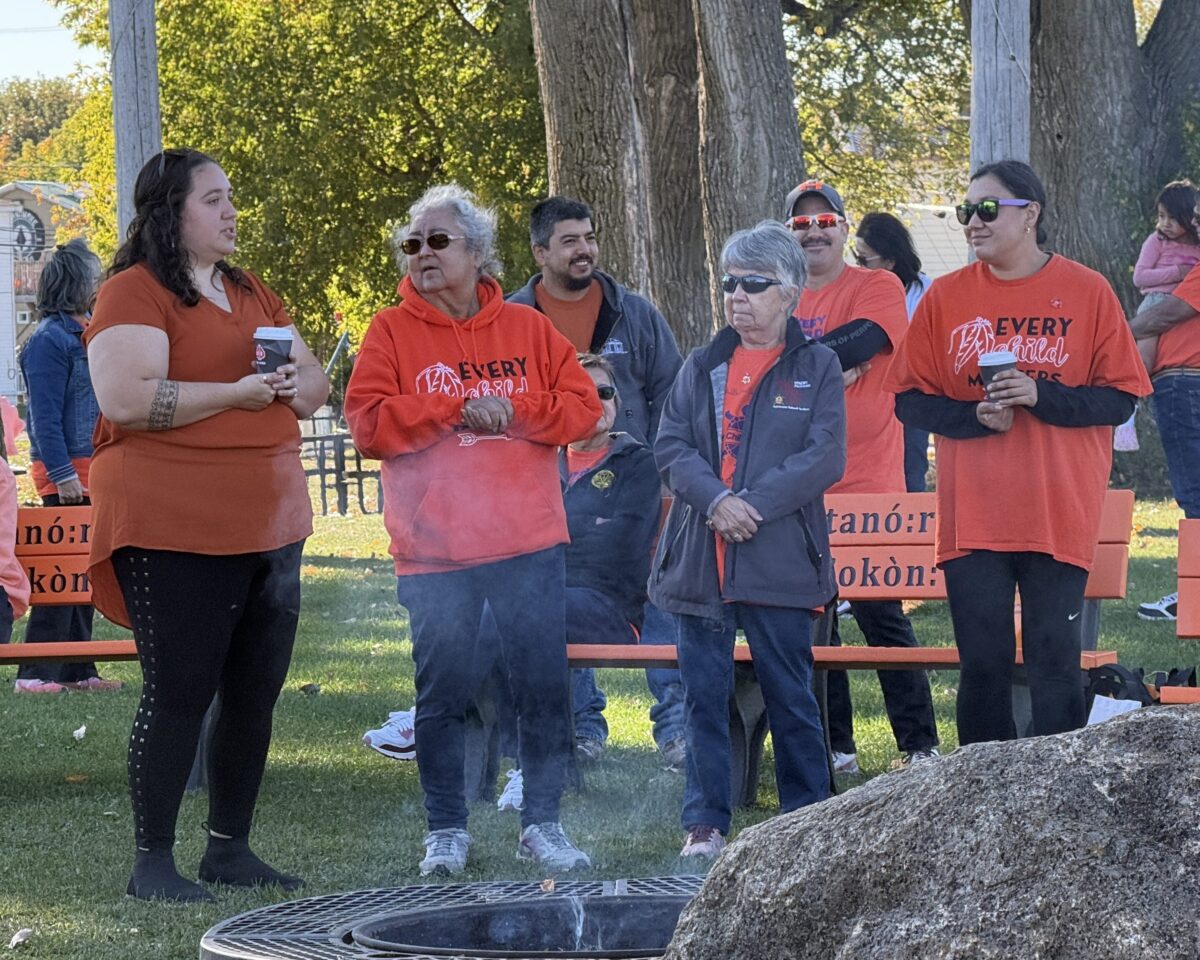
Breakfast for 100 people wasn’t enough on the morning of Orange Shirt Day in Kahnawake, and neither was breakfast for 150.
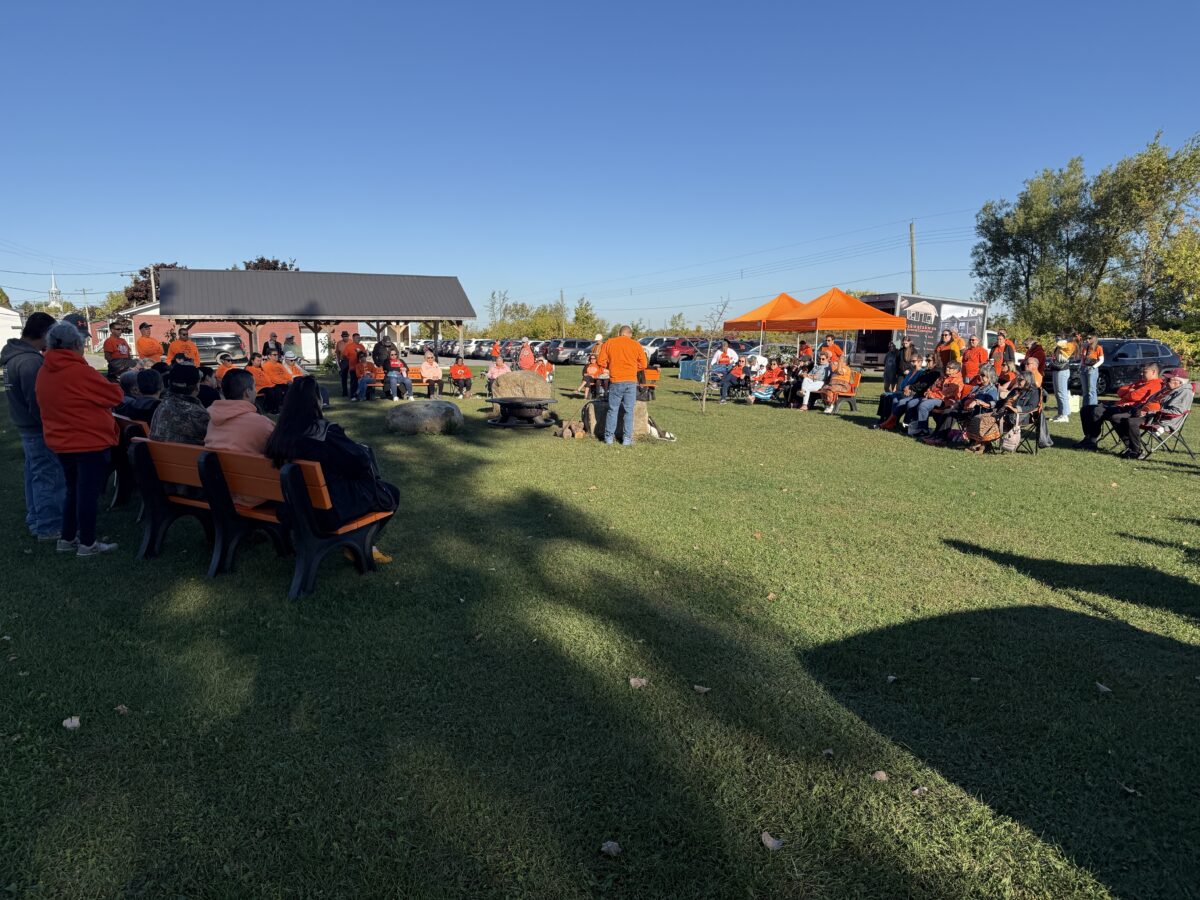
The caterer, Playground Cares, went back to home base not once but twice for more scrambled eggs, potatoes, and breakfast meats to feed all the Kahnawa’kehró:non and others who assembled at the Golden Age Club on Tuesday to honour residential school survivors and the children who never came home.
Marcus Bankuti The Eastern Door
“It feels really great to know that the community is aware of the survivors, and to see everybody come here and support survivors it’s a great feeling,” said Ruth Loft, who attended the Shubenacadie Indian Residential School in Nova Scotia.
“I look at all the people with their orange shirts on, and it shows that they’re with us, that they’re with me, the survivors, and that’s a big thing.”
Speaking about her experience is not easy, which is why when she meets students at McGill University about what she went through, as she has twice a year for 11 years, she brings a CD with her, so she doesn’t have to explain the details over and over again before answering their questions.

Marcus Bankuti The Eastern Door
“Kill the Indian and the child,” she said of the residential school system’s philosophy. “Take away everything that was valuable to me. My language, my culture, my ceremonies, my identity. In residential school, they gave me a number. They wanted to erase my life. That’s why it’s so important to educate people about all this. They’re not going to erase my background,” Loft said.
Things have changed over the 11 years she’s been speaking. The first time she presented, when she asked who was familiar with residential schools, only a couple sparse hands were raised.
“Now everybody’s hands go up, because everybody knows about it now,” she said.
This year’s breakfast was a change of pace from the “birthday party” themed events that have been taking place, but as always Kahnawake’s Orange Shirt Day event was about community connection.

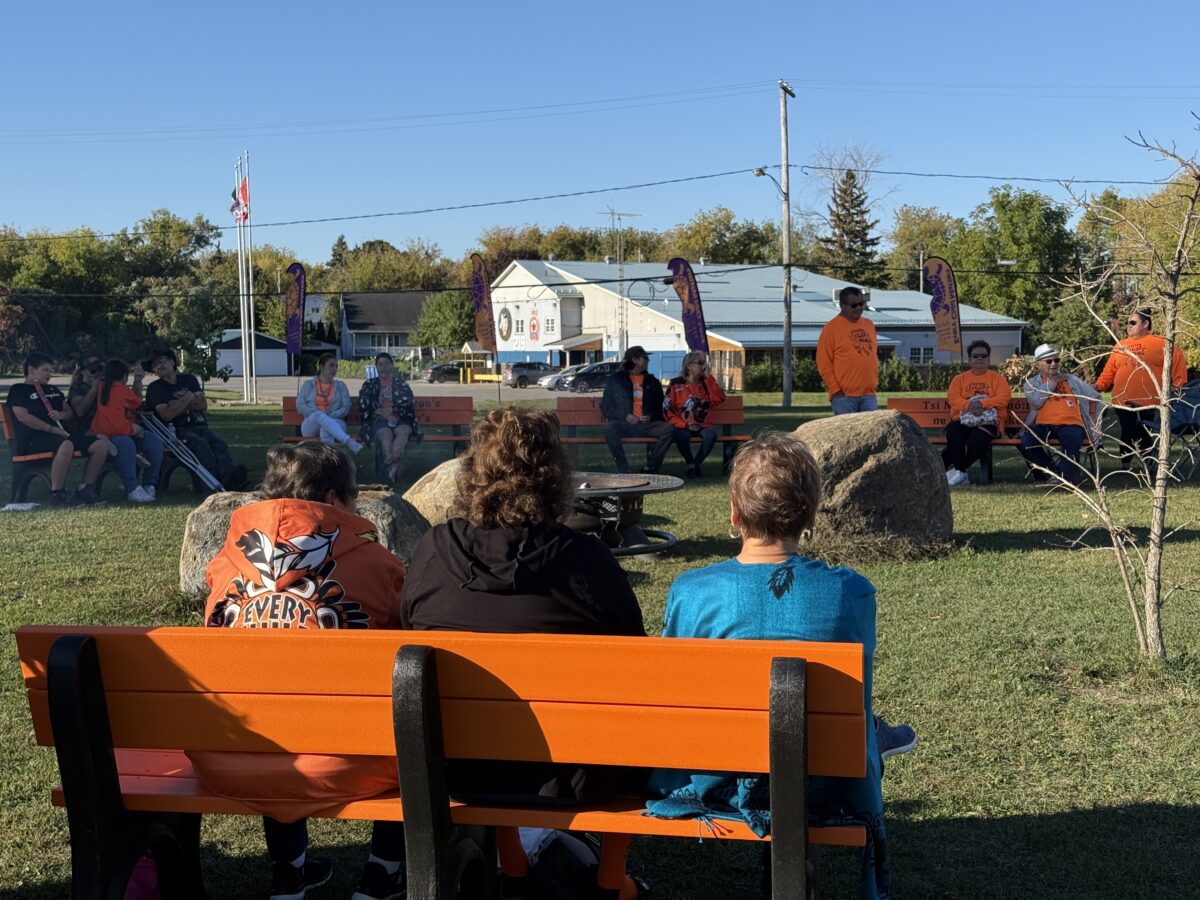
“The idea of the breakfast is bringing people together,” said Helen Jarvis Montour, one of the organizers of the event, alongside June Skye-Stacey, Katsi’tsohrónkwas Curran Jacobs, and Carly Kateri Diabo. “Now there are people in there that maybe didn’t see each other for six, seven months, who knows. They’re sitting down at a table together and they’re talking, and they’re telling stories.”
Marcus Bankuti The Eastern Door
Other staples of the event, such as a tobacco ceremony led by Don Barnaby, remained unchanged.
For Jarvis Montour, it’s meaningful to see the way people’s understanding has grown around the impact of residential schools since Orange Shirt Day - it will always be Orange Shirt Day to her, although September 30 has since 2021 been recognized as the National Day for Truth and Reconciliation - was founded.
“I’m honouring my father (Frank Montour). My father was a survivor. I wouldn’t have been here if it wasn’t for him,” she said.
“People always ask me what happened. I say I would never tell and dishonour him that way, but I honour him this way. They were just little kids. They were small babies, and it’s horrible,” she said. “This is part of the healing, healing for me and healing for my family.”
Sharon Cross was thinking of her father, Sonny Joe Cross, who passed away last year, when she came out on September 30.
“I come every year because my father was a residential school survivor, and I come here to honour him,” she said.
“It was very hard for him. It’s hard for everybody.”
It’s important, she said, that the children growing up today in Kahnawake understand the legacy of residential schools.
Marcus Bankuti The Eastern Door





“They need to understand our place in the world and how we got to where we are today, and what we need to do to move forward. The residential schools did a lot of damage to our people. We need to heal and we need to progress, and it’s important that they know why,” said Sharon.
While a lot of people turned out for Orange Shirt Day in Kahnawake, Sharon added, she would like to see even more community members make it to the event.
Many others in attendance were also thinking of their families.
“It’s so amazing. I couldn’t wait for today,” said Patricia Douglas, whose two aunts attended residential school, about the chance to honour survivors with her fellow community members.
“Truth and reconciliation, it’s something not to celebrate, but to remember,” she said.
Marsha Horne, whose parents went to the Mohawk Institute, said her understanding of what her parents went through has grown in recent years.
“They survived. It’s been hard knowing what they went through,” Horne said. “I feel bad about it all the time.”
Arnold Boyer, who is a Mohawk Council of Kahnawake (MCK) chief, comes to the event every September 30. His parents, Ronald and Sheila Boyer, met at residential school in Spanish, Ontario. His mother passed away last year.
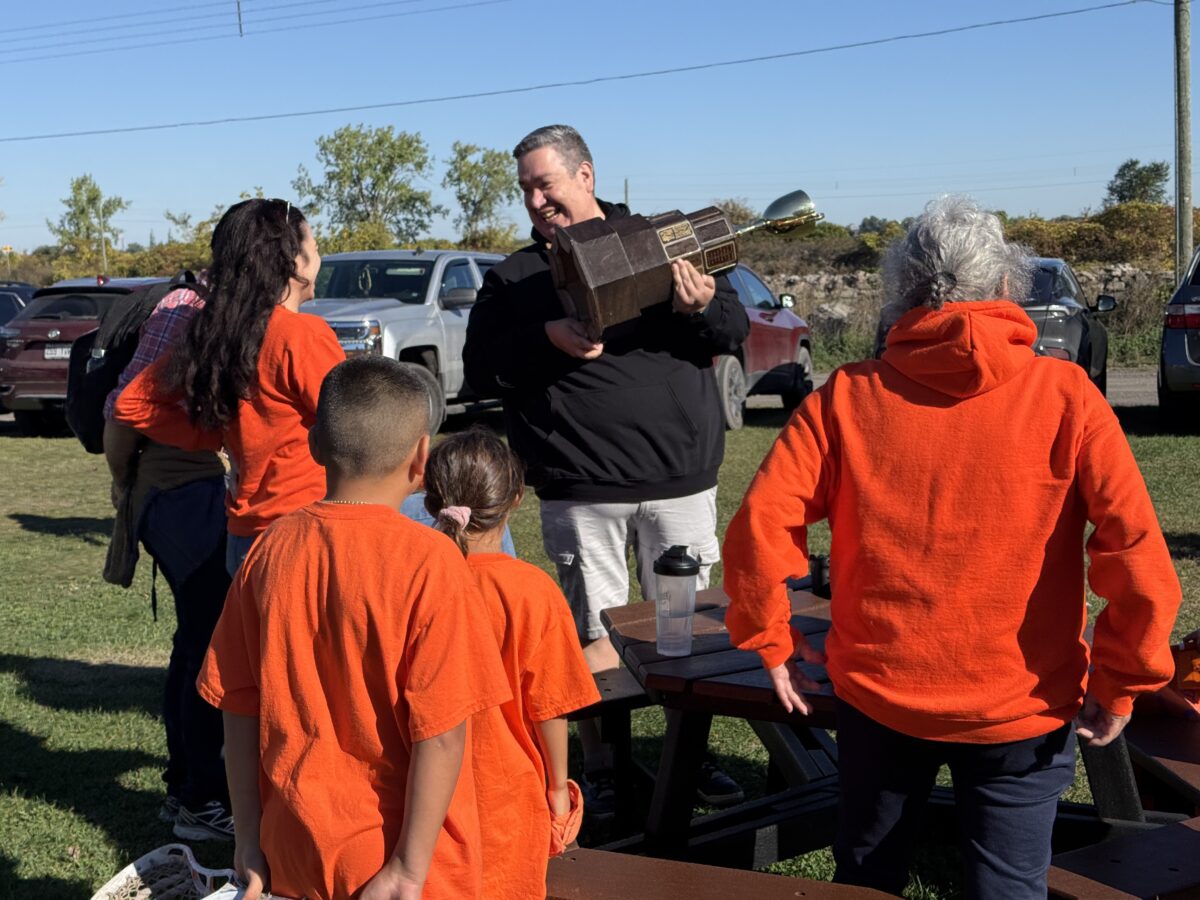
“They missed growing up as a kid in their community,” said Boyer, who appreciated seeing the children enjoying themselves at the Golden Age on Tuesday.

Marcus Bankuti The Eastern Door
“They’re being kids, they’re growing up as kids,” he said. “For the residential school kids who didn’t have that, they didn’t have too many smiles, at the end of the day.”
Sign up for email updates from The Eastern Door
It was not only community members in attendance. This year, a group of students from Ecole Marguerite Bourgeois attended after reaching out to the organizers.
Teacher Lorraine Beyard saw it as her duty to help increase awareness and understanding among her school’s students.
This year, she noted, the school’s 550 students each selected a name from the National Student Memorial Register and wore it on a bracelet on September 30, something she shared in a brief speech at the Golden Age.
“There’s work to be done, and I made it my duty this year,” said Beyard, who hopes to ensure the Chateauguay students learn the meaning of Orange Shirt Day and why it’s so important.
“It makes me feel good that all this hard work we’re doing, people are finally understanding,” said Jarvis Montour.
“People need to be educated, and there’s still a lot to learn.”
Marcus Bankuti, Local Journalism Initiative Reporter