Northvolt fight continues in Superior Court
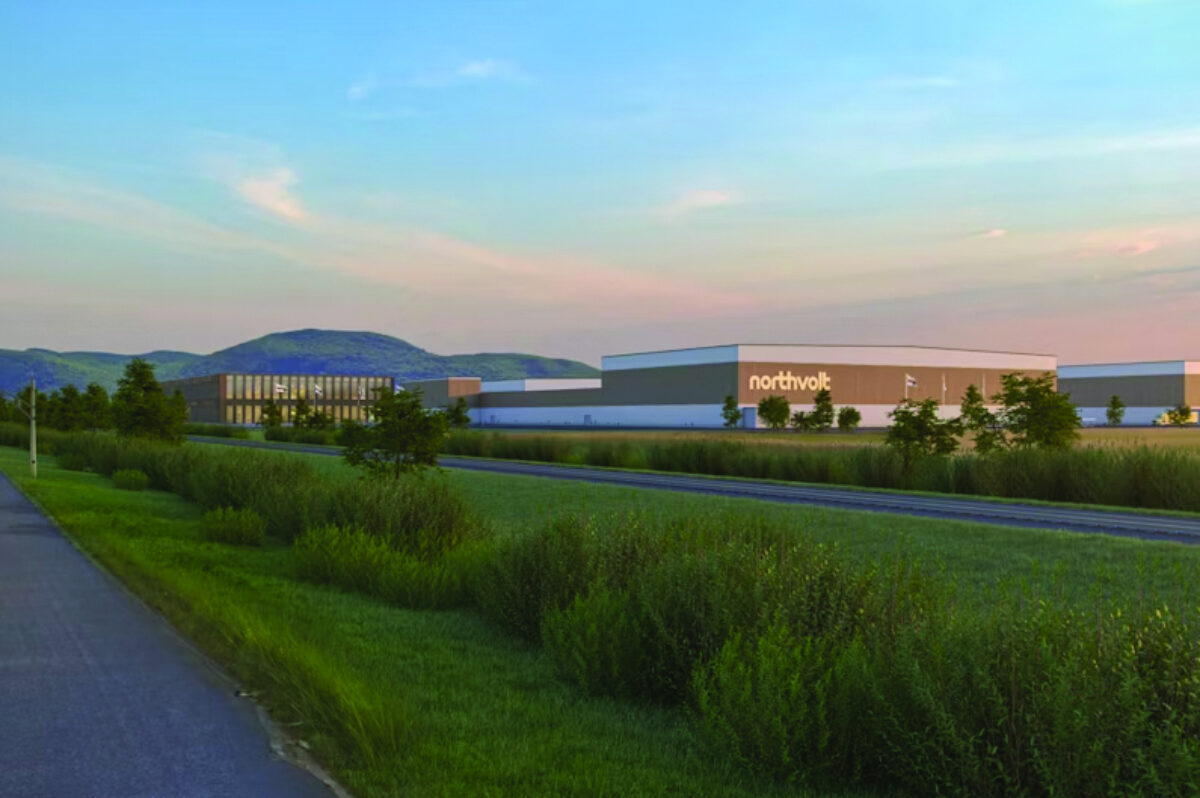
The ongoing construction of an electric car battery plant in the Monteregie has the potential to cause “irreversible harm” to wildlife and biodiversity in Kahnawake’s traditional territory should it continue to move ahead as planned, an environmental advisor for the Mohawk Council Kahnawake (MCK) wrote in a recent affidavit to Quebec’s Superior Court.
Patrick Ragaz of the Kahnawake Environment Protection Office (KEPO) delivered his warning as part of one of three sworn statements sent to the court in mid-August.
The MCK’s lawsuit filed there targets Northvolt, the Swedish company behind the project, as well as the federal and provincial government. All three failed in their duty to consult Kahnawake over the project, the MCK is alleging.
“I am deeply concerned by the cumulative impacts that will be inflicted on the Richelieu River,” wrote Ragaz, mentioning increased erosion in the watershed and a reduction in local biodiversity.
Species like the spiny softshell turtle and birds like the least bittern and bank swallow that live in and around the wetlands that were approved to be destroyed there are among those he’s most concerned about, Ragaz wrote to the court. He fears what will come of their populations once the plant is in operation.
“To my knowledge there is no study to support that the remaining habitat can maintain these species,” he wrote.

Last week, Northvolt shared that it intends to pump 25 million litres of water per day from the river to supply its factory. According to the company, this amounts to 0.06 percent of the river’s total flow. The amount of water discharged into the river after use will meanwhile represent “less than 0.05 percent” of that flow, the company is projecting.
“Northvolt is presenting statistics that minimize the potential impacts by comparing the volume of water removed and discharged into the river to the total volume of flow in the Richelieu River. This is a common tactic to minimize the potential impacts of an activity,” Ragaz wrote in a statement to The Eastern Door.
“KEPO does not have enough information to determine the full nature and extent of potential impacts, despite repeated requests to Northvolt and provincial and federal authorities for information on project’s impacts to the Richelieu River.”
Wetlands at the site where spiny softshell turtles lived have already been filled in by the company, MCK chief Stephen McComber wrote in his affidavit to the court.
“As a matter of principle, we Kanien’kehá:ka must not interfere with the turtles. Instead, we have a responsibility to protect them and the areas necessary for their life cycle,” McComber wrote. “It is hard to understand how we could justify sacrificing turtles and their habitat.”
That habitat’s destruction comes following an approval from Quebec’s environmental ministry to destroy 14 hectares of wetlands at the site of the future plant, which straddles 170 hectares of land between Saint-Basile-le-Grand and McMasterville.



In his statement to the court, McComber recounted the story of the turtle and the boy. It tells the story of a young boy struck by illness. It was later discovered that before he had fallen ill, he had placed a turtle upside down between the fork of a tree. Once the turtle was rescued and returned to the water, the boy quickly returned to health.
“The story of the boy and the turtle tells us about the responsibilities of the Kanien’kehá:ka with respect to the turtle,” McComber wrote, linking the health of their population to the revitalization and preservation of his own culture. “It shows us what the consequences are if we disregard those responsibilities.”
The turtle also plays a central role in the Creation Story, MCK chief Ross Montour underscored in his affidavit.
“The turtle’s back became the earth and Sky Woman’s home. This is why this land is known as Turtle Island,” he wrote in his statement to the court. “All of this helps to understand how and why the Kanien’kehá:ka people have exercised stewardship rights and responsibilities since time immemorial with respect to the turtle. These rights and responsibilities are part of the core of Kanien’kehá:ka culture.”
Montour told the court he’s also concerned the factory’s reliance on the river could lead to a contamination and degradation of its waters, writing he fears what the impacts will be for fish like the copper redhorse that reside there.
“The Richelieu River and its watershed have always been and continue to be an important area for the transmission of traditional knowledge and exercise of our rights through a wide variety of activities,” he wrote in his statement.
Sign up for email updates from The Eastern Door
The MCK filed its lawsuit back in January with the hope of interrupting construction at the site. Judge Andres Garin has since been assigned to the file and decided in a judgement rendered earlier this May that it would be resolved through case management hearings.
A schedule for when those hearings will be held has yet to be decided. Lawyers for Northvolt and the federal and provincial governments still have until mid-October to file their sworn statements with the court.
This article was originally published in print on September 6 in issue 33.36 of The Eastern Door.