New phase for greening project

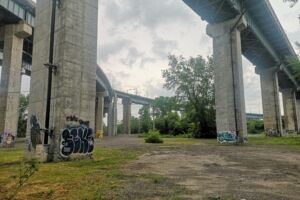
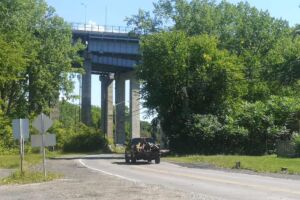
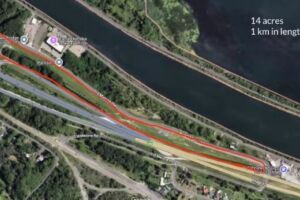
After years of planning and public input, the greening and design project is entering its third stage on the way to bringing to life a long-anticipated vision for the greenspace between the Mercier Bridge up-ramp on Highway 132 and the Old Malone service road.
The initiative, led by PlanIt Consulting & Communications, originates from the Jacques Cartier and Champlain Bridges Incorporated (JCCBI) sustainable development strategy, which supports environmental and social improvements around bridge infrastructure.
According to Maris Jacobs, project coordinator for PlanIt, phase three marks the beginning of the design phase, when ideas collected through consultation finally start to take shape.
“Phase three is what we’re calling the design phase. So, we are post-community consultation, and all the information we have gathered since we started again is being created on paper, digitally, being put into place in phase three,” she explained. “We’re basically putting things into motion so that they’re no longer just ideas. They’re the ideas that are kind of coming to life.”
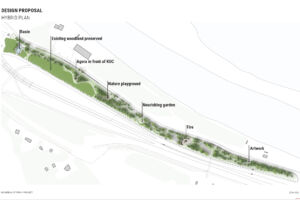
The project’s final design, known as the Hybrid Scenario, combines two earlier concepts that emerged during community consultation and working group sessions held between 2023 and 2025. The plan integrates greening, public art, water features, and traffic flow to create a multifunctional, sustainable public space.

“We were referring to it as a hybrid scenario because that was a presentation on a design that merged two ideas together from previous consultation phases,” she said. “So, we’re now referring to it as the final design we landed on and what all of the feedback pointed to.”
Phase three focuses on refining that design: selecting vegetation, defining water management strategies, and beginning the artwork procurement process.
“Now that we’re in the design phase, it’s time to start talking about refinement and strategy determining the types of vegetation that will go in the space, the elevation of the space, and the art that’s going to be included,” Jacobs said.

Plans for the Greening and Design Project are moving forward as phase three begins, turning community ideas into a revitalized greenspace near the Mercier Bridge. Courtesy Maris Jacobs
“Part of phase three is about the procurement process. We know that the community was interested in including artwork in the space, so that’s going to entail calls to artists, determining dimensions, materials, and all of those final details.”
PlanIt expects visible progress to begin next year.
“The earliest (on-site work) would probably be next fall or end of summer 2026,” Jacobs said. “Our work in this phase is really going to be to provide updates on the project and find the project’s certain milestones, when there are completed renderings available, when the procurement process starts, and when work-on-site begins.”
While formal consultation has ended, PlanIt will continue engaging the community through information kiosks and regular updates. The first public kiosk will be held November 4 at the Services Complex from 12 p.m. to 4:30 p.m.
Beyond beautification, the project aims to restore and preserve natural ecosystems while offering a safe, accessible greenspace for residents.
“This phase will help determine whether we focus on a recreational approach, an accessible approach, or a reforestation approach,” said Jacobs.
Sign up for email updates from The Eastern Door
“What’s going to be the one strategy for the greenscape, to make sure that all of those things are working together to promote biodiversity, to have the foliage be self-sustaining, not just have a stream there because it looks nice, or bushes here because they look nice, but to have the space take care of itself, feed itself over time, so that the community can access it briefly and use it as an educational opportunity. Or just for a leisure opportunity, but that even if nobody is in there, using it all year round, it still serves a purpose of improving that environment.”
Jacobs emphasized that open communication remains a priority as the project moves forward.
“If anybody has any questions, you don’t have to wait for the kiosks,” she said. “We’re here anytime people want to ask questions or get a little more information about the project.”