New local foster care families list

The Kanesatake Health Center (KHC) is creating an official list of Kanehsata’kehró:non foster care families in the community in an effort to keep children who are removed from their families within the community.
This first-time initiative of making a list for Youth Protection (DPJ) is meant to reduce the trauma of children who undergo the difficult circumstance of living apart from their families. It is also meant to encourage more families in the community to foster care, said Emilie Boucher Gauthier, a social worker at the KHC.
“We want to involve the community in facing this sad reality: we need foster families in the territory,” said Gauthier.
Foster children who are placed with families outside their communities find themselves in a completely new environment, in a city they do not know, with people they have never met, said Gauthier.
“Changes in school, daily routines, and living environment can create instability and increase stress for the child,” said Gauthier.

Staying in their own community gives children more stability, allowing them to continue attending their own school and keep a routine and relationships with extended family, friends, and other important people, said Gauthier.
“This can reduce feelings of separation, isolation, or abandonment that some children feel when they are placed outside their community,” said Gauthier.
And children can also stay better connected to their culture, language, traditions, and land, she said.
Indigenous children have long suffered from separation from their home communities, resulting in negative outcomes for many in health and cultural knowledge, such as during the residential school system and the Sixties Scoop. The effects of the trauma and broken families created from these systems are still felt today.
Indigenous children are overrepresented in the foster care system. According to 2021 Statistics Canada census data, 53.7 percent of foster children living in private homes are Indigenous. Just more than half, 50.6 per cent, of First Nations foster children lived with non-Indigenous foster parents in 2021.


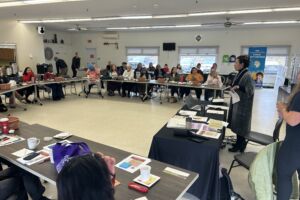
In Kanesatake, the new list of foster care families will help the DPJ to match children with families in the community, said Gauthier. And the new list will also include families interested in foster care. The KHC can formally accredit families who want to become foster parents, she said.
For families where the DPJ is involved, the KHC can offer support. KHC workers can help parents develop their parenting skills, find resources to meet DPJ requirements, or even defend the rights of parents and children with the DPJ, said Gauthier.
The KHC will not oversee the foster care program; it will remain under the Centre Jeunesse des Laurentides, said April Kibbe, manager of child and family services at the Kanesatake Health Center (KHC).
There is no update on the KHC overtaking youth protection services, said Kibbe.
“We continue to provide support and prevention services,” said Kibbe.
Sign up for email updates from The Eastern Door
Families interested in foster can contact Emilie Boucher Gauthier at the KHC.
Hadassah Alencar, Local Journalism Initiative Reporter