Moose hide tanning comes to John Abbott
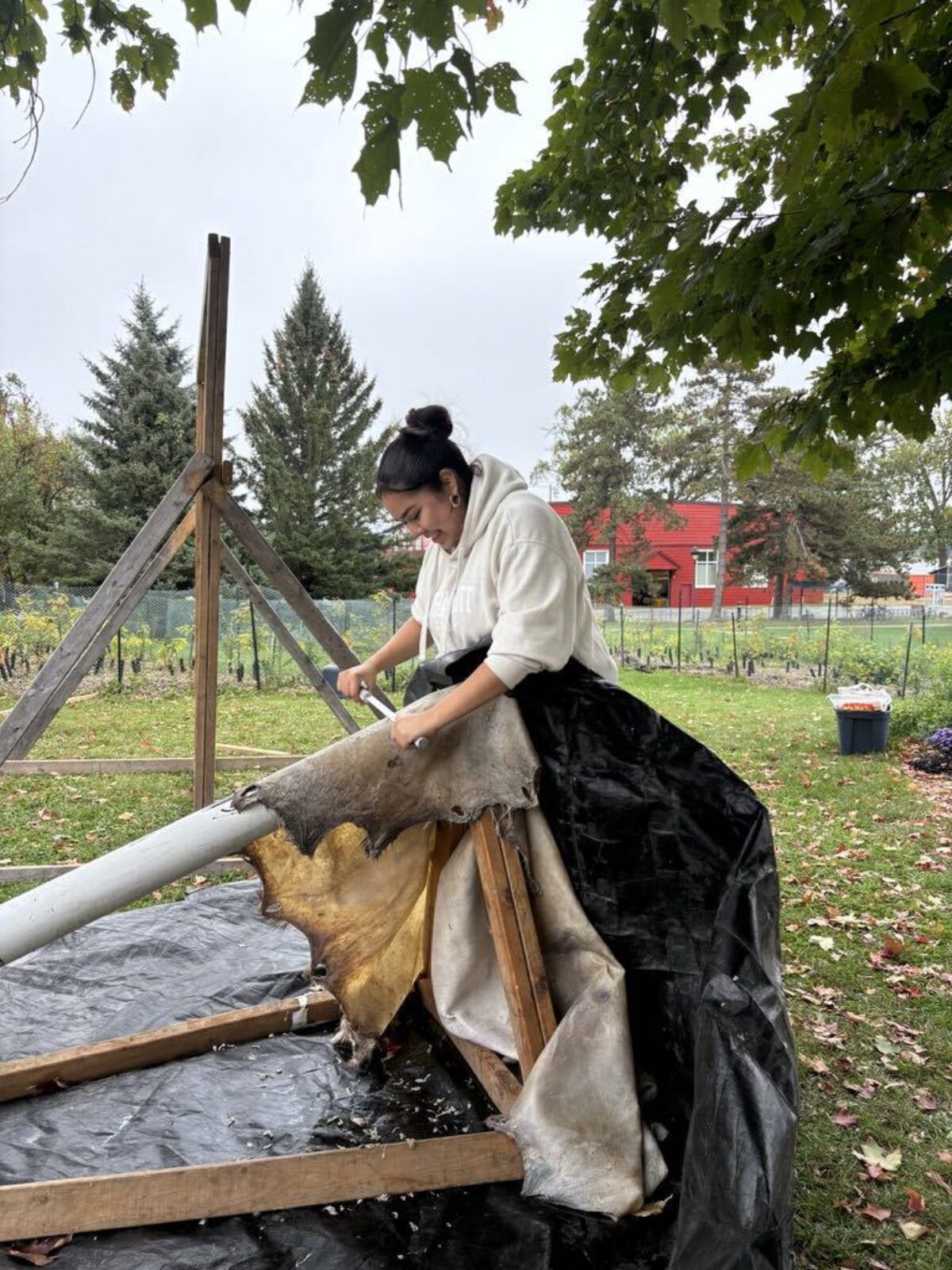
Cree and Inuit students at John Abbott got to learn how to smooth moose hide leather last week - thanks to an initiative organized by the college’s Indigenous Student Resource Centre.
The three-day long workshop attracted upward of 40 Indigenous students from a wide array of departments there. Amanda Lickers and Autumn Godwin of the Buckskin Babes, a Montreal-based moose hide tanning collective, were the ones that hosted the workshop.
“The purpose is to bring a little bit of community into the campus, so students can see Indigenous practices and knowledge being valued in Western institutions,” said Lickers, who is from Six Nations. “Some of them are from really far away, the Cree students especially, and they were able to do something that they’ve seen in their home communities.”
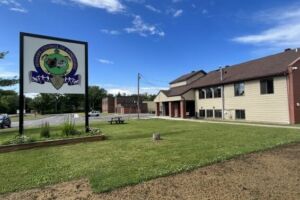
The students got to learn the basics of the craft outdoors at Kahnikonri:io Good Mind Garden, a new gathering space just recently inaugurated at the college.
Godwin, also a counsellor at the Indigenous student centre there, generously donated the moose hide - which she had already pre-prepared for softening.

“It’s a workshop for the students to connect with each other and really look at what these practices mean to them,” said Godwin, from Montreal Lake Cree Nation in Saskatchewan.
“We got a lot of amazing feedback from the students. It was really good for their mental health to step out of the classroom and to just be in community.”
Only Indigenous students got to take part in the land-based learning opportunity. They learned how to break down the fibres of the hide by hitting and scraping it, using a variety of tools like traditionally made bone tools, wooden bats and metal blades during the process.
“In order to actually protect the transmission of knowledge, it’s really important that we have a closed space that is not open to just anyone,” Lickers said. “We want to learn our culture, and it’s a vulnerable thing to be learning.”
John Abbott’s dean of Indigenous education Kim Martin, who is from Kahnawake, was eager to watch the workshop unfold at the garden.


“I believe that language and culture is the medicine that our students need today to keep them grounded,” Martin told The Eastern Door while at the workshop last Thursday. “When students feel that they’re welcome and they belong, their anxiety and mental health states are better.”
She’s been putting emphasis on hosting outdoor, land-based activities for the roughly 100 Indigenous students at the college. She said her next goal is to organize a hunting party so the students can learn snaring.
So many more resources are available at the school to support Indigenous students, she said, especially those from remote communities who need help adapting to urban life. Martin, a John Abbott alum herself, said she would have loved having these kinds of activities when she was a student in the 1990s.
“There would be high levels of anxiety, isolation, culture shock. Some students couldn’t adapt, and they left. And I relate to that, because in the 90s, I was one of them,” she said. “I came here, and I felt very isolated and alone. I didn’t know how to use a bank card or take the bus, and it was a really intimidating experience.”
It will ultimately be up to the students to decide what they’d like to make with the moose hide they worked with over the three-day workshop.
Sign up for email updates from The Eastern Door
The hope is to host another workshop soon, Lickers said, as creating moose leather is a lengthy process. The skin the students smoothed still needs to be soaked and softened a few more times before it can become something they can craft with.