Montreal march honours Red Dress Day
Ella Paulin The Eastern Door
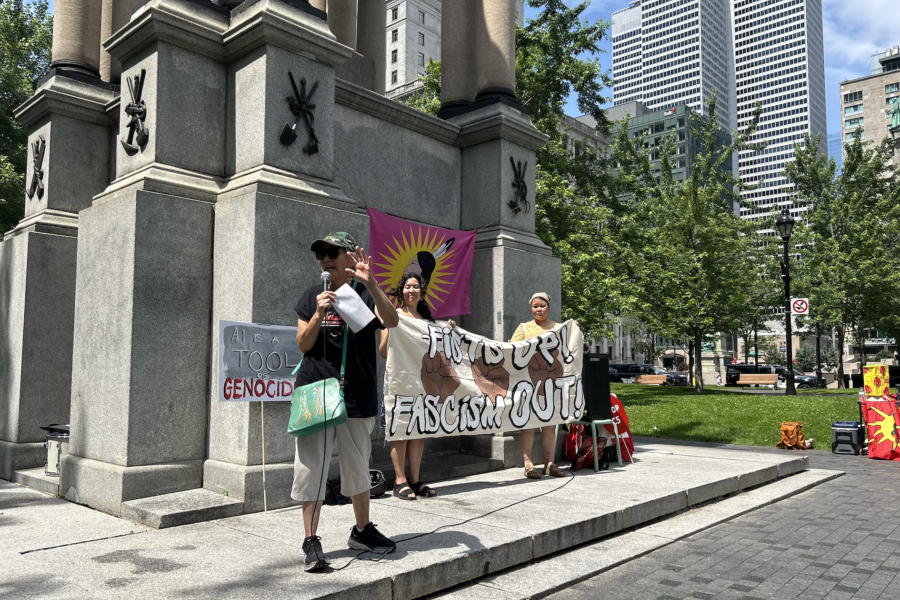
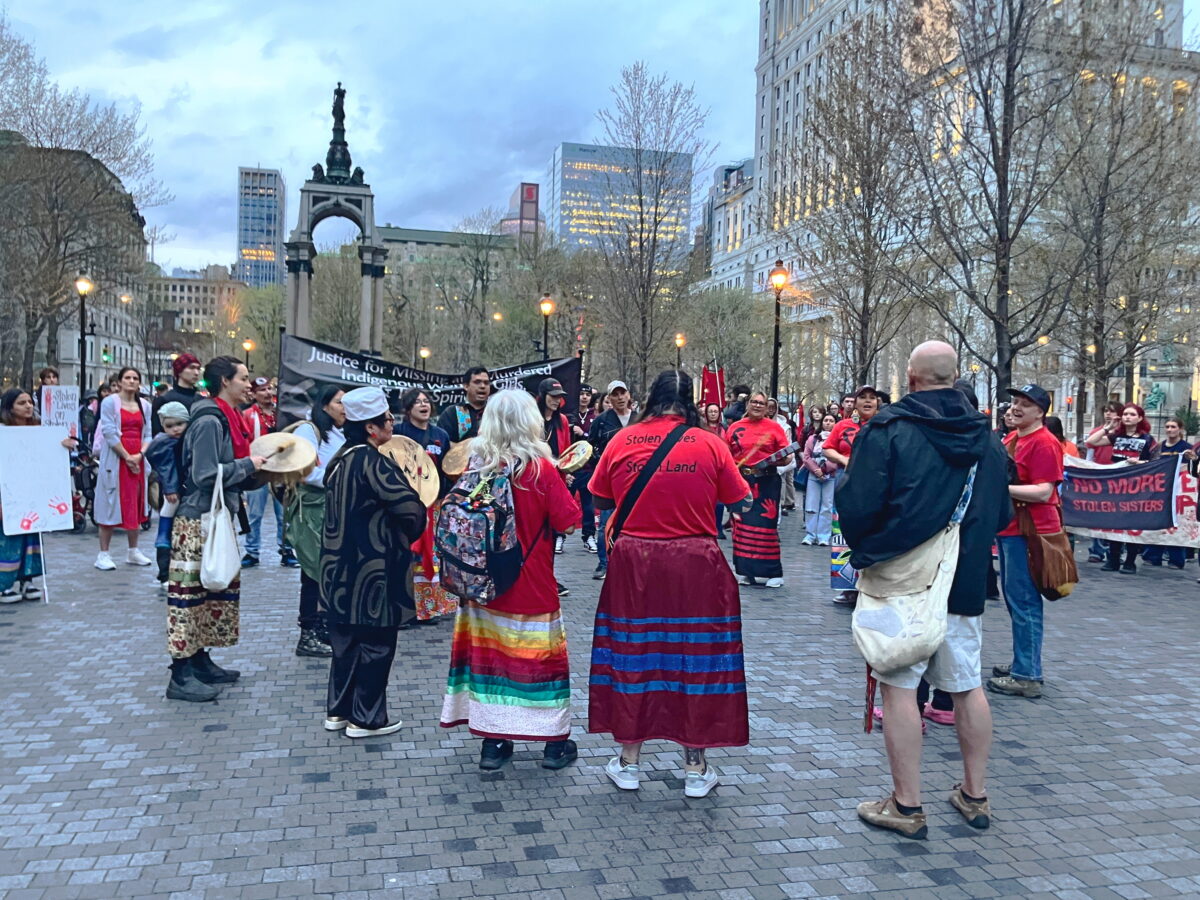
Hundreds joined together at Cabot Square in Tiohtià:ke on May 5 to commemorate Red Dress Day, the National Day of Awareness for Missing and Murdered Indigenous Women and Girls, with a march through the city’s streets.
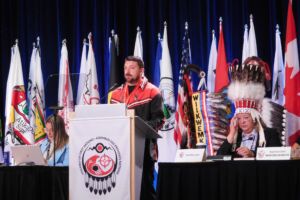
The opening speeches included remarks from Ellen Gabriel, who brought the crowd’s attention to the ways that violence against Indigenous women today is connected to a long history of violence against Indigenous people.

“I want to talk to you today about self-determination,” Gabriel said, “because this is the reason why Indigenous women are the most vulnerable group in Canada, with the highest rates of violence, the highest rates of murdered and missing. It’s about the land.”
Gabriel went on to criticize the Canadian government and police force for not doing enough to right the wrongs of colonization.
“The government just throws a few bones, a few pennies for prevention programs - they throw money at the police, thinking that they will protect us, but they won’t,” Gabriel said. “There have been many studies that have shown the indifference of the police in dealing with the violence against Indigenous women. Indigenous women and girls are not a priority of Mr. Carney, or any province or territory.”

The crowd also heard testimony from those who had lost friends and family members.
“I am here today to pay homage to my cousin, who did not have the chance that I had to have kids, because she died as she was approaching 20 years old,” said Jolie-Ann Brazeau, who is Anishinaabe.
“We, as women in our communities, are very important,” Brazeau said. “Colonization has made it so that we have lost our value - all the violence that the government has imposed on us for centuries, it hurts women very much, and it hurts all of our communities.”
Brazeau noted the vastly disproportionate rate of femicides of Indigenous women in Canada.
“This stems from a system that is deeply racist towards our people, and which puts our women in danger,” Brazeau said.
After a performance by the Pow Wow Rangers, the march made its way through downtown Montreal, walking to the beating of drums and chants of “No more stolen sisters!” Organizers paused the chanting periodically to speak directly to the people of Montreal, explaining the history of violence against Indigenous women through the loudspeakers.
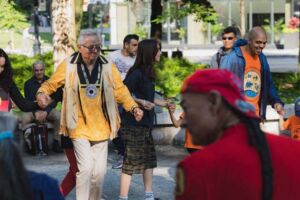




The march, full of people wearing red, carrying signs, and holding red dresses, made an impression against the grey skyscrapers.
Upon reaching Dorchester Square, participants gathered to hear closing speeches. For those who lingered, a drum circle formed as the sun set.

Simone Page, project coordinator for the Iskweu Project and one of the organizers of the march, felt the event was a success.
“I think it was a really good turnout,” Page said. “I think we can always get the numbers higher, so we can put more and more pressure on the government, and on those in power who make decisions, but it was a beautiful energy and a really amazing crowd - it was really nice to have everybody together.”
Page expressed concern about reduced government funding for Indigenous women.
Sign up for email updates from The Eastern Door
“A huge amount of funding is going to be cut from public services and services for Indigenous communities that are really needed to address this crisis,” Page said.
“I’m really hoping that today reminds those in power, and reminds the people here, who are working every day to address these issues, that it matters and that we care, and that we have to keep fighting for it.”