McComber hopeful for future of food production
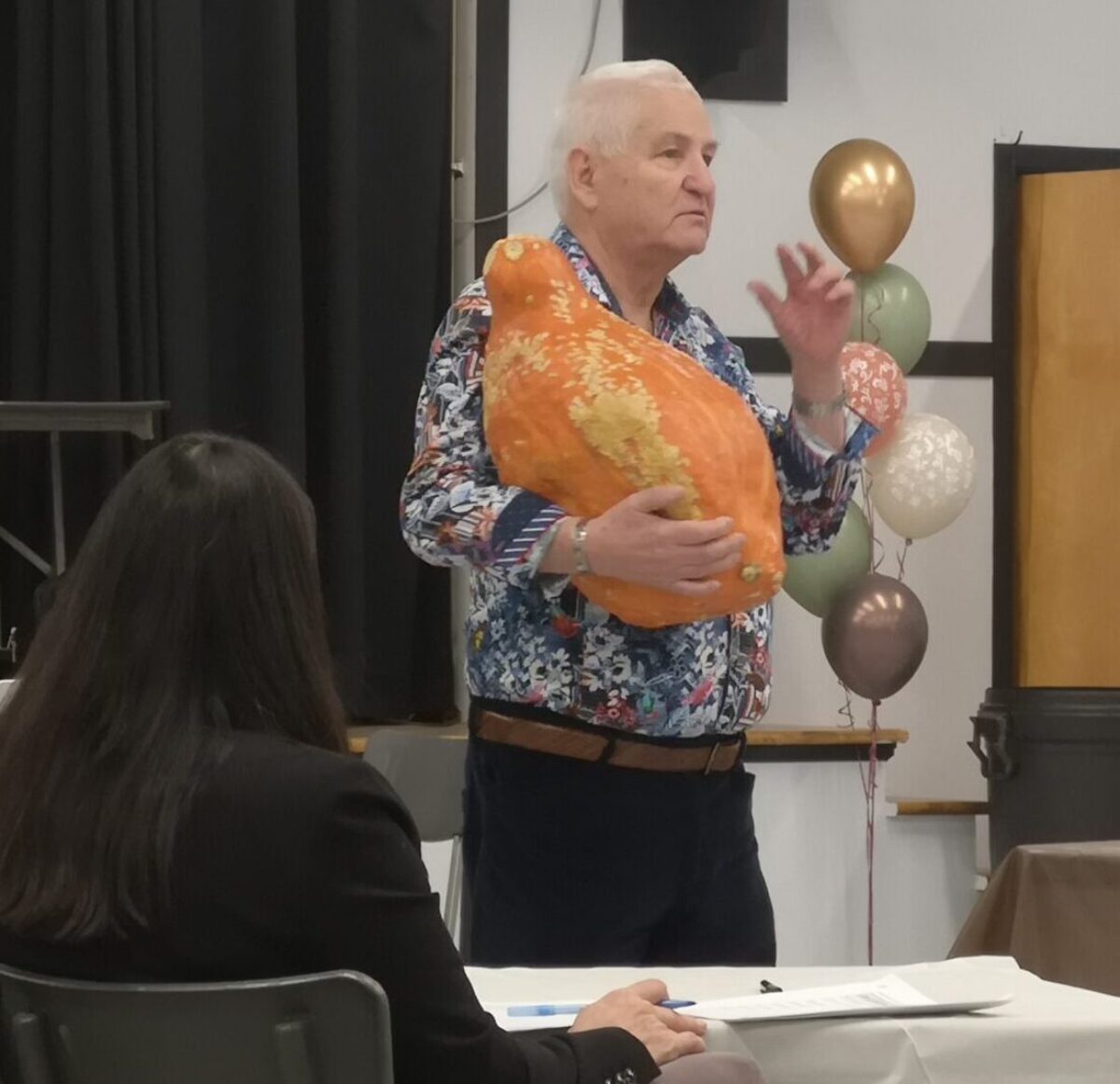
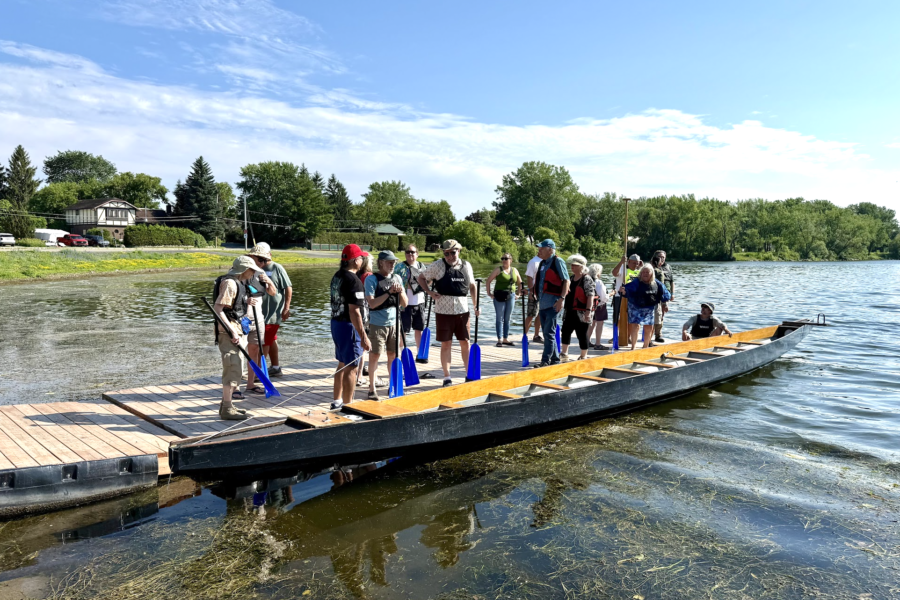
Stephen McComber last February at the Seed Conference discussing how the Boston Marrow squash in his hands was an example of food sovereignty in action. Olivier Cadotte The Eastern Door
Close to 2,000 seeds have gone out to schools and daycares in town, thanks to Mohawk Council chief Stephen McComber. This is now his second year in a row getting seeds out to children in town, he said, saying Kahnawake Collective Impact (KCI) helped to get them distributed to the classrooms.
“Now would be the ideal time to start indoor class projects, where kids could start things on their windows or in greenhouses,” McComber said. “I noticed the schools now are getting involved in greenhouses, I know Step by Step is supposed to have a greenhouse now.”
He acquired the seeds from a US-based heirloom seed company, including for flowers, tomatoes, the three sisters, and more. Many can be started indoors or out in the garden. Just this week he got a thank you card back from Step by Step Child and Family Center for the donation.
“These seeds are a gift that will keep on giving,” read the handmade card from its grade two classroom. “Putting these seeds into the hands of our children will help them develop, not only a sense of responsibility for nature and the environment, but also a connection to our culture.”

It’s a message that’s left him feeling uplifted, and hopeful for the future of food security and sovereignty in the territory.
“It’s very encouraging,” he said. “I’m encouraged by it myself, and also to see that the youth is really getting involved. That’s where it has to be and it has to begin there, and so whatever we can do to assist them is wonderful.”
Now that he’s a Council chief, McComber has more power to promote local food initiatives. As the chief with the lead on sustainable development, he said he has his eyes set on applying for public grants that could allow for the creation of a local agricultural program.
The idea would be to create a learning space that would allow for collaborations with organizations like the Kahnawake Youth Centre (KYC) or Kahnawake Shakotiia’takehnhas Community Services (KSCS), he said.



“There are many different grants available, but often you have to have somebody go underwrite it, like the Council, to get approval, so that would be our role,” McComber said.
Because Kahnawake is limited in the amount of land for agricultural use, community members will need to get creative if they want to work toward becoming self-sufficient.
“With all the different things that are going on in the environment and the climate, we have to look at not only growing food, but alternate ways of growing food,” McComber said. “Maybe a lot of it will have to be indoors, within greenhouses, high tunnels, those types of things. There’s a lot of challenges.”
Other options could include aquaponic projects, where food is grown only using water and fertilizers, or in some cases, with fish tanks. Community food baskets, and a canning and drying facility, would also enhance food security, he said.
Sign up for email updates from The Eastern Door
There’s a possibility land returned to Kahnawake from Quebec around Highway 30 could be used for these kinds of projects, whether that include indoor or traditional farming, if that’s what the community decides it’s interested in, he said. Surveying just recently wrapped up, with a report summarizing the community’s feedback expected to be made public soon.
Many of the parcels of land were previously used for farming, and feasibility testing has shown at least three may be suitable for in-ground agricultural development.
“We’re also looking possibly at lands around us, like in St. Remi too,” McComber said. “Some of these farms are starting to become available, because there’s no more people that are willing to take them on from their families.”
[email protected]
Editor's note: A previous version of article said the seeds were purchased; they were in fact donated.