Kahnawake’s Council takes stand on cuts
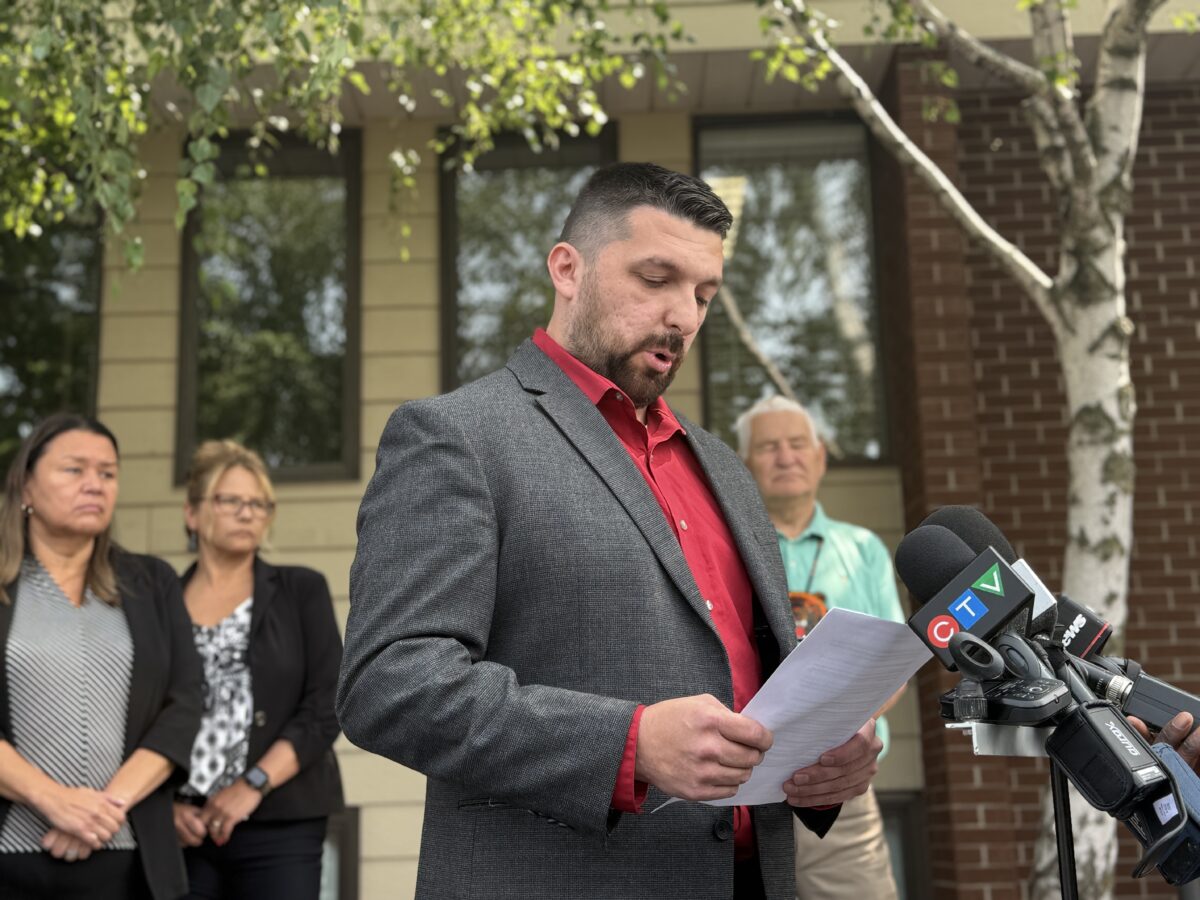
Faced with potential funding cuts to federal Indigenous programs, the Mohawk Council of Kahnawake announced in a press conference last summer that they would be looking for ideas to recoup money, including implementing road tolls. Marcus Bankuti The Eastern Door
The Mohawk Council of Kahnawake (MCK) has announced it will likely implement tolls on highways running through the territory in response to the federal government’s plans to make cuts to all governmental departments, including Indigenous Services Canada (ISC).
“This action is not just a failure of public policy - it is a violation of human rights and constitutional law,” said MCK grand chief Cody Diabo at a press conference outside the band council office on Tuesday.
A plan to introduce budget cuts of 15 percent across federal departments was cast as “racialized austerity” by the MCK in an accompanying press release.
“Canada cannot claim a commitment to reconciliation while cutting the very services that support our communities,” said Diabo. “These cuts will deepen inequalities in housing, health care, education, public safety, and more - while also undermining Canada’s legal obligations under Section 15 of the Charter of Rights and Freedoms.”
This section guarantees equal rights under the law and protection from discrimination.
The MCK linked the planned cuts to the Building Canada Act, which aims to expedite approvals for many major infrastructure projects. Diabo noted the plans to cut ISC’s budget follow First Nations’ widespread opposition to the legislation, previously known as Bill C-5, which passed on June 26.
Diabo was one of several participants to walk out of a meeting between more than 600 Indigenous leaders and high-level government officials, including prime minister Mark Carney, in uly. He criticized Carney this week for failing to broach the cuts during the meeting.

“Was silence part of the strategy to secure photo ops, while avoiding accountability?” Diabo asked.
In response to an inquiry from The Eastern Door, ISC portrayed the plans to restrain department spending as being aimed at avoiding waste.
“On July 7, federal departments were asked to bring forward savings proposals for the day-to-day running of government by targeting programs and activities that are underperforming, not core to the federal mandate, duplicative, or misaligned with government priorities,” said ISC spokesperson Pascal Laplante.
“The government of Canada is focused on ensuring that funding for critical services in Indigenous communities is sustainable and accessible long-term,” he continued.
“As Indigenous Services Canada undertakes this comprehensive expenditure review, effective delivery of core services to Indigenous partners is central to our analysis. The department’s work is and will continue to be grounded in reconciliation and working in meaningful partnership with First Nations, Inuit, and Métis Peoples to create a more prosperous future for all.”
Proposals for cuts have not yet been finished, and no decisions have been made, he added.
Regardless, Diabo presented potential tolls as necessary to make up shortfalls this policy could cause, not to mention the existing strain on local resources from heavy outside traffic. Further, he told The Eastern Door following the press conference, even if cuts did not reduce transfers to First Nations directly, there are more issues that need to be resolved.



“We don’t know the full extent of it. It makes us worry, but at the end of the day we’re not going to wait for something to happen to us, we’re going to be proactive. So, if this is what they’re contemplating, this is what we’re going to do to address it.”
Diabo suggested in his comments at the press conference that tolls on highways could be just the beginning and that all major infrastructure running through the territory could eventually be targeted.
“We have two main highways. We have train tracks. We have a Seaway. I mean, let’s start with the vehicles right now and then maybe we’ll look towards the trains and the Seaway and afterwards,” he said, noting 120,000 vehicles travel through the territory each day, burdening Kahnawake’s resources.
“All roads lead to Rome, so all roads lead to Montreal when they come through Kahnawake,” Diabo said when asked whether the Mercier Bridge would be included.
He noted community members have often voiced support for tolls on the many vehicles that traverse the territory.
However, in his comments to media at the event, he highlighted that the goal is not to punish Canadians.
“Let’s be absolutely clear,” he said. “This is not an action against the Canadian people. It is a direct response to a government that has failed both us and its own citizens - so early into its term.
Sign up for email updates from The Eastern Door
“We continue to seek peaceful co-existence, but history has shown us that, time and time again, your government pursues policies designed to erase us. We will not sit quietly.”
Tolls would not be applied to Kahnawa’kehró:non, Diabo confirmed. He also suggested to The Eastern Door that those with legitimate reason to be in Kahnawake, such as non-local employees of local organizations or even customers of local businesses, could potentially be exempted.
Marcus Bankuti, Local Journalism Initiative Reporter