Kahnawake highlighted at conference

Courtesy Paul Rice
Economic Development Portfolio Lead at the Mohawk Council of Kahnawake (MCK) Chief Paul Rice addressed industry leaders this week, telling them projects on unceded territory must include at least 50 percent equity for First Nations.
From April 27-29, the eighth annual First Nations Major Projects (FNMP) Coalition Conference, about reconciliation in global markets, was held in Toronto at the Sheraton Center Hotel.
The goal of this conference is to integrate more First Nations into trading partnerships and showcase the fruition of their contribution to international trade across various regions and sectors.
On the morning of the second day, the focus was to “explore strategies to reduce financial barriers, unlock capital, and enhance Indigenous participation in projects, driving economic benefits for all,” as written in the program.
Rice spoke with the intention of showcasing successful Indigenous ownership models in electricity projects and highlighting recent partnerships involving the MCK in renewable energy infrastructure projects.
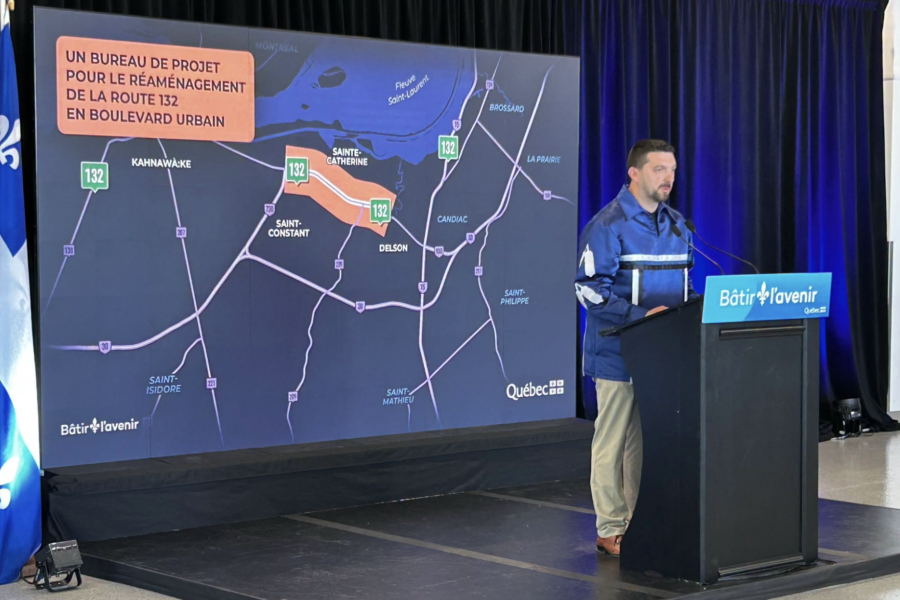
Such projects include the Hertel-New York Interconnection Line and the investment solution to finance equity participation in large-scale renewable energy projects between the MCK and the Caisse de dépôt et placement du Québec (CDPQ).
“Renewable energy is important because it aligns with our traditional and cultural values when it comes to land,” Rice said. “Energy diversification is all part of lessening reliance on fossil fuels.”

With Kahnawake and the Mi’kmaq community of Gespe’gewa’gi having solid leads on grand-scale renewable energy projects partnered with the province of Quebec, both Rice and Frederic Vicaire, the CEO of Mi’gmawei Mawiomi Business Corporation (MMBC), were invited to participate.
“We were asked to speak at the panel to share our experiences so that we could showcase that knowledge to other First Nations that are looking to do this,” said Vicaire. “I think it’s important for nations to hear that nothing is impossible.”
With Quebec’s vision to invest a lot more in wind energy development in the years to come, “we would love to see all First Nations get the same equal participation in those projects and create their own success stories,” he added.
At the panel, Rice opened with a clear message to the government and industry officials in attendance: “Projects on unceded traditional lands should include a mandatory minimum of 50 percent equity for the nation.”
This notion is backed by the actions the MCK is taking with the CDPQ. “We’re participating in financing those projects in order to help those nations fund their equity portion of projects,” said Rice.
The Mi’kmaq community was very intrigued by this, Vicaire explained.
“For any new infrastructure that Hydro Quebec installs on traditional territory, we are looking for equity participation in those initiatives,” he said. Not only for financial reasons, however. “Having your own land management plan for your nation is very important so that you can engage with your citizens to see what would be acceptable among different projects.

“Having social acceptance is key to success.”
Rice weighed in on the intentions behind partnerships between Quebec and Indigenous communities.
“The reason why renewable energy projects are happening is because of the demand in Quebec,” he said. “Quebec knows that these projects must happen on First Nations territory, which means that these communities have to buy into these projects.”
While Rice acknowledges the progress being made through these deals across Canada, he emphasized that true reconciliation requires the province to recognize that Kahnawake existed long before Quebec.
“I think that needs to change,” he said. “The government needs to be more proactive to work with Indigenous nations, not just when it needs something.”
Investments in large-scale renewable energy projects across the country can have many benefits for the Indigenous communities involved, enabling a steady flow of revenue contributing to financial independence, according to Rice.
“This is an integral priority for the economic development portfolio that I lead. It allows us to reinvest in things such as language and culture, youth and elderly … things that the government doesn’t necessarily want to fund,” he said.
Sign up for email updates from The Eastern Door
“I’m excited about what we are creating within the economic development portfolio as well as the Sovereign Wealth Fund.”
Michael Peters, CEO of Glooscap Ventures in rural Nova Scotia and attendee of the conference, was enthusiastic about what he experienced. “Indigenous people are finally getting a seat at the table,” he said. “Getting this opportunity to connect with all these people was really helpful.”
While agreeing that these electrical projects are great for creating own-source revenue, Peters was particularly ecstatic about the employment opportunities they provide. “And not just any kind of employment, such as minimum wage,” he said.
“These are life-long careers that are going to be developed from these projects that are high-skilled, high-paying, and in high demand for our communities.”