Indspire inspires local educators
Courtesy Kanesatake Education Center
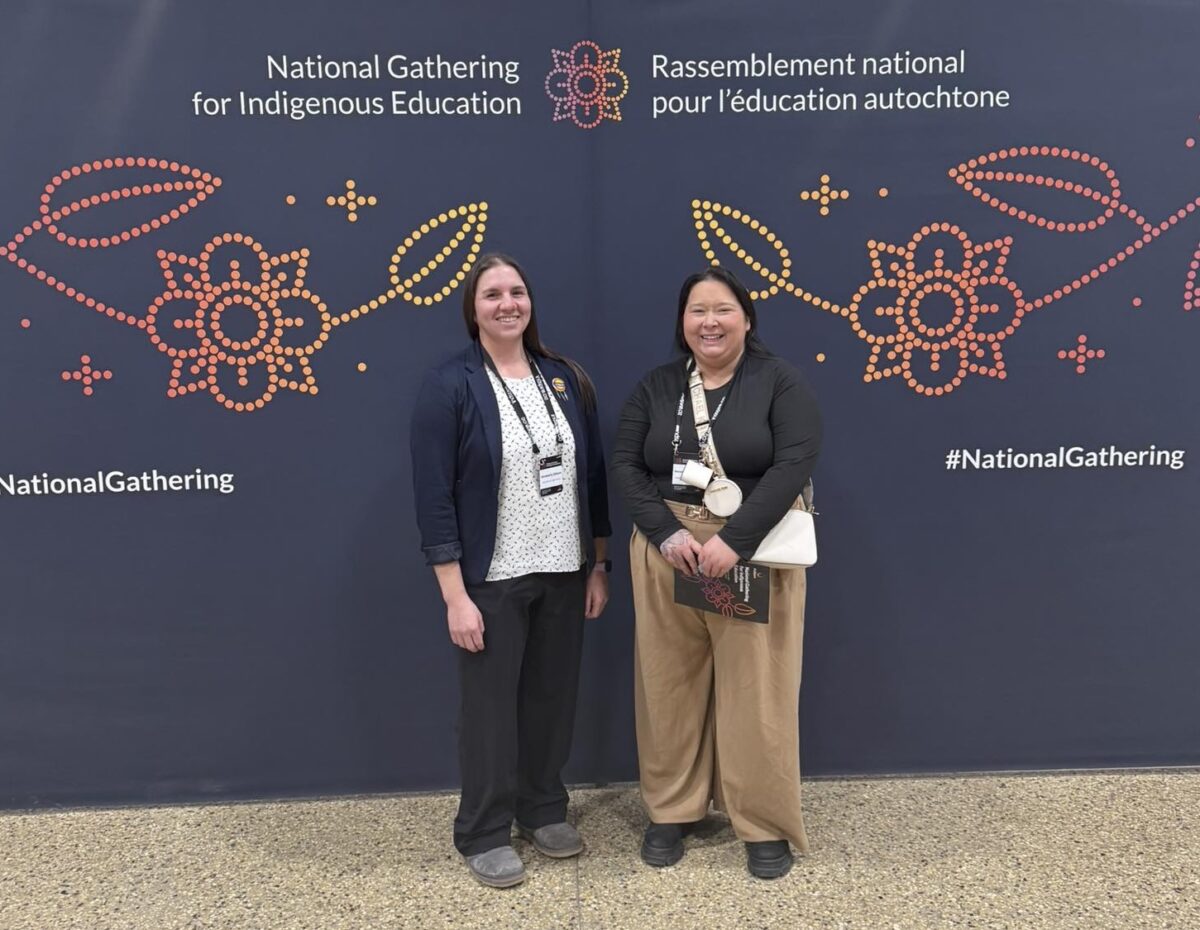
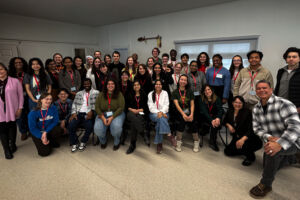
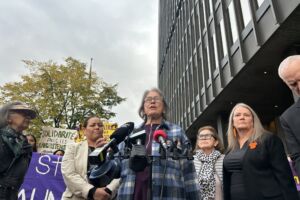
Kanesatake Education Center (KEC) administrators were among the educators who travelled to Winnipeg last week to connect over the challenges and opportunities in Indigenous education today.
“Honestly it felt like a big family,” said Kimberly Simon, principal of Ratihén:te High School. “It was very inviting, warm, comfortable. The funny thing is when Indigenous people gather, it’s always kind of that same feeling. You feel like you’re at home. Everybody was just very friendly and willing to share.”
Simon attended the Indspire National Gathering alongside KEC education director Watsenniiostha Nelson, and the pair attended workshops and made connections that could prove useful as the education centre works to deepen the role of cultural learning in the local system.
One of the sessions that stuck out to them was about virtual reality (VR) as a teaching aid. In fact, the six-part VR series that was presented, William, was written and directed by Kanehsata’kehró:non Sonia Bonspille Boileau and produced by Nish Media. The production tells the story of a nine-year-old who is forced to attend residential school in 1960, which could give students a new way to understand this history.
“It just opened up kind of a world of possibilities for Watsenniiostha and me of what could be possible implementing this type of technology into our schools,” said Simon.
She believes this technology could one day be integrated with language revitalization and used to teach students about Kanesatake culture and stories, even enable them to zoom in on medicinal plants for more context.
“Maybe an elder could be on the VR explaining that knowledge,” Simon said. “It’s real. It’s not just the teacher speaking to them. We can bring our culture and our history to life with this new technology. It’s very exciting.”
On the flipside, they also attended a presentation about artificial intelligence (AI), an emerging technology that has a lot of educators worried. Besides the usual concerns about plagiarism, participants learned about how it can impact students given that these platforms are heavily trained on a Eurocentric perspective.

“The focus of that presentation was actually how Indigenous perspectives and our views on science and the natural world don’t necessarily fit into the AI model, and we’re kind of not included necessarily in an answer that ChatGPT would give you,” said Simon.
The presentation also explored what an AI system incorporating Indigenous perspectives could look like.
“We talked about that and to make students aware of limitations, using it as an Indigenous student, to be aware that ChatGPT doesn’t know our rich histories and all of the knowledge that comes with it.”
While the KEC wants to ensure students develop critical thinking and writing skills by wrestling with subjects themselves, there are also opportunities offered by AI, Simon said.
“I think showing them the tools, the positive things that could support their learning and their education, I think that’s what we should be focusing on. There are some good things out there, but we want to teach them not to use it as a crutch.”
They also attended a presentation by Kahnawake educators Kwawenna:wi Diabo and Coral Phillips-Brown, who shared how they are integrating culture and language with vocational skills at Kahnawake Survival School.
“It was really nice to see because we really want our program to be well developed and supporting the students’ interests and make it culturally-based, so she definitely had a lot of ideas in that area,” Simon said.
Other areas of interest included the suggestion of a non-traditional school calendar, which would take some of the summer vacation and redistribute it through the year to fit the ceremony cycle and traditional practices, such as time off during hunting season.
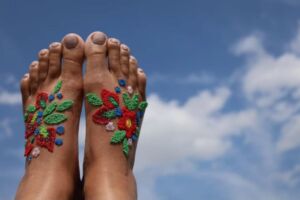
For Simon and Nelson, one experience they’ll never forget from the conference is meeting Phyllis Webstad, who founded Orange Shirt Day, which takes its inspiration from her story of her own orange shirt being taken away on her first day of residential school.
“She was so kind and took a few moments to speak to us,” said Simon.
The pair told Webstad about the KEC’s efforts around Truth and Reconciliation, including the Annual Inter-School Walk for Truth and Reconciliation Walk, and thanked her for sharing her story.
“She’s a very important person for Indigenous people right now, having a voice for all the survivors. It was really great,” said Simon.
She told Webstad how much Orange Shirt Day has inspired young people.
“I think this generation is becoming more invested in learning their culture and their language,” said Simon.
Simon took to heart the words of one of the featured speakers at the conference, Niigaan Sinclair, son of Murray Sinclair.
“What he said was really meaningful and powerful because he was talking about cultural revitalization, residential schools, and how do we keep climbing the mountain as Indigenous people in education to try and keep improving, to try and undo what residential schools did?” said Simon.
Sign up for email updates from The Eastern Door
Indigenous education is a tool in this effort, Simon reflected, as she recalled Sinclair describing the potential of education to ensure Onkwehón:we students grow up proud of who they are.
“I think it was really meaningful for everybody that was there to hear that,” Simon said. “It’s not all for nothing. It’s not for a paycheque. There’s a big purpose to what we do in our schools, and we have to keep moving and trying to climb that mountain.”
Marcus Bankuti, Local Journalism Initiative Reporter