Housing project triggers lawsuit
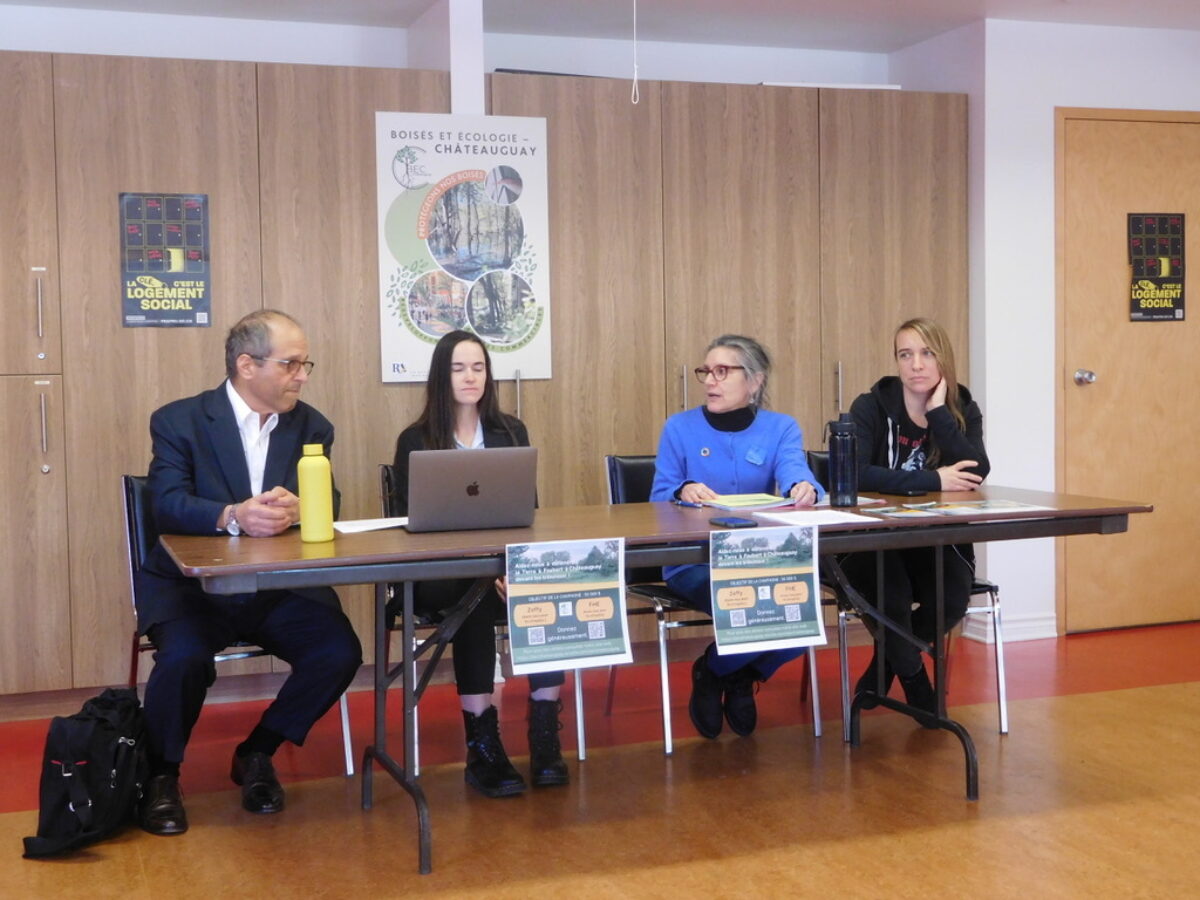
An environmental group filed a judicial review at Quebec Superior Court this Wednesday in the hope of halting a city-led plan to build housing over wetlands in Chateauguay. The wooded area sits along Highway 30, just next door to Kahnawake.
Three citizens that live nearby are also named as applicants in the challenge. It also seeks approval for a permanent injunction against the city, which would force it to cease moving the housing project ahead - should it be approved.
The city hopes to build upward of 2,000 units on the 28.6-hectare stretch of land bordered by Saint-Jean-Baptiste and Pierre-Boursier boulevards, known by locals as Faubert’s land.
“Why are we launching this judicial review? Because the city refuses to listen to the position held by many in the city who maintain it has chosen an inappropriate site for the project,” said Chantal Payant, part of a coalition of citizens opposed to the project.
There’s no need to destroy wetlands to respond to the city’s growing housing crisis, she said. The city itself has also identified other areas in the city that could be good candidates for more housing.

“The city’s existing urban development plan prioritizes development around the Faubourg area, in the west-end of the city (near Anna-Laberge hospital), along René-Lévesque Boulevard, on Anjou Boulevard in the city’s downtown, and by the transit hub on St. Jean Baptiste Boulevard,” said Payant, one of the three applicants in the filing. “Faubert’s land isn’t among any of the areas prioritized for residential development in that plan.”
The two lawyers involved hope the court will squash three zoning by-laws adopted by the city earlier this November to move the project ahead.
They maintain the city failed to abide by Quebec’s laws surrounding land use planning, and that it should have instead brought the project forward through a different urban planning mechanism, which would have required all zoning changes to be approved through a referendum.
“Our objective with this challenge is to call into question, before the courts, the validity of these by-laws, because we think it’s in the public interest and in the population’s interest too,” said Gabrielle Champigny, one of the lawyers involved.
The way the project is currently structured leaves it to the regional county to approve requested zoning changes. The three by-laws targeted in the legal challenge have yet to be approved by the county – the MRC de Roussillon.




“One can understand why, because the opposition in the community seems to me to be pretty strong, so they know what the result of that referendum would likely be,” said Franklin S. Gertler, the other lawyer involved. “Those mechanisms were put in the law for a reason. They’re protective of the environment, protective of municipal democracy, and they have to be followed.”
The two other citizens named in the filing are Alexandra Richard and José Luis Banda. Both live right next to the woods.
Richard used to go there often to walk her dog alongside her boyfriend. She’s no longer able to as of this May, when trespassing signs were installed by the paths leading into the forest.
“There’s tons of birds, tons of animals, and we were permitted to go in and spend time there. We would visit often, and take pictures of all the flowers there in the spring. There’s plenty to look at, the trees are beautiful,” said Richard, who’s lived in the area since 2011. “Now, we’re no longer allowed in.”
Most of the trees there would have to be cleared to make way for the project, and a large portion of the wetlands would be destroyed too. The city has assured it’ll keep some areas intact, promising to conserve at least 30 percent of the existing habitat.
Sign up for email updates from The Eastern Door
“I find it unfortunate that advocacy groups believe that their vision is superior to that of the population, and that they’re trying to use the courts to that end,” Chateauguay mayor Éric Allard shared in a written comment to The Eastern Door. “It’s just as important that the population’s rights are respected. The city council is elected by the majority and is responsible for making decisions on their behalf. That’s what we’re doing here, for the benefit of the entire population, and for present and future generations.”