Health Summit a big hit
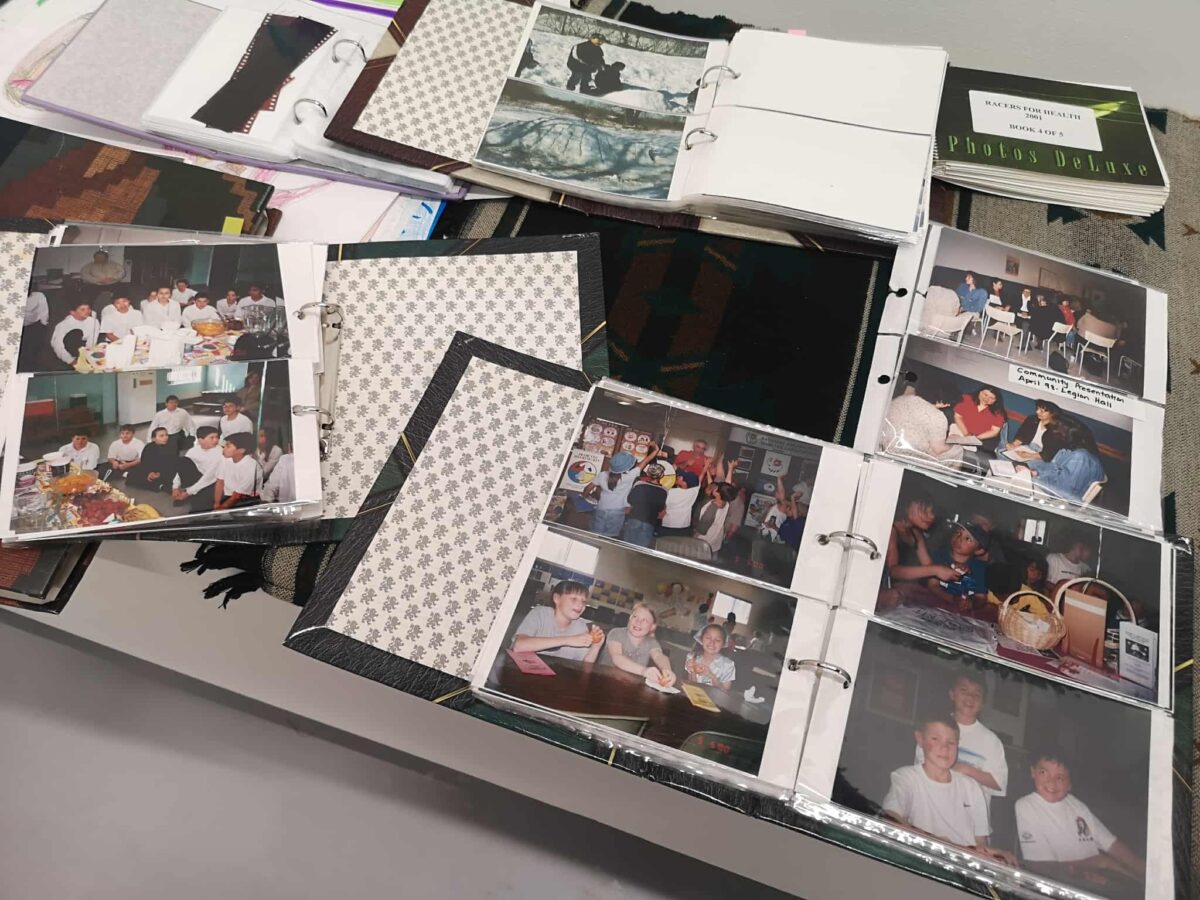
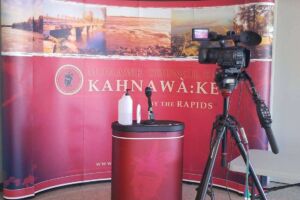
The portion of the Indigenous Health Research Summit organized by the Kahnawake Schools Diabetes Prevention Program (KSDPP), PlanIt Consulting & Communications, and the Tahatikonhsontóntie’ Quebec Network Environment for Indigenous Health Research (Qc-NEIHR) held at the Knights of Columbus had some items and photos from KSDPP’s past. Olivier Cadotte The Eastern Door
Last week’s Indigenous Health Research Summit co-organized by the Kahnawake Schools Diabetes Prevention Program (KSDPP), PlanIt Consulting & Communications, and the Tahatikonhsontóntie’ Quebec Network Environment for Indigenous Health Research (Qc-NEIHR) was the first of its kind in town, but KSDPP program director Coreen Delormier already knows it won’t be the last.
“It exceeded my expectations,” said Delormier, who said that hundreds of people from around Turtle Island came to the kiosks and activities at the Knights of Columbus and the panel discussions at the Golden Age Club between last Wednesday and last Friday.
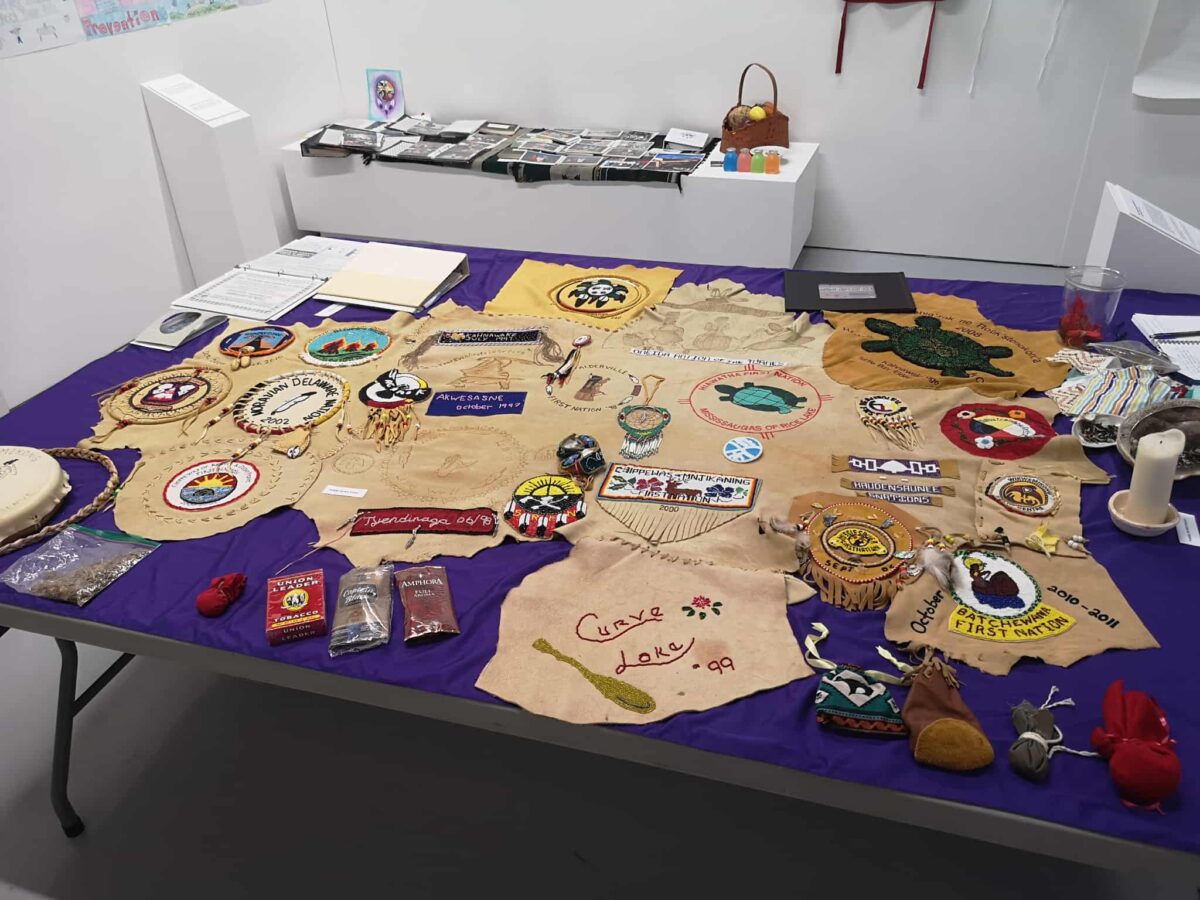
At the Knights, those kiosks included trips down memory lane, with old photos from KSDPP activities and classroom visits, posters from those visits, and Joe Jacobs’ diabetes wampum belt, with dates and patches from different communities he visited.
Olivier Cadotte The Eastern Door
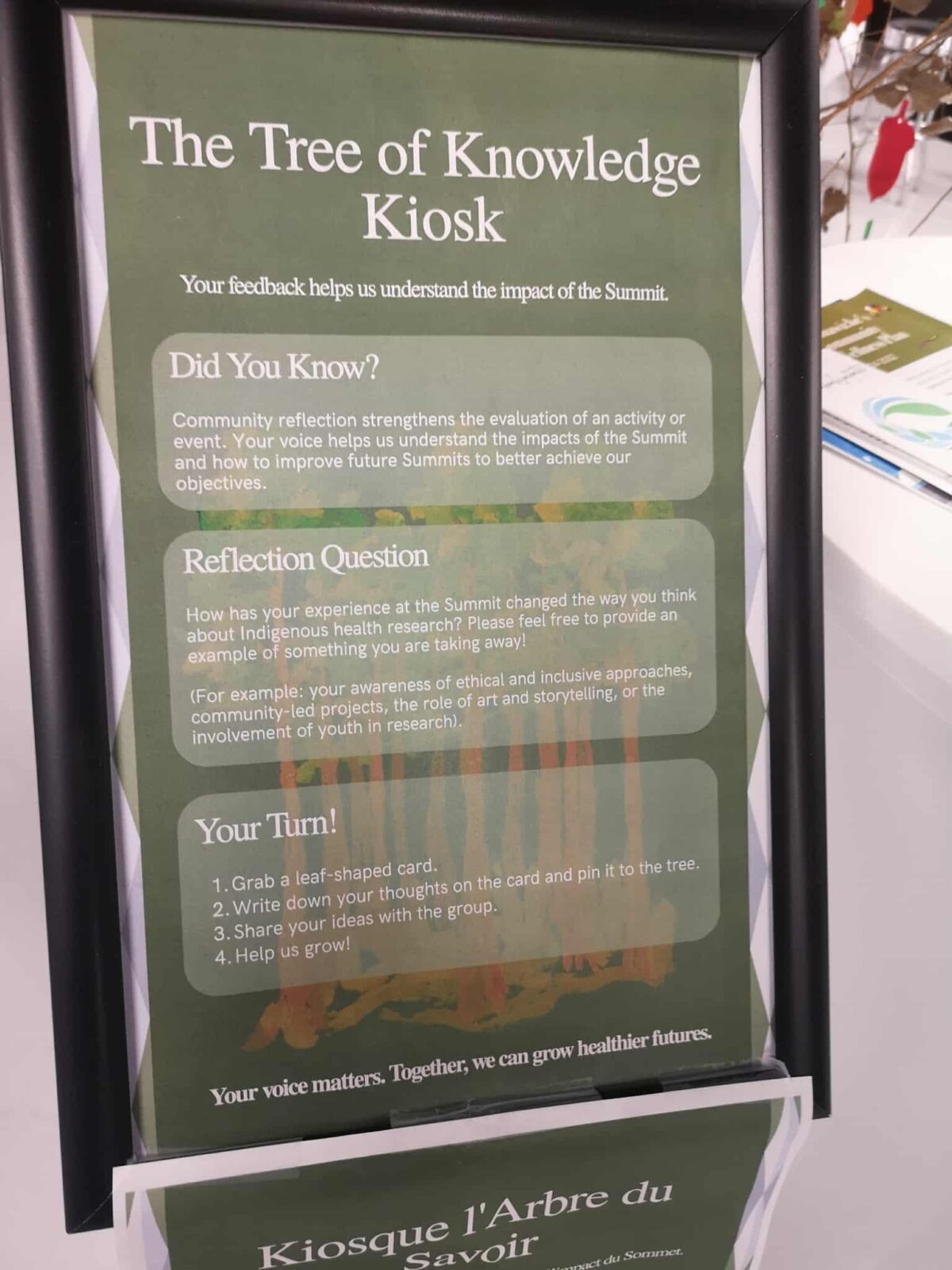
There were also interactive kiosks where one could ask questions about how KSDPP, Qc-NEIHR, the Kahnawake Environment Protection Office (KEPO), and Onkwata’karitáhtshera worked to improve health in the community. Finally, there were interactive kiosks, including surveys, feedback gathering, a ping pong ball polling station to see what KSDPP should focus on in the future, and an exercise bike to demonstrate social exercise.
On the bike, you would engage in a conversation with the person at the kiosk - on Friday it was Universite du Quebec a Rimouski (UQAR) kinesiology master’s program student Julien Champagne. Your heart rate would be measured, and you would engage in small talk with him, to see how much effort you could give and still hold a conversation.
“We want people to have fun and be motivated by fun,” said Champagne.
He gave a personal example: a few years ago, a friend suggested they’d go biking to an ice cream shop here and there during the summer. One day, they stopped doing it.

“I found myself missing the ice cream, but I was also missing the bike ride,” said Champagne.
The goal was not to put in maximum effort, but instead a sustainable amount of effort.
“The message we want to pass off is that for the majority of people, the important thing is being consistent,” said Champagne, adding that they think people should avoid becoming “weekend warriors,” people who only exercise once or twice a week, but do so at a very high intensity, increasing the risk of injury.
All these kiosks are, in a way, research: on the bike, it was research in action, while others were research into what the community was interested in going forward - the ping pong ball poll showed that family-based research was the leading interest.
At the Golden Age Club, the panel discussions were also well received.
Treena Delormier, Coreen’s sister and KSDPP’s scientific director, said that the panels were an important part of the event because of the different perspectives all the speakers gave.
They included Kahnawake Shakotiia’takehnhas Community Services (KSCS) executive director Derek Montour, KSDPP community advisor and researcher and assistant McGill professor Alex McComber, KSDPP researcher and McGill professor Ann C. Macauley, and Chelsea Gable, executive director of the Institute of Indigenous Peoples Health.
“It was just an honour to be sharing the stage with all of these people who I have an incredible amount of respect for, for their leadership and their work. Our goal is to keep working to make our community a healthy place to bring children up and to live and to grow old and continue as a family,” said Treena Delormier.


The first day of events began with a traditional opening by medical student and KSDPP community advisory member Rotshennón:ni Two-Axe, followed by an introduction by Coreen and another community advisory board member, Amelia McGregor.
Treena said that the Summit bringing people together to explore Indigenous health will make a difference, and many of the visitors saw it that way, too.
“I think people were very pleased and encouraged to see that there’s so much positive work being done by partnerships and also with the communities to do health research,” said Treena.
Olivier Cadotte The Eastern Door
“That’s the whole purpose of the network, to connect best practices and learn from each other.”
Leila Qashu, executive director of Qc-NEIHR, said that these kinds of summits could be done in other communities to share the wealth of knowledge throughout Turtle Island.
“Others can watch that and then take home the information. Our objectives are around enhancing community-led research capacity, supporting emerging Indigenous researchers, and institutional transformation. This summit was a strong marker in all of those goals, and I think even going forward, it’s a place that will be a reference,” said Qashu.
For next time, Coreen said that based on the feedback they received, they would like to do more workshops that involve the lived experiences of community members who might have something to bring to the discussion, as well as planning it earlier in the summer to have more participation from school-age community members.
Sign up for email updates from The Eastern Door
“I would like to acknowledge just the amount of commitment and effort and hard work that everybody put into putting this on was, so to me, it amazes me,” said Coreen.
“You don’t do an event like this without a lot of support, resources, coordination, volunteers, and vision,” said Treena.
“It’s just an incredible feeling of encouragement and hope and positivity that we are starting to feel that research works in the ways that we wanted to when we’re involved with it.”