Guerilla art exhibit reimagines the MET

Josué Rivas’ piece Standing Strong featuring Acosia Red Elk (2021) overlaid on Thomas Sully’s Queen Victoria (1838), part of a new unauthorized exhibit titled ENCODED. Courtesy Amplifier
The American Wing at New York’s Metropolitan Museum of Art (MET) contains tens of thousands of artworks deemed to represent America, sprawling paintings of George Washington crossing the Delaware river, and portraits of presidents past.
But this week, there’s been a second exhibit in the American Wing - one that’s invisible to the naked eye, but that recontextualizes many of the pieces in each room. The historic Delaware river crossing, painted by Emanuel Leutze in 1851, for instance, can be totally transformed by simply scanning a QR code and panning over the work with a phone camera.
With an augmented reality (AR) tool provided by nonprofit design lab Amplifier, a new artwork is digitally overlaid on the original piece, one where Washington and his peers are bogged down by leafy vegetation, vines wrapping around them and creeping up the United States flag at the centre of the painting, slowly suffocating it.
The AR piece, titled LANDBACK, is by artist Flechas, one of 17 Indigenous artists from across Turtle Island taking part in an unsanctioned exhibit at the MET titled ENCODED. The exhibit launched on Indigenous Peoples Day, a result of a collaboration between Amplifier and mixed-heritage artist Tracy Renee Rector.
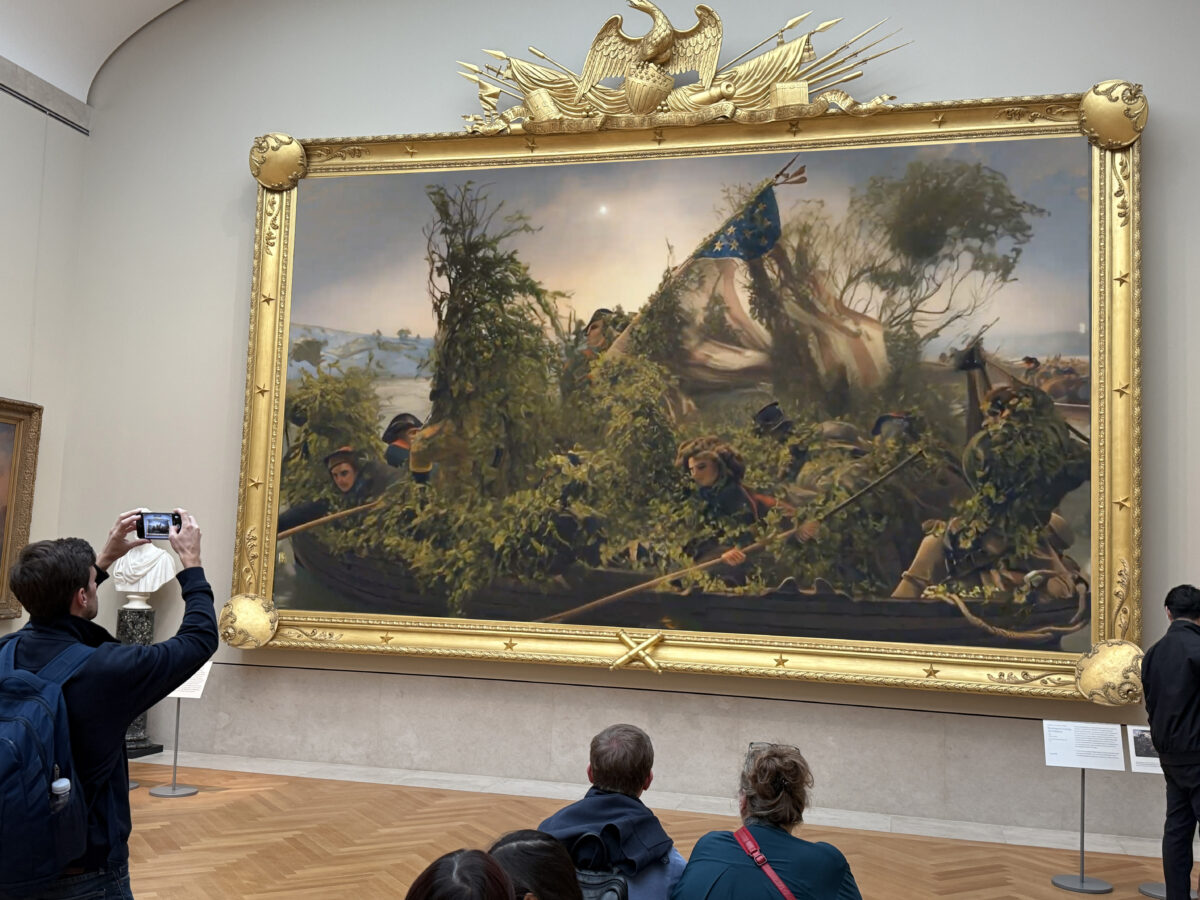
Flechas’ LANDBACK reimagines Washington Crossing the Delaware (1851) by Emanuel Leutze. Courtesy Amplifier
“Because we amplify artists and movements, the intention was always to find ways to put the stories of artists into spaces like the MET that they would otherwise not be allowed in,” said Cleo Barnett, executive director of Amplifier. “Our job is to identify the empty spaces for artists to fill.”
Amplifier first became interested in the “permissionless installations” made possible by AR four years ago, using technology as a storytelling tool to “activate” spaces using tools like 3D scans, animation, and sound.

For this project, the team collaborated with technology partners to design an interface that allows visitors to experience the MET’s exhibit in a new way, directly on their phones.
“Every piece was meticulously mapped to existing artworks within the museum, so that when visitors lift their phones, the original works transform into Indigenous counter-narratives, creating a seamless dialogue within the gallery itself,” Barnett said.
Kahnawake’s own Skawennati is one of the featured artists in the exhibit, and her work They Said Get Ready is one of the first that participants will see when accessing ENCODED.
Corn, beans, and squash are personified as superheroes in Skawennati’s classic video-game style, and when users point their cameras towards the entrance of the MET, they’ll see those colourful digital avatars spring to life, looming over the historic building.
She also wrote a song as part of the exhibit.
“I really wanted people to feel an intimacy with the characters of The Three Sisters, and here people can see them on their phones, flying above them. They feel so close, they do feel kind of real,” Skawennati said.
She said the guerilla-style exhibit is an exciting way to critique artwork and colonial narratives.

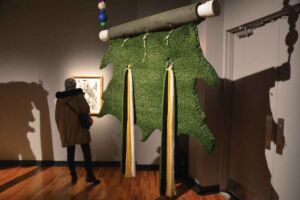
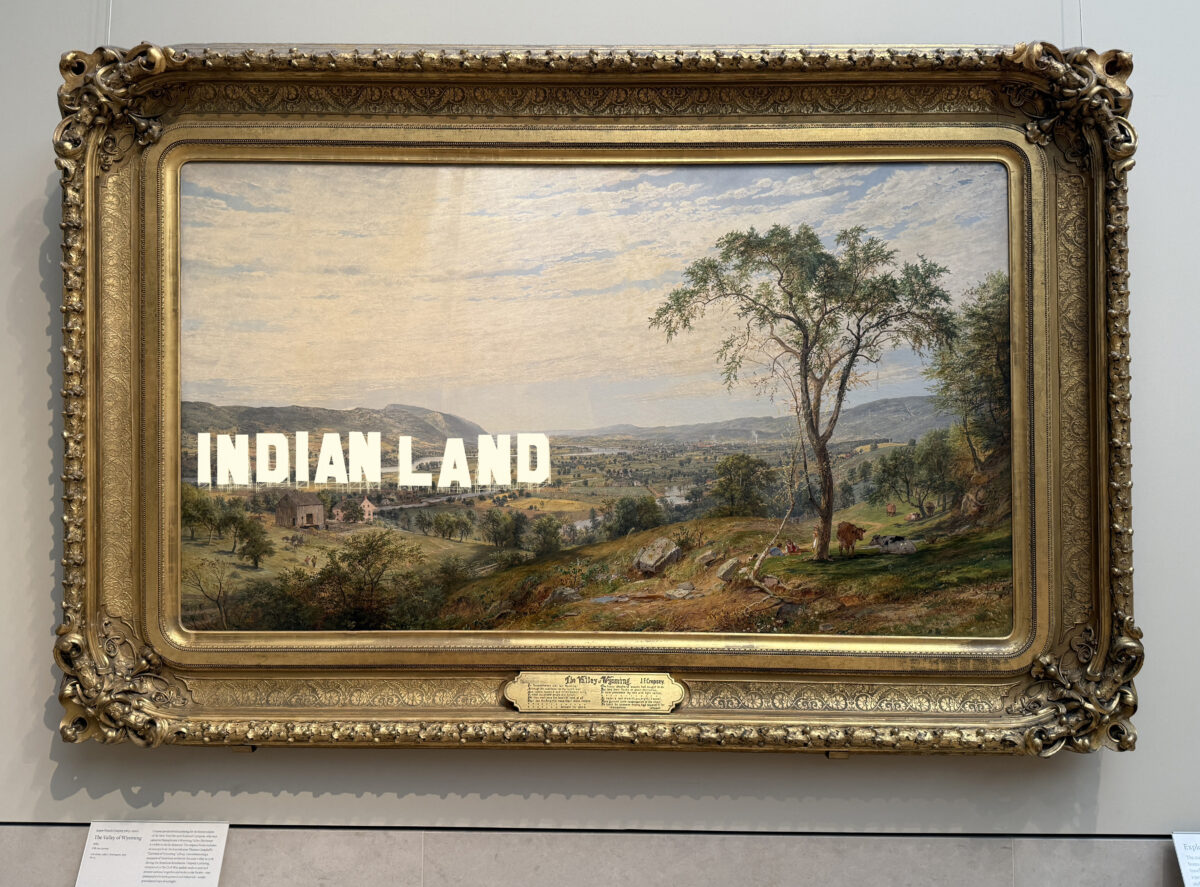
Nicholas Galanin’s Never Forget (2021) changes the landscape of Jasper Francis Cropsey’s Valley of Wyoming (1865). Courtesy Amplifier
“Because all of these works are AR pieces, nothing is destructive to any of the artwork, Amplifier is changing the terminology from takeover to makeover,” Skawennati said. “They wanted to change the story, they wanted to add in Indigenous people and show that we’re still around, and we’re still thinking about the future.”
By creating a non-destructive yet still unauthorized intervention in such a historic space, each literal layer of AR art adds metaphorical layers of meaning to each piece, becoming a catalyst for more meaningful engagement with art, said Rector, who co-curated the exhibit on a rapid three-month timeline.
“Guerrilla-style art actions are like medicine, small but potent doses of truth entering colonial systems. They stir the air, unsettle comfort, and make the invisible visible,” she said. “Over time, they can rewire curatorial consciousness, calling museums to become places of dialogue instead of dominance, of living relationships rather than static display.”
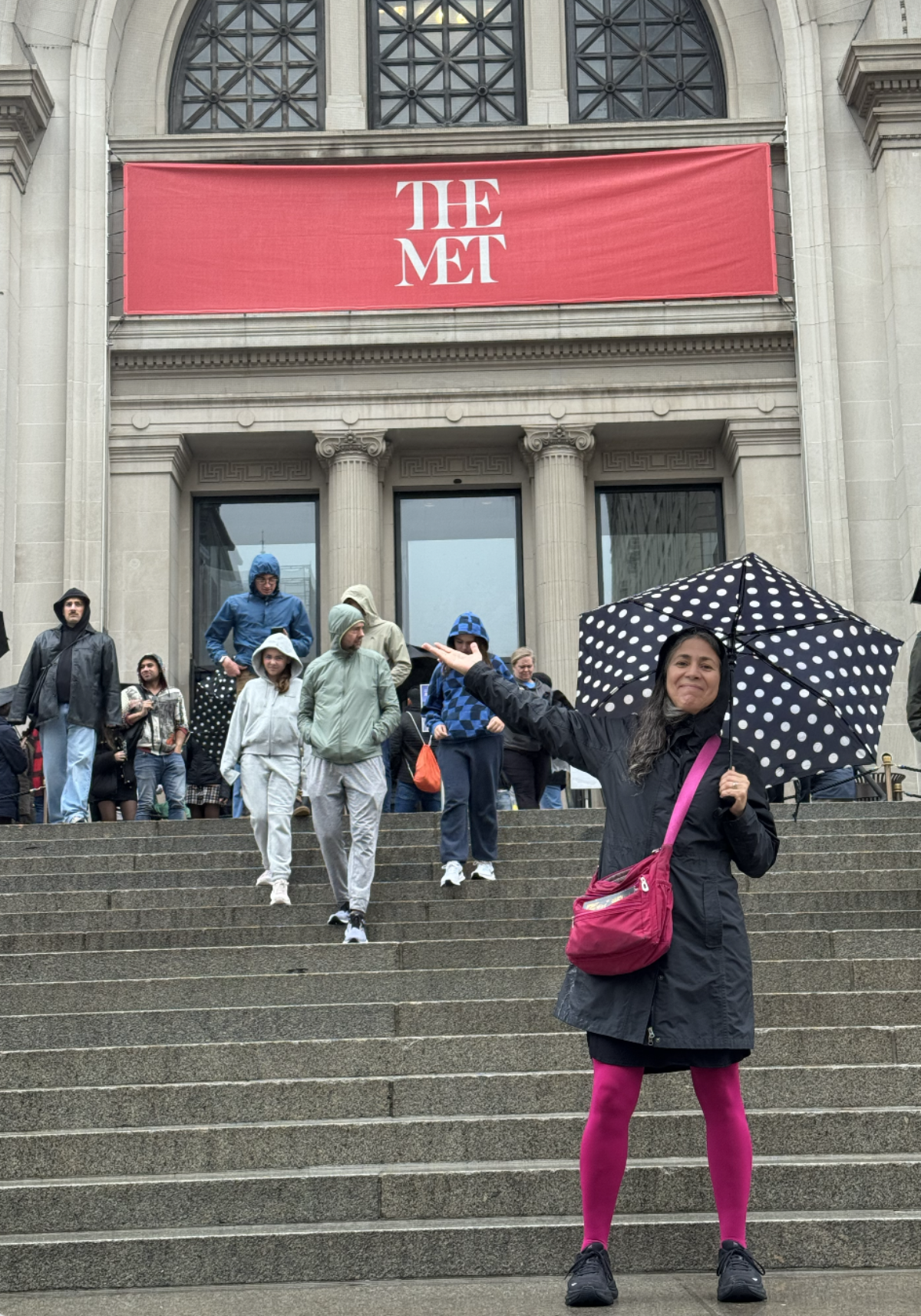
Skawennati stands outside of the MET, where her work is part of the unsanctioned exhibit ENCODED. Courtesy Amplifier
She said she hopes that exhibits like ENCODED will contribute to a big-picture shift in curatorial spaces.
“These kinds of interventions plant seeds of transformation. When Indigenous artists reclaim space through unsanctioned creative acts, they reveal the cracks in the colonial foundations of museums, and awaken possibilities for truth-telling,” she said.
Sign up for email updates from The Eastern Door
“They remind museums that art isn’t only what’s framed on a wall, but what’s embodied, ancestral, and alive in community.
The MET did not respond to The Eastern Door’s request for comment in time for publishing deadline and has not yet issued a formal response. ENCODED can be viewed via a QR code linked on Amplifier’s website and social media and will be available to engage with until December 31, 2025.